History shows dissident words survive and even thrive because writing is about freedom
UPDATE – 12:46AM, TUESDAY – JANUARY 17 23

go through Pramod K Nayyar
The poet Eliot worried about the misnomer when he wrote four quartets:
nervous speech,
Under heavy pressure, sometimes cracked, sometimes broken,
Under tension, slip, slip, perish,
decays imprecisely, does not stay in place,
Will not stand still.
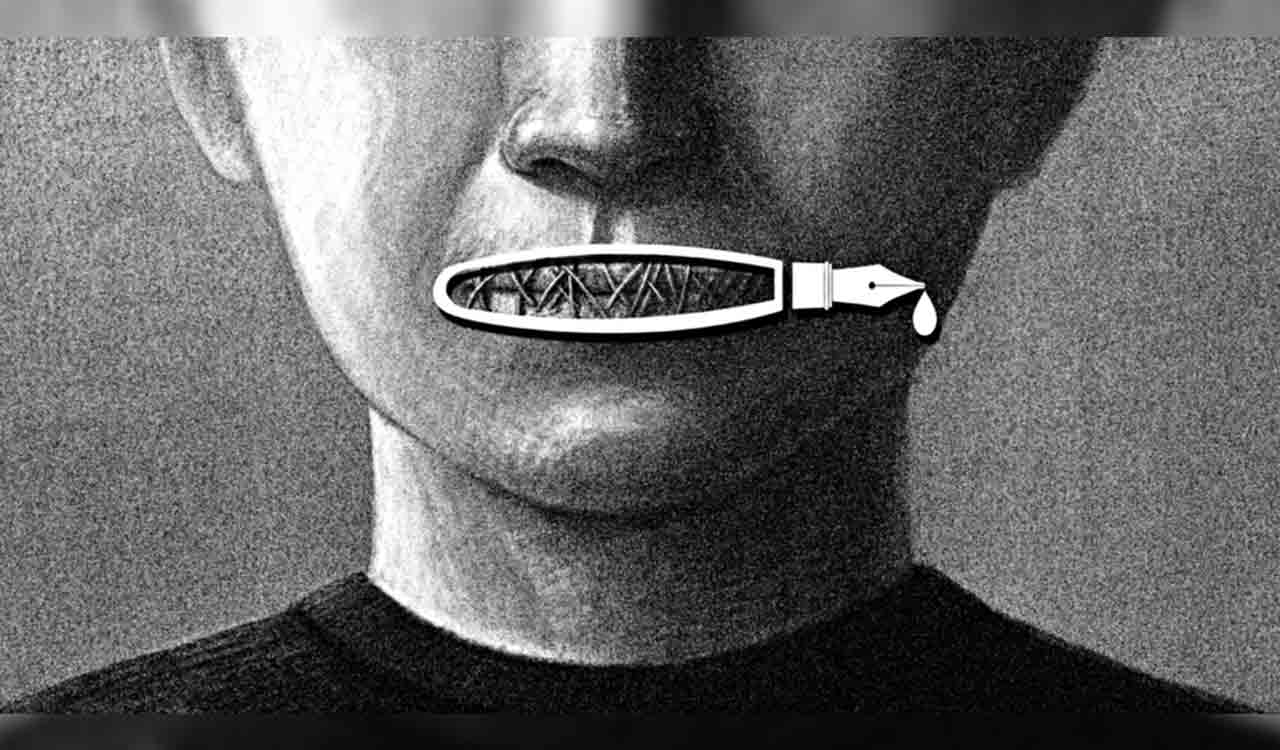
The pressure to find the right words to capture intensity, singularity, and even banality plagues writers.In some cases, words are in tension because their speaking subjects are in tension, whether in Fatwa, a state order prohibiting civil servants from writing op-ed articles or assassination of writers by non-state actors. However, history shows that the word dissident persists. Even thrive. Because writing is about freedom.
vulnerable speech topics
The attack on Salman Rushdie took place in Fatwa, A sensation in the literary world. Why, writes Nobel laureate Wole Soyinka, “the mere incarnation of some immutable definite word on perishable parchment or paper, or even stone, evokes so mortal and primal passion”, which calls for an investigation, not without irony.
Various literary critics claim that words and alphabets are nothing more than the “discourse” and manipulations of an existing language used to maintain an oppressive social hierarchy. All of this is true. However, this attack demonstrates a simple truth. The meanings, meanings, and imagery of the words used in the “offensive” texts testify to a living awareness: the speaking subject. The subject, SR, is the operational consciousness behind the word, regardless of himself as the creator of discourse and power structures. The subject, literally, spilled ink and blood on paper and on stage.
Psychoanalytic critic Julia Kristeva said in her 1992 Oxford Amnesty Lecture that it is the voice, the meaning and the process of creating meaning in what we call “literature” that makes it so that social norms are destroyed place, update’.
in other words, how Poetic language—by which we also mean extended narratives such as novels—makes meaning a mode of questioning social norms. This is where the problem lies.
Authors who codify words in a certain order to worry about the authority of social norms are a matter of anxiety, because the poetic language used is always marked by heterogeneity, a meaning outside What the state wants or orders. Heterogeneity, Kristeva writes, “has nonsensical effects that undermine … accepted beliefs and meanings”. It is for this authorial function that the attacks are launched, the arrests ordered, and the obliteration of lives: words reshape the world, and no matter how much we argue—or ChatGPT sets out to prove—that language works before us, there is a speaking subject who speaks them Put her words and her life at risk when strung together.
Words and social norms
In an article about macbethDrama critic Terry Eagleton believes that witches are the real “heroes” of the play, because they shape and reshape the existing social order. South African novelist and anti-apartheid activist Andre Brinke expanded on this argument, classifying writers as “witches”. Retracing the etymology, Brink notes that it comes from “wit” (knowledge) and “weihen” (devotion). Broadening the connotation of the word, Brinker connects it with “heretic,” which originally meant “choice.” The Verge wrote:
in our current situation [‘heretic’] would mean choosing to oppose the power structures in a given society; opposing the prevailing discourse of the time; opposing food; sometimes even going “against nature”
The writer, like the witch, “embodies the revitalizing and regenerative power of … society”. When so-called dissenting voices—whether in teachers’ unions or public intellectuals—are afraid to question dangerous public or state policies (despite those who at one point spoke out about “oppression” and “social injustice”), witches and their witches Their wit disappeared. The price paid is also literary, for we cannot “underestimate the role of this word in the world” (Brinker).Even in dark ages, literary vocabulary provides us with something.
Return the edge:
Broadly speaking, every literary text is not just a leap of the imagination but an act of faith.
This is what makes writers dangerous: they encourage us to act on our faith, to seek answers. The author’s mantra, says Brinker, is “Say—ask—and we’ll answer,” even if that answer might not be what we expected or didn’t want to hear.This possibility of hearing another meaning and another vision is enough teach The same is true of literature.
choice of explanation
Writers are a threat, we now know that. They challenged the nation, the decadent, and even, as Wole Soyinka poignantly described it, “competitive guardians of ultimate truth and apologists for marshmallow cultural sensitivities.” They offer us not only possible selves but a society of such selves that, in the words of the critic Wayne Booth, is “a chorus that is not necessarily harmonious.”
Writing is about the freedom to choose interpretation, both for texts and for life itself.We accept our new selves when we meet others, especially other people not like We, and discovering our lives in the process, are the plot lines (I’m adapting Booth again here). The plot line touches on our family line, but crucially, the social world as well. That is, when we read, we discover that our unique lives are embedded in networks of other similar lives. That’s why when one dies, some part of the other dies too: because our plot lines are intertwined.
This is not to say that writing is an exact replica of life, which is why literature must be defended (really?).Writing and the attendant freedoms of expression and interpretation constitute our personal and social selves because these freedoms make us subjects choose. Freedom to interpret is freedom of Own:
what is essential [the] The ego is not primarily in its difference from others, but in its freedom to pursue storylines, lifelines, dramas carved out of all the possibilities each society offers: it doesn’t matter how much it overlaps with other storylines.
Literature is nothing but the celebration of freedom.