

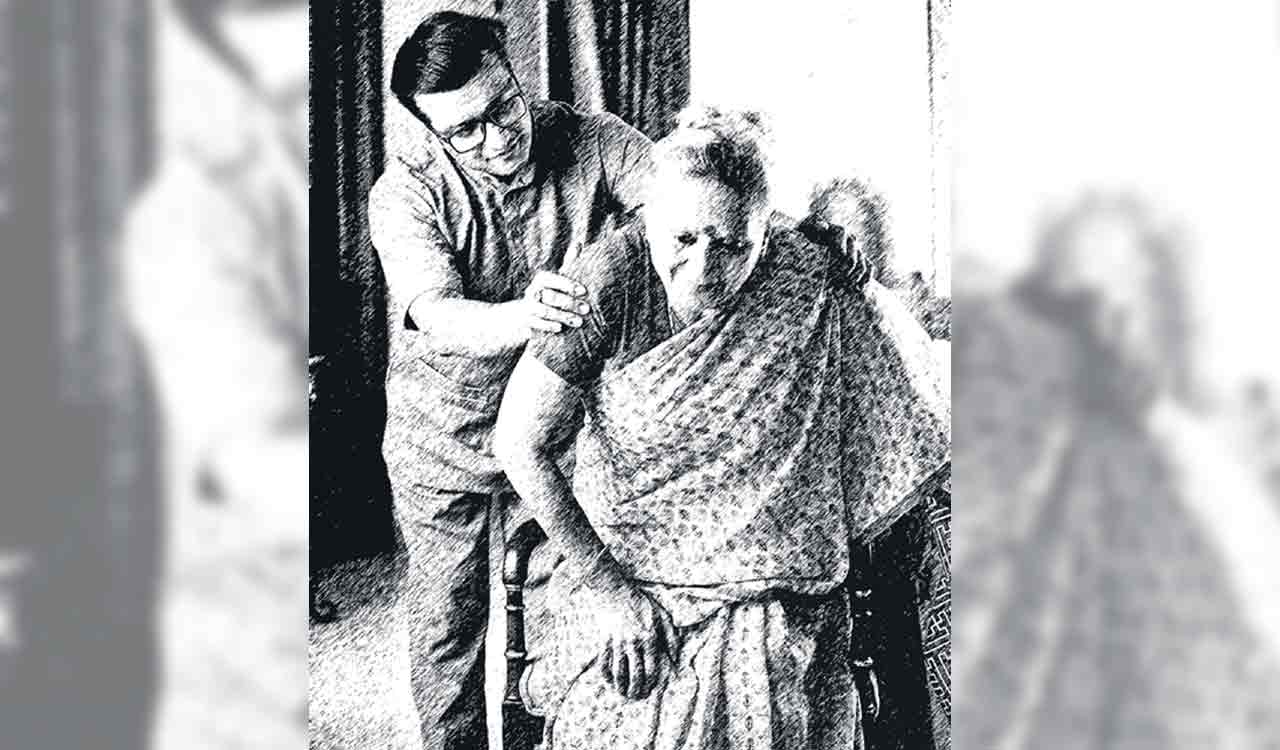
Strong family support system saves Indian government billions, but puts extra stress on caregivers
Posted on – Thursday 3/23/23 at 12:30pm

By Dr. Garima Rajan, Krishna Balsarkar
Hyderabad: Caregiving usually takes place within the family. Caregiver burden (CB) is defined as “the physical, psychological or emotional, social and economic problems that family members who care for an impaired older person may experience” as one of the consequences of caregiving (George & Gwyther, 1986, p. 253) .
The core cultural values of collectivism and emotionalism underpin Indian society. People with dementia continue to live with their families in this developing country. Adult family members living under the same roof provide this long-term unpaid care for the disabled elderly. A strong family support system undoubtedly saves the Indian government billions of dollars every year. On the other hand, caring for someone with dementia at home places enormous physical, emotional and financial stress on the caregiver (Gupta et al., 2012). Long-term care is the most pressing need of an aging society. In Indian culture, family members are the informal (though primary) caregivers for the elderly. Caregiving requires significant emotional and financial investment (Chakraborty et al., 2023).
Family members who are informal caregivers may suffer from poor health due to the added stress and burden of caring for the health and well-being of the elder. In most cases, caregivers had much higher rates of depressive symptoms than non-caregivers. Depressive symptoms were diagnosed in 29% of nursing staff compared to 27.58% of non-nursing staff. In contrast, 11% of nursing staff reported self-rated poor health (SRH) (Chakraborty et al., 2023).
According to research, behavioral abnormalities in dementia patients are one of the most important variables leading to CB (Beeri et al., 2002; Sink et al., 2005). Aggression, agitation, and nocturnal wandering are all strongly associated with CB and depressive symptoms (Gallicchio et al., 2002; Gaugler et al., 2005).
price of relationship
The most immediate determinant of burden is the quality of the relationship (Gupta, 2009a). Caregivers often express feelings of attachment to the care recipient. According to recent research, the emotional closeness between caregivers and care receivers is an important factor in explaining the level of caregiver burden (Lecovich, 2008; Said and Barusch, 1994). According to Stoller and Pugliesi (1989), caregivers who have positive relationships with their care recipients are less likely to experience high levels of caregiver burden, no matter how much care they provide.
Poor relationships between caregivers and care recipients can increase the burden on caregivers (Koerner, Kenyon, & Shirai, 2009; Gupta, 2009a). Thus, it is likely that as ‘relationship quality’ increases, so does perceived caregiver burden. Moreover, such care within the family is subject to normative, gender-specific constraints.
Given women’s roles as caregivers in the Asian Indian context, women are more likely than men to provide care for older adults and thus feel a caregiver burden (Kahn, McGill, & Bianchi, 2011; Miller, Lynda, & Cafasso , 1992); Navaie-Waliser, Spriggs and Feldman, 2002). Caregiving responsibilities may be imposed on women (mainly daughters-in-law) due to gender-related expectations, causing tension in their relationships with care recipients. As a result, women are more likely than men to have poor quality relationships with care recipients (Gupta et al., 2012).
The spread of disputes
Family disputes may arise as a result of the caregiver’s experience, or when long-standing unresolved family issues continue to creep into the caregiver’s experience, increasing needs and interfering with the support they may receive (Neufeld & Harrison, 2003). To reduce the degree of CB, Li and Sprague (2002) found that caregivers needed help and assistance from family members, as well as their verbal praise and appreciation for the caregiver’s labor. Family conflict is a key predictor of caregiver depression. It has also been found that when cognitive impairment worsens, caregivers perceive the family as more conflicted and less adaptive (Deimling et al., 2001).
Previous research has shown that older adults living with primary caregivers are well cared for if they contribute to the family, such as financial, emotional support, and information (Gupta, 2002; Gupta and Chaudhuri, 2009). Role overload had no effect on relationship quality. Caregiving is provided in situations of role conflict and role overload, but older adults’ supportive positions lessen their impact on caregiver stress (Gupta et al., 2012).
enlightenment
Why is it critical to solving these problems? First, poor mental health of caregivers may affect the quality of care they provide. For example, depressed caregivers were more likely to engage in patient neglect and abuse, behaviors that are known to predict patient mortality.
Second, social relationships between patients and caregivers are compromised. For example, caregivers often report feeling lonely and isolated in their relationships. Poor relationship functioning has been linked to poor physical health, decreased immune function and death among partners. Finally, caregivers with poor mental health may negatively impact patients through emotional contagion or behavioral mimicry (Lwi et al., 2017).
Effective interventions to minimize CB are a key component of providing optimal care for dementia patient-caregiver dyads (Etters et al., 2008). Family intervention programs that include education, stress management, and coping skills have been shown to significantly reduce caregiver depression and stress, while also reducing behavioral problems (Marriott et al., 2000).
