Farm knowledge for climate change adaptation has always existed among Indigenous groups, we just have to learn from them
Posted Date – Friday, 31 March 23 at 12:45pm
by Alin Damroy
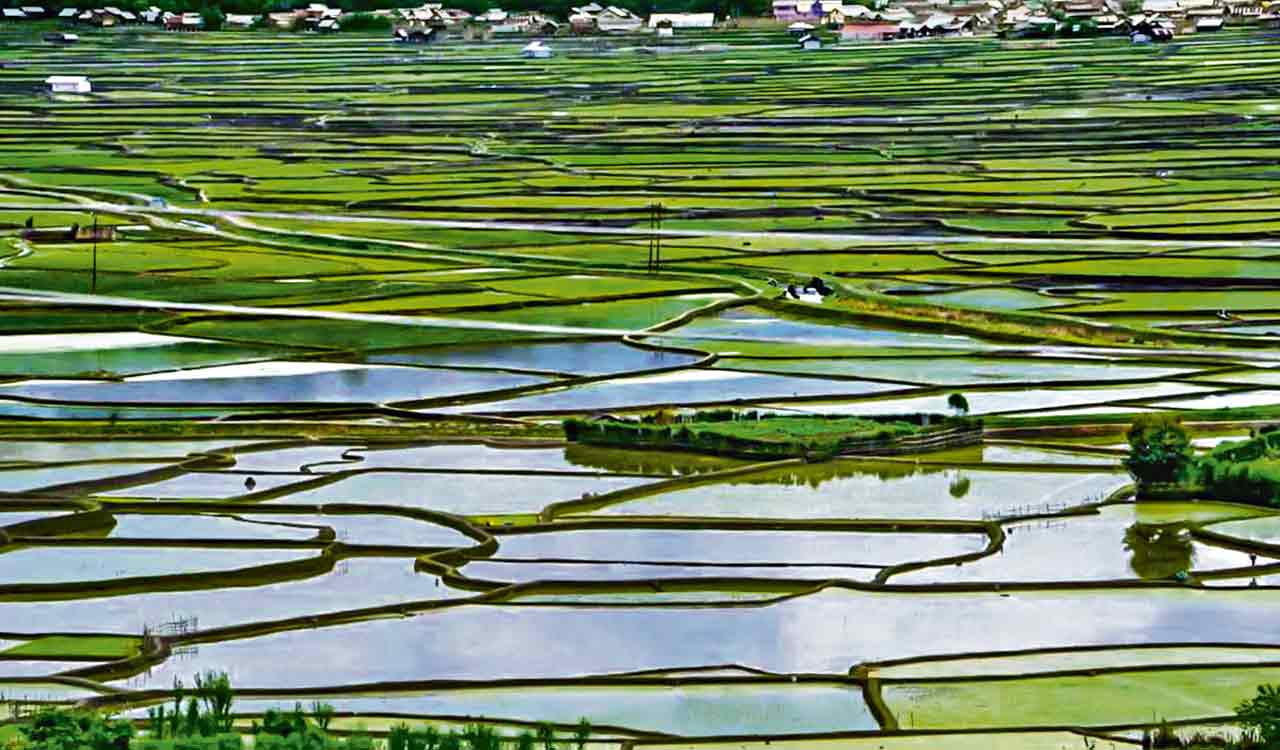
Hyderabad: The Apatani people of India’s Eastern Himalayas practice a unique farming method that combines two crops of rice (mipya and emoh) with one season of fish (ngihi). The wet rice fields are irrigated by a well-managed canal system by diverting streams from the surrounding forests into a canal connected by bamboo or pine tubes. The paddy fields and fish ponds are strategically positioned to receive all the water that flows down from the mountains.
They have been farming near the Yero Valley for centuries, and their reverence for nature is at the heart of all their practices. Their rice cultivation is often the reason why the Apatani are considered one of the most advanced tribal communities in northeastern India. For decades, they have been known for their affluent economies and vast knowledge of land, forest and water management.
natural ecosystem
Agricultural systems driven by indigenous knowledge can absorb shocks from multiple climate extremes. But this wealth of knowledge passed down from generation to generation is often poorly documented. The key to protecting it is engaging, learning from these lessons and integrating them into wider society. The Apatani have strict customary laws governing the use of forest resources and hunting to ensure that the environment is not destroyed. The availability of irrigation water is made possible due to the effective conservation of forests around the valley.
Their farming methods integrate the existing landscape and use as much local resources as possible to maintain the natural ecosystem, including their fertilizers, pesticides, irrigation channels and seeds. The entire cultivation process is organic. The crops are supplemented with livestock manure, agricultural waste, kitchen waste and rice husks that help maintain soil fertility.
There are an estimated 104 million people in India’s 705 ethnic groups. There are 2,00,000 Irular in the wet and humid Western Ghats. The 13,000 Apatani people have lived for 600 years in high-altitude valleys in the eastern Himalayas that also receive abundant rainfall. But the Rahulah people call the dry, snowy mountains of Rahul and Spiti in the western Himalayas home. With little rainfall, its 31,000 people rely primarily on snow for water. In contrast, the Dongria-Gondh people live in the hot and humid Niyamgiri mountains of Odisha. They thrive in small streams in the mountains.
These four indigenous populations come from very different ecogeographical regions, but all face the effects of climate change – increasing days due to high temperatures, unpredictable monsoons and extreme weather. Specifically, flash floods in the eastern Himalayas, drought in the Eastern Ghats, retreating glaciers and water shortages in the western Himalayas, and insect infestation in the Western Ghats.
common defense
There are several agricultural practices common among populations that can be the first line of defense against the effects of climate change. The surrounding forest and sustainable practices are critical to the food security of all four.
Everyone practices communal farming and uses local resources wherever possible. The division of labor at all stages of agriculture produced specialists with specialized skills who passed their knowledge on to the family. Farm work essential to maintaining the entire system includes irrigation, fencing, building sidewalks, weeding, field preparation, transplanting, harvesting, and storage. Different families are responsible for specific tasks, and their roles are passed down from generation to generation.
After the crops are harvested, some seeds are kept for the next year’s planting. The rest are eaten as food. Genetically modified seeds commonly used in modern agriculture have a much shorter shelf life and cannot be kept until the next planting season because they either fail to germinate or produce poor yields. Farmers will have to buy again. Instead, they use native seeds that can be stored—the result of thousands of years of natural farming preserved over generations.
Crops are often grown together – all at the same time on the same land, which reduces the chance of pest infestation. Fruits, spices, vegetables and grains can be grown together, taking advantage of their different heights by using the land vertically.
Some planting varieties are drought tolerant, some heat tolerant, some have a shorter growing period, while others require a longer growing period. For example, the Dongria-Gondh people grow 80 crops simultaneously, including resilient indigenous varieties of rice, millet, leaves, beans, tubers, vegetables, sorghum, pulses, maize, and oilseeds that have been preserved for dozens of years. Year.
Security Level
In the case of extreme events such as floods and droughts, growing all plants at the same time can provide a degree of safety, since not all plants will be wiped out. Kala mali phulo is a type of rice grown by the Dongria-Gondh people. This variety of rice does not require a lot of water and can withstand environmental changes. The Irular people of the Western Ghats have been farming around the Palamalai and Nilgiri mountains for centuries. High rainfall and wet weather present challenges in how best to preserve the annual harvest of seeds.
Storing the seeds for a year puts them at risk of rotting and pests. Storing them using modern technologies like refrigeration facilities is very expensive. So the Irular people stored rice grains with herbs in a small mud hut, kept millet in soil in containers coated with cow dung, and kept pepper seeds in hanging sacks to keep the grains alive . They also use botanical insecticides and repellants derived from neem, a common Indian plant.
Because of the snow, Lahaulas could only grow crops for six months, so they developed a long-term composting method to account for the loss of essential nutrients as the snow melted. They have several community compost rooms where they collect livestock manure, human waste, kitchen waste and forest leaves all winter long. Composting takes longer as temperatures drop below freezing. When summer comes and the fields are cleared of snow, compost material is applied to the fields. They also highly integrate livestock into their agricultural systems for food and compost.
danger of getting lost
Indigenous peoples are now more than ever moving and changing their traditional livelihoods due to the destruction of their lands and forests. Due to their already relatively small population size, ancient knowledge is increasingly in danger of being lost. Creating a well-documented national stockpile will ensure their preservation and longevity, especially as we face extreme weather that threatens food security.
With the Intergovernmental Panel on Climate Change recommending that Indigenous knowledge be integrated into local and international climate change adaptation plans, now is the time to hear how we can better save our crops from heatwaves, droughts and floods. The knowledge seems to have always been there, we just have to learn from those who have it. 360 information