

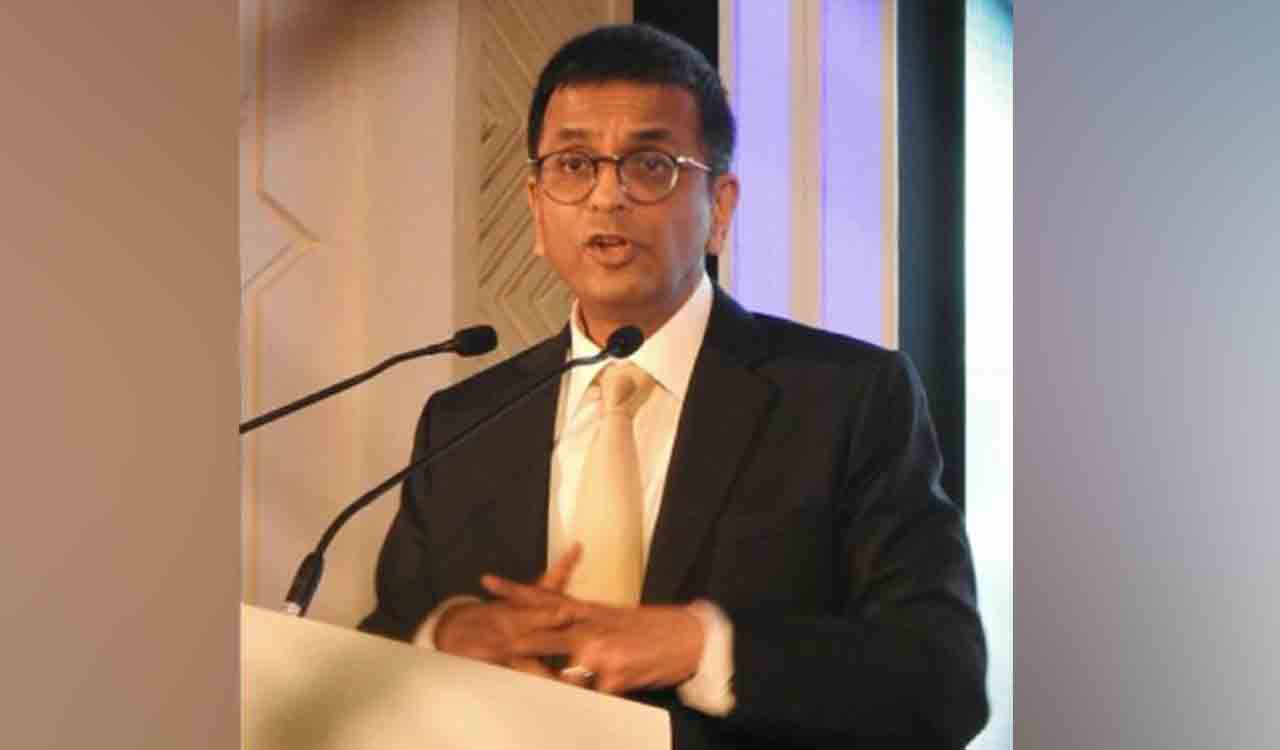
At Guwahati High Court’s Platinum Jubilee, CJI Chandrachud says laws should take into account realities of communities seeking implementation
Post Date – 10:52 AM, Sat – 4/8/23

file photo
Guwahati: Chief Justice of India DY Chandrachud said laws must be humane, serve the interests of all and should always be applied with sensitivity to address the root causes of problems.
CJI Chandrachud, addressing the Platinum Jubilee at the Guahati High Court on Friday, said the law should take into account the realities of the communities it seeks to implement.
He said that when laws are wisely interpreted and applied, people develop confidence in the fabric of society, which is a step towards justice.
“The legitimacy of the judiciary lies in the faith and confidence it receives from the people, who in turn depend on the independence of the judiciary. People’s confidence in the judiciary rests on the single most important factor, that the judiciary is citizens in distress and in need The first and last passage of the road,” he said.
“The law must be human … the human touch is essential to ensure that the law serves the interests of all. There should be empathy and respect for equality and diversity,” he added. CJI Chandrachud said the role of the judiciary is to ensure that the law and its administration do not hinder justice but uphold justice.
“The three hands of the state — executive, legislative and judiciary — are engaged in the common task of nation-building. Constitutional politicians need deliberation and dialogue first, not public grandstanding,” he said.
CJI noted that President Droupadi Murmu had urged the judiciary to address the issue of access to justice for vulnerable groups in society, “her words inspired the legal profession to expand access to justice across the country.” CJI Chandrachud said the Guwahati High Court also faced Challenges plaguing the judicial system, especially in the areas it governs.
He said many areas under his jurisdiction were regularly hit by natural disasters such as recurring floods that displaced thousands of people each year and many lost identity documents and other possessions.
“The challenges faced by marginalized and vulnerable communities during these disasters hinder their access to public services, including access to justice,” he said.
Pointing to the extraordinary judgments handed down by the Guahati High Court during the state of emergency, he insisted that “it is in tough times that tough judges come into office.”
