


Organ transplants do not give the recipient carte blanche in terms of living an unfettered lifestyle, as donated organs have expiry dates
Posted Date – Thu, 4/20/23 at 12:45pm

Organ transplants do not give the recipient carte blanche in terms of living an unfettered lifestyle, as donated organs have expiry dates
Organ transplantation is a transformative experience because patients undergoing this complex procedure are among the lucky few in India who have access to financial resources and donor organs, which may be cadaveric or living. After an organ transplant, however, recipients are completely unprepared to deal with the moral issues as they are suddenly faced with the burden, and perhaps even a sense of responsibility, of protecting the donor organ that until recently enabled the survival of another human being. Organ transplantation does not provide the recipient with carte blanche in terms of living an unfettered lifestyle, as donated organs have an expiry date.
It is undeniable that organ transplants add years to those who have only a few months to live on this planet. The fact remains that the quality of life these patients experience after transplantation is overshadowed and rarely discussed. Awareness of organ donation and donation is high due to the high priority given to organ donation by state governments, voluntary organizations and healthcare providers. In stark contrast, almost no one, including transplant specialists, talks about the inherent risks of transplantation.
after transplant
The moment a patient receives a donor organ, his or her body’s immune response begins to recognize it as a “foreign object” and respond accordingly. Whether a patient receives a heart, kidney, liver or lungs, the body does not accept the donor organ and sees it as a foreigner. As a result, the body’s immunity goes into overdrive, which, if left unaddressed, can lead to organ rejection.
Immediately after transplant surgery, recipients take a heavy and powerful combination of immunosuppressive drugs, including steroids, calcineurin inhibitors, and antimetabolites. While organ recipients take (throughout their lifetimes) this powerful cocktail of drugs to suppress immunity and allow the body to accept the donor organ, the drugs also carry the risk of causing secondary diseases such as diabetes, high blood pressure, heart and kidney Diseases and serious infections such as lupus.
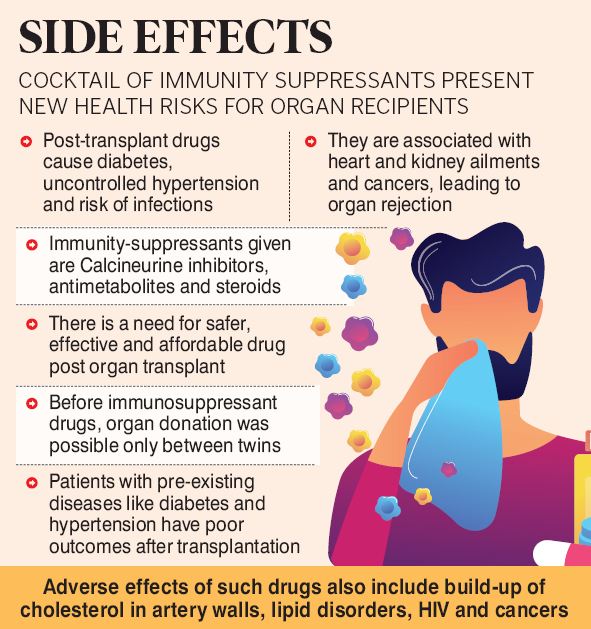
Because of these complications, transplant specialists cannot guarantee that a regimen of expensive drugs that must be taken at least once or twice a day will be effective and well done for an extended period of time and protect the patient from harm. The body’s own immunity.
There are many well-documented studies showing that heart disease is the most common cause of death in patients who receive donor organs. Side effects of such drugs that lower the body’s immunity have also included cancer, a major reason why transplant patients have a lower life expectancy than typical healthy individuals.
With the increase in the number of organ transplants not only in Telangana but across the country, there has also been a clear increase in the need for new and highly effective drugs that can strike a balance between suppressing the body’s immunity, preventing secondary infections, and increasing quality. life of the organ recipient.
