

Citizen participation in decision-making should be promoted in response to repoliticization of decentralized institutions
Published Date – Thursday, 4/27/23 at 12:30pm

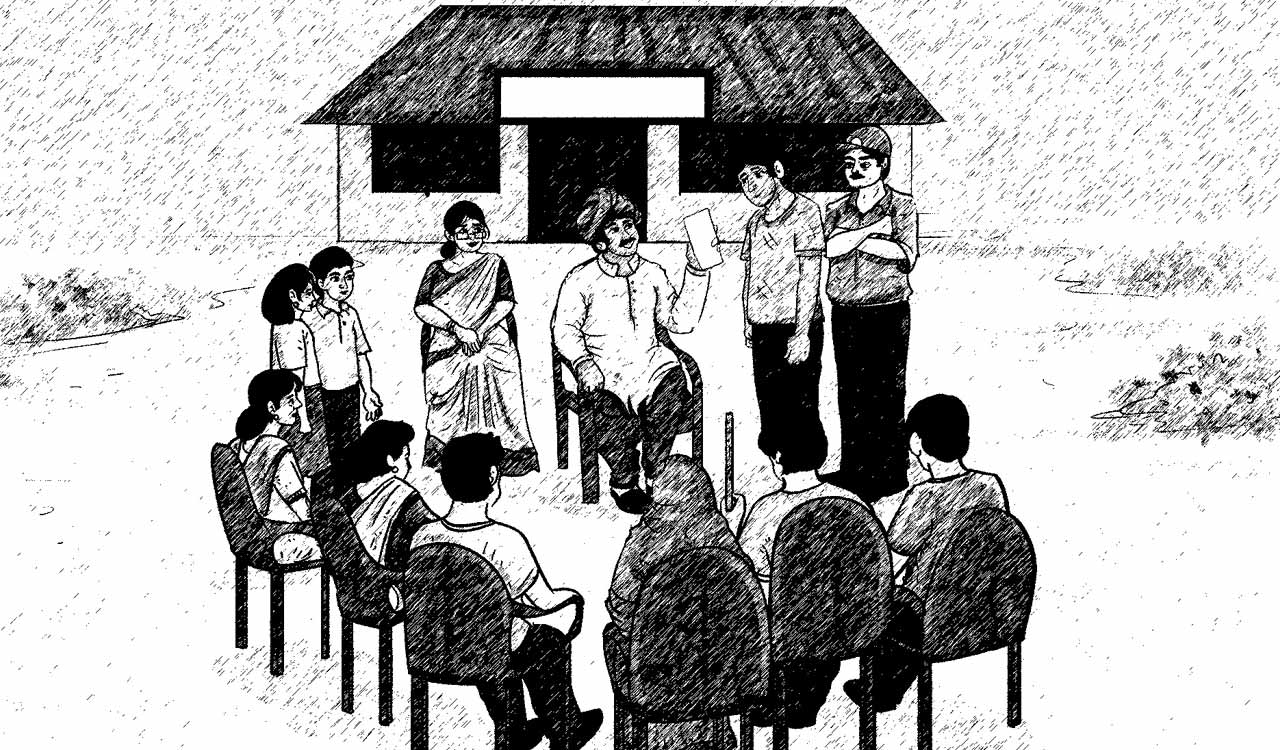
representative image.
by A Rajeshbabu
Hyderabad: Democracy is impossible until power is shared by all, but don’t let democracy degenerate into democracy – MK Gandhi
Mahatma Gandhi advocated decentralization to help people approach governance. In 1992, the central government introduced the 73rd and 74th Constitutional Amendments to strengthen local autonomy in rural and urban areas by decentralizing grassroots democracy. Local governments play an integral role in putting state and central government welfare and development programs into practice. Giving more power to local governments leads to true decentralization.
Go to the grassroots
Local governments are a critical step towards democratization because they give people the power to choose the policies and initiatives they wish to implement. Decentralization aims to achieve people-centred governance, improve public sector delivery services and raise living standards. It increases people’s participation in decision-making at the grassroots level, enabling them to benefit from welfare programs by raising their awareness and increasing transparency and accountability. Gram Sabhas assist in coming up with collective solutions to the challenges involved in implementing programs and policies.
However, decentralization has been challenged by repoliticization at the local level. The central government has been touting the fancy term of “twin-engine growth”, whereby if the same party in the central government is in power in the state, then the state’s government can benefit from being led by the same party. centers and countries.
Likewise, local agencies are practicing the same. During the local body elections, campaigns will be conducted and every effort will be made to bring the same party to power at the state level in the Panchayati Raj Institutions (PRI). The campaign has sometimes involved not only protecting voters but threatening them so that they would be removed from government programs to which they were entitled.
toothless tiger
The repoliticization of decentralization has made the elected leaders of the opposition party at the village committee level a toothless tiger. It happens often at the gram panchayats that the elected leader from an opposition party does not have any power (de facto) to carry out welfare activities. Power at the Executive Council level rests with representatives (non-elected) of incumbent state parties hands. This representative is feared not only by the people, but also by local bureaucrats. Sometimes, the elected leader from an opposition party is pressured to change the political party to carry out his/her duties as the Sarpanch without any hassles.
The repoliticization of decentralization has gone to extremes, with party representatives excluding people from the welfare programs they enjoy. Families leaning to the other party do not get the welfare programs offered by the state and central government. Rejection of welfare programs hits people’s livelihoods and leaves them helpless. For example, field assistants at MGNREGS (belonging to the political party that is in power in the United States) deliberately do not register for new job cards, or are late in registering job cards from families from other parties, depriving them of the opportunity to earn a living.
The current government of Andhra Pradesh has introduced the pioneering “Village Volunteer System” to bring welfare programs to the people’s doorstep. Every 50 households appoint a volunteer to implement the state government’s door-to-door governance. Ideally, this is a very good move. These volunteers are elected by the party’s state government representative in 2019, regardless of whether the representative holds any elected or elected office. It is no surprise that these volunteers belong to the same political party as the state government. These volunteers are playing a prominent role in the 2021 local body elections in Andhra Pradesh.
However, rather than making governance human-friendly, these volunteers focused on politicizing the system. If harnessed properly, the volunteer system can bring about a revolution in the country. Unfortunately, its ultimate purpose is only to politicize governance, which defeats the real purpose of decentralized governance. It could also happen that if the government changes at the next election, then the volunteers will automatically be replaced by their representatives.
Strengthen the system
Decentralized institutions like the PRI are often subject to repoliticization due to the power dynamics and vested interests of regional parties. To counter the repoliticization of decentralized institutions, citizen participation in decision-making processes should be promoted in an inclusive, accountable and transparent manner.
The legal framework for PRIs should be strengthened to make PRIs accountable to the people. Capacity should be built (raising awareness of legal aspects such as RTI) to enable people to make informed and independent decisions without reliance on local politicians. A cohesive environment should be created so that the voices of representatives of each party are heard and considered during the Gram Sabhas to decentralize democracy in letter and spirit.
