With increasing security concerns, conflicts, and an overall increase in the number of powers in a multipolar order, the use of the veto needs revision
Posted on – Thu, 5/11/23 at 12:45am

By Abhishek Kadiyala, Dr. Karamala Areesh Kumar
In the mid-1940s, two unusual phenomena occurred in international politics. The first is an organization that promises to prevent war in the world and provides a platform for all countries, large and small, to improve relations and conduct diplomacy. The other is the nation-state of a civilization that dates back tens of thousands of years in human history. Composed of diverse groups, plundered and plundered by various empires, this civilization manifested itself as a single nation for the first time in modern history.
The group came to be known as the United Nations Organization (UNO) – a conference of nation-states originally aligned against the Nazi massacre of European peoples in the early 1940s. Known as the Union of India, these nation-states were actually a colonial union of the Indian subcontinent and states.
biggest experiment
However, when these two phenomena appear, people are skeptical about their practicality. A plan to bring together disparate countries with opposing and intersecting interests to negotiate on a single platform was an experiment not long ago seen as a failure in the form of a coalition of nations. The other is a never-before-seen experiment in democracy on the largest continent in history, made up of diverse populations with diverse ethnic, religious, cultural and linguistic backgrounds and deep-rooted social conflicts.
UNO and Indian unions have seen their success and despite many shortcomings, they are still standing today. Moreover, during these 75 years, these phenomena proved to be a pivotal point in the larger international system. In fact, people of all kinds, with their conflicts, differences and diversity of thought, can co-exist under the umbrella of certain principles of peaceful settlement of disputes, harmony and democracy.
Despite failing to prevent armed conflict in situations ranging from North Korea and Vietnam to Rwanda and Yugoslavia, the UN has retained its core mission. The Cold War can be considered an important example of this success. Today, this core mission permeates every aspect of society, from energy security, cybersecurity, and environmental security to the long-term effects of globalization and neo-colonialism.
security council
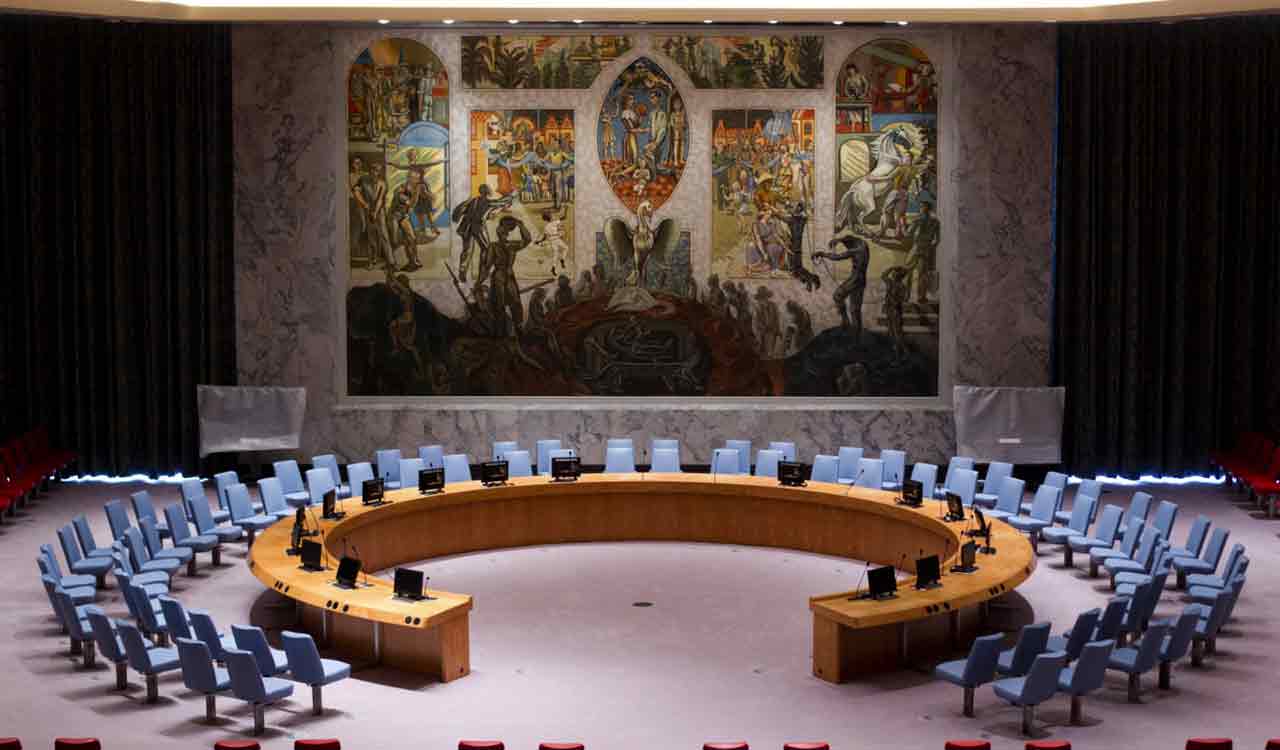
One of the bodies within the United Nations with the greatest power of influence is the United Nations Security Council (UNSC). Through its limited number of elected members, the broad and legally binding nature of its resolutions and its power to take unilateral military action when needed, the UN organization is often considered the most effective international body in the world.
The UN Security Council originally consisted of the United States, the United Kingdom, and the Soviet Union as its permanent members. France and the Democratic Republic of China joined later. These countries are the victorious countries after the end of World War II, and due to the heavy economic, military and socio-political burdens brought about by the war, they are still the only countries with enough power and influence to have a significant impact on world affairs.
Given the powerful nature of these countries, it is widely believed that they should never be directly opposed in any conflict, nor should they interfere in each other’s spheres of interest. So a veto power is created, which means that even if one of the five powers disagrees with the parliamentary position, the decision can be unilaterally stopped.
However, political interference in addressing security-related issues has thwarted the UN Security Council’s core objective of member states using the veto to support their allies, leading to situations of continued violence, ethnic cleansing, genocide, and more—from the Soviet Union’s use during the Korean conflict. The veto to the French and British vetoes on Palestine in the first few days, and today Russia and China’s flagrant use of the veto involves UN Security Council actions in the ongoing Russia-Ukraine conflict.
But with security concerns, the widening scope of conflicts, and the overall increase in the number of powers in a multipolar order, the use of the veto needs revision.
However, one cannot completely remove these veto powers, as this would cause the great powers to lose their incentive to engage in the process, as seen in the League of Nations. Since the reform of the UN Security Council is more than 40 years late, it cannot solve this problem slowly and steadily. It is important to note that without these reforms, the overall relevance and impact of UNSC resolutions is threatened on a daily basis. On the other hand, one solution would be to increase the number of vetoes and include India in them, as proposed by the G-4 members.
Indian case
The world’s largest democracy, with more than 17 percent of the world’s population, India is represented by elected leaders and bound by the rule of law and strong state institutions. With its geographical advantages, India acts as a bridge between Central Asia and the Middle East, connecting the Indian Ocean and Southeast Asian markets. It plays a leading role in the Indian Ocean, which is the hub for more than 80% of the world’s trade. It also has one of the largest militaries in the world, has fought in five major wars, and is one of the few countries in the world to possess nuclear weapons.
More recently, India has also joined various security alliances, such as the Quad, which has helped to enhance its geostrategic position in the grand scheme of international politics. Taking all these factors into consideration, India qualifies as a major power worthy of a veto even by the traditional UN Security Council standard of “leaving no major powers out”.
India’s journey began at the same time as the UN’s and faced similar challenges. Both believe in the peaceful coexistence of institutions, the notion of unity that respects diversity, and the democratic process of peacefully resolving conflicts. It is only natural for the UN and India to unite and strengthen each other’s missions.
Granting India the veto power will be the most pivotal event in India’s relationship with the United Nations. It will also demonstrate the continued relevance of the UN in a changing international order and its willingness to adapt to the needs of today’s world.
When India speaks, more than 17% of the world speaks. When India moves, it affects the larger geopolitical landscape across Central, Central, East and Southeast Asia, not to mention the Indian Ocean. When India is excluded, a large portion of the world’s population, not only India but also its allies in the world, are denied a voice.
If not today it will one day lead to the security exclusion of the great powers that have broken the alliance in the past and may bring down the UNO in the future making it irrelevant in today’s rapidly changing world by WWII standards no longer Be applicable.