Many Asian economies may not reach their full potential unless they remove the mutually beneficial links between business and politics
Posted Date – Fri, 5/12/23 at 12:15am

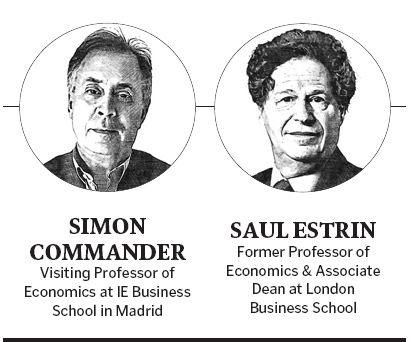
Simon Commander and Saul Estrin
There is no doubt that Asia is a rising economic force – its share of the world economy has risen from 9% in the 1970s to nearly 40% today. Asia’s economic growth, however, has been fueled by mutually beneficial connections between dynastic corporations and political elites, or what experts call a connected world.
These arrangements, favorable until now, are starting to threaten future Asian economic growth. It could be directly related to whether the 21st century belongs to Asia, or whether its economies falter as key vulnerabilities are exposed.
Asian countries differ in many ways, but they share common features, not least the pervasive and deeply entrenched political and economic networks that have had a huge impact on the structure and performance of these economies. This is much broader than specific cronyism and favoritism.
gain an advantage
Interactions between businesses and politicians/parties in a “connected world” are transactional and reciprocal. Politicians look to companies to make campaign or personal donations, pay bribes and provide jobs for family members or colleagues, as well as help such as job creation in regions or at politically favorable times.
At the same time, businesses look to politicians for protection from domestic and foreign competition and to provide subsidies, loans and/or public sector contracts. In this way, they usually manage to gain very considerable market power and profitability. Reciprocity ensures that all parties benefit.
Development policies in Asia usually emphasize the role of the state. Active industrial policy tends to focus on providing infrastructure, finance and support to priority sectors and firms (“national champions”), including through protection from competition from foreign firms.
On the other side of these informal coordination arrangements is Asia’s powerful and ubiquitous business community. These groups cut across the political system and are as important in Vietnam as they are in Thailand or Indonesia. They are large, diversified companies, but their organizational structures have long been outlawed or rarely used in advanced economies.
in the family
These business groups are characterized by the degree of cross-holding and pyramidal structure. The purpose of this opaque ownership arrangement is to keep control within the “family”. Share pyramids, for example, allow families to own a smaller percentage of shares than would be implied by the extent of control they own.
Such arrangements facilitate tunneling, which can involve opaque inter-group lending, and opaque capital flows between different parts of the group. Business groups are also particularly well-suited to transacting with political elites, both legally and illegally, because they provide the political class with a centralized point of contact, thereby reducing the complexity of their relationships.
However, “connecting the world” appears to be far less supportive of economic growth than it used to be. This is because of several factors.
* Reduced competition: Politicians and business groups have no interest in stimulating competition, whether domestic or foreign multinationals, unless the latter bring key technologies. As a result, conglomerates consolidate their positions and are often able to exert major market power.
While this will translate into profits, it will also lead to high levels of concentration, reaching levels of about 30% in South Korea and more than 10% in larger economies such as India and China. Most of these companies are either business conglomerates or state-owned, a level that indicators of concentration suggest are much higher than the US figure of around 3.3%.
* Limiting the creation of “good” jobs: Despite Asia’s rapid growth, jobs — especially high-productivity jobs — have not followed. Indeed, labor productivity remains largely flat. Relative to US productivity levels, only South Korea has reached over 50%; others hover around 30%, and on average, GDP per capita in Asia is only 10-15%.
Asia faces serious challenges. To keep its employment share stable, it must create more than 2 million jobs a month. While it is true that the business community creates well-paying, secure and productive jobs, the problem is that there are only so many of them. As a result, most jobs are found in Asia’s vast informal sector, which is full of vulnerable, low-wage, low-productivity jobs. These informal economies often account for more than two-thirds of employment, but on average only one-fifth of GDP.
* Rising inequality: A “connected world” breeds income inequality, not least through wage differentials from these dual labor markets. But even more striking is the staggering expansion of wealth and the proliferation of ultra-wealthy households. In China alone, the number of billionaires has soared from zero in 2000 to nearly 400 in 2020.
However, the biggest concern for future growth in Asia has to do with the nature and evolution of the development model. The margins for further extensive growth—applying more capital and labor—are shrinking, and some countries—notably China—already need to shift to more intensive growth driven by innovation driven by technology, knowledge, and skills. What does “connecting the world” look like through this lens?
In fact, business units are very effective at identifying and allocating resources, and there is evidence that their affiliates innovate more than their nonaffiliated firms. However, we also find that business groups are often focused on making short-term profits through their relationships and can impede innovation by crowding out innovation from non-business group firms, especially by restricting market access and limiting the availability of external resources. financing. Conglomerates also generally suppress the level of entry and exit of firms, which limits the ability of the economy to shift from low-value-added to high-value-added activities.
solution
Asian economies must harness the entrenched power of “connecting the world” if they are to increase productivity and strengthen innovation.
To achieve this, they need to take steps aimed at transforming business conglomerates into more transparent and well-regulated business organisations, while fundamentally weakening the link between politicians and businesses. This will not happen naturally, as the mutual benefits of market consolidation and political linkages outweigh any benefits of reform.
This will require policies that hasten the demise of conglomerates, including changes in corporate governance, weakening pyramidal ownership structures, mergers and cross-shareholdings, estate taxes, and a shift to new types of competition policy and competition policy objectives. At the same time, steps are needed to limit the scope and motivation of politicians to use their connections for personal or family gain.
It is too early to declare the 21st century the “Asian Century”. Unless policies are introduced to push back the tentacles of the “connected world”, many Asian economies will not be able to reach their full potential in the coming decades.