

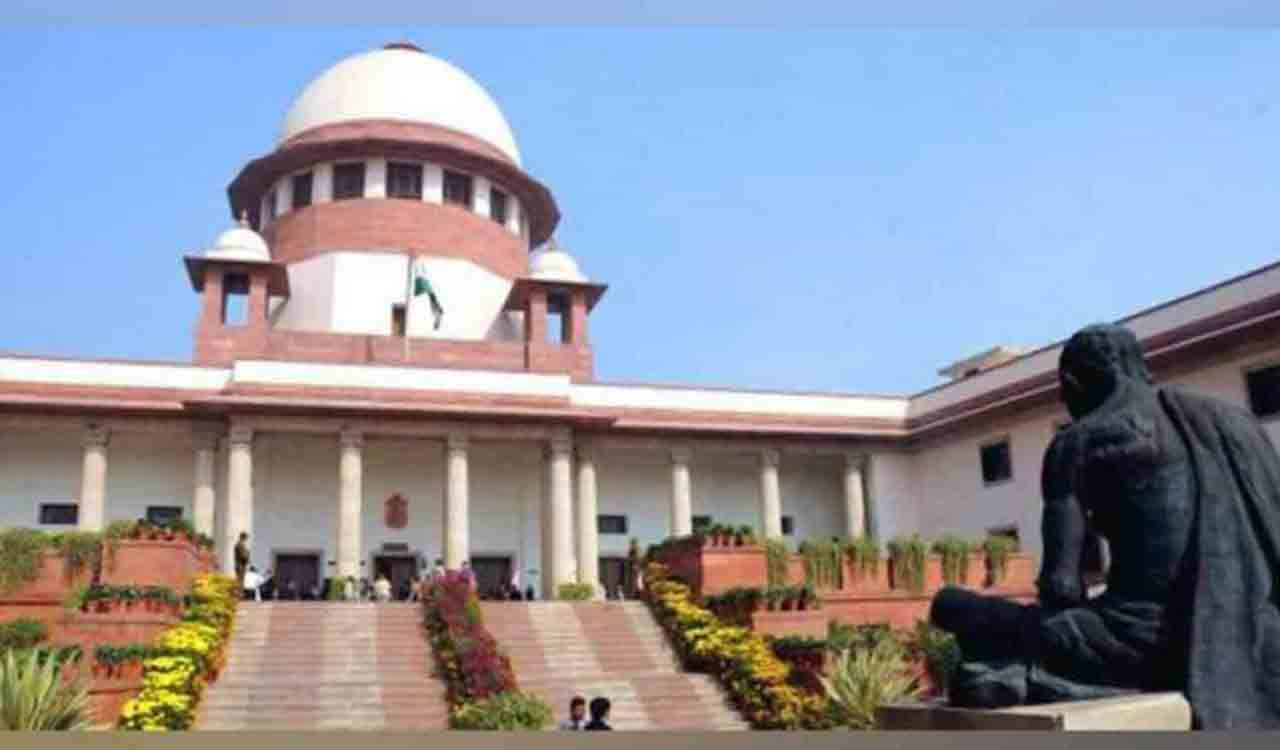
Disturbingly, even after all this time, the implementation of the 2013 PoSH Act has suffered serious failures, the Supreme Court stressed
Posted Date – Fri 12 May 23 08:08 PM

New Delhi: The Supreme Court on Friday directed the Centre, all state governments and the Union Territories (UT) to verify that all relevant ministries, departments, government agencies, authorities, public sector enterprises, agencies, etc. have established sexual harassment committees.
The Supreme Court stressed that it is disturbing that, even after this long period of time, there have been serious failures in the implementation of the Prevention of Sexual Harassment (PoSH) Act 2013.
The Bench comprising Justices AS Bopanna and Hima Kohli said the Prevention of Sexual Harassment (PoSH) Bill 2013 will remain a hollow form if the working environment continues to remain hostile, insensitive and unresponsive to the needs of female employees.
“If the authorities/management/employers cannot assure them of a safe and secure workplace, they will be afraid to step out of their homes to live a dignified life and maximize their talents and skills. Therefore, it is now time for the federal and state It is time for the government to take affirmative action and ensure that the altruistic goals behind the creation of the PoSH bill are truly achieved,” said Judge Corley, who wrote the 61-page judgment on behalf of the bench.
The Supreme Court emphasized that no matter how beneficial the statute may be, it will never succeed in providing the dignity and respect women deserve in the workplace unless and until all states and non-states adhere strictly to enforcement regimes and take a proactive approach.
The bench said it was the responsibility of all state functionaries, public authorities, private businesses, organizations and institutions to implement the PoSH Act in letter and spirit.
“Being a victim of this deplorable behavior not only erodes a woman’s self-esteem, but also damages her emotional, mental and physical health. It is often seen that when women face sexual harassment in the workplace, they are reluctant to report such misconduct . Many of them have even quit their jobs. One of the reasons for the reluctance to report is that there is uncertainty as to whom to seek redress under the Act,” the judge said.
Judge Corley said it was disturbing that even after such a long period of time, there had been serious failures in the implementation of the Act. This apparent loophole was recently brought to light by a national daily that conducted and published a survey of the country’s 30 national sports federations and reported that 16 of them have so far not established Internal Complaints Committees (ICCs), judges said. Corley said.
She added: “The ICC/LC/IC is improperly constituted, as envisaged by the statute and the rules, to hamper the investigation of sexual harassment complaints in the workplace. It is equally counterproductive to have an ill-prepared committee conduct a half-baked investigation, which could lead to serious Consequences, that is, to impose heavy fines on violating employees, or even terminate the service.”
The bench said: “The Union of India, all state governments and UT have been directed to conduct a time-bound exercise to verify that all relevant ministries, departments, government organizations, authorities, public sector enterprises, agencies, groups etc. are performing their duties. Constitute the ICC/LC/IC, as the case may be, and the composition of said committees strictly complies with the provisions of the PoSH Act.”
The judge directs that the necessary information regarding the constitution and composition of the ICC/LC/IC, the details of the email ID and contact number of the designated person, the prescribed procedure for submitting an online complaint, and the relevant rules, regulations and internal policies are available at the relevant authority/ It can be checked at any time on the website of the functional department/organization/institution/institution.
“A similar activity should be undertaken by all statutory professional bodies at the highest and state level, including those regulating physicians, lawyers, architects, chartered accountants, cost accountants, engineers, bankers and other professionals,” the Supreme Court said. Offered by universities, colleges, training centers and educational institutions as well as government and private hospitals/nursing homes.”
The Supreme Court has issued a series of directions in hearing the plea of former University of Goa dean Aureliano Fernandes against the order of the Bombay High Court against him over sexual harassment allegations.
The High Court dismissed his plea to challenge the order of the Goa University Executive Committee (disciplinary authority), dismissed him and disqualified him from future employment. The Supreme Court reversed the High Court’s order, citing procedural lapses and breaches of the principles of natural justice in the inquiry process.
The Bench adopted a series of directives on the matter: “Authorities/management/employers should conduct regular inductions, workshops, seminars and awareness programs to upskill ICC/LC/IC members and educate female employees and Provisions, rules and related provisions of women’s groups regarding the Act.”
The Supreme Court directed the National Legal Service Agency (NALSA) and the State Legal Service Agency (SLSA) to develop modules to conduct seminars and organize awareness programs to raise awareness of the provisions of the Act among authorities/management/employers, employees and youth groups.
The judge said: “A copy of this judgment shall be transmitted to the secretaries of all ministries and they shall ensure that all relevant ministries, statutory bodies, agencies, organizations etc. execute the instructions under the control of their respective ministries. A copy of the judgment shall also be transmitted to all states and the Union The chief secretaries of the municipalities, they should ensure that all relevant departments strictly follow these directions,” he said.
The Supreme Court also directed the Center and states to file their affidavits to report compliance within eight weeks.
