

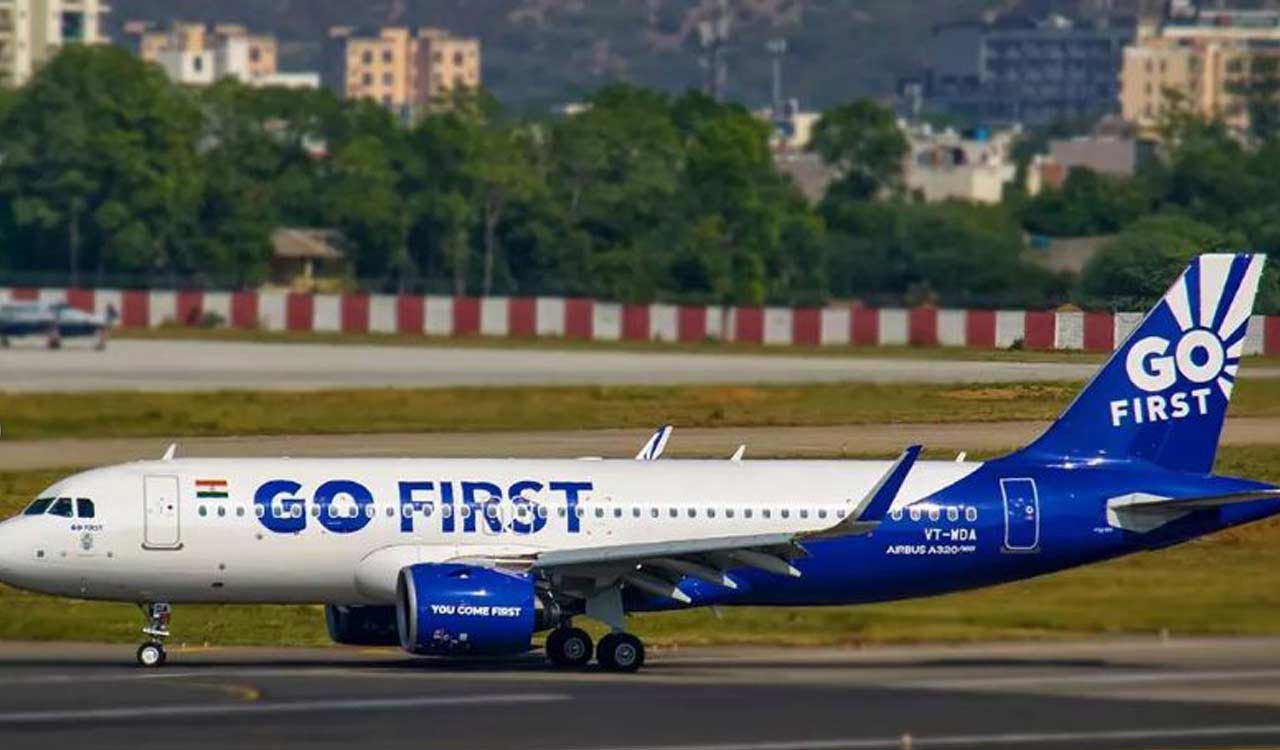
In less than two weeks, at least 50 people have demanded as many leased planes from two Indian airlines
Published Date – Mon, 15 May 23 at 08:30 AM

file photo
New Delhi/Mumbai: In less than two weeks, at least 50 people have demanded to take back as many leased planes from two Indian airlines. A petition from lessors seeking to enforce their rights under international norms, and concerns that risk premiums for domestic carriers leasing aircraft could soar.
Cash-strapped Go First’s voluntary plea to enter bankruptcy, followed by a pause, has left aircraft lessors in India, the world’s third-largest aviation market, with a host of worries and uncertainties.
Currently, Air India has around 700 aircraft and some airlines, including Air India, are expanding their fleets. Most of the country’s commercial aircraft are operated through a sale-and-leaseback model, and there are concerns that developments related to Go First could drive up lease costs.
India’s aircraft carrier is expected to require more than 2,200 aircraft over the next 20 years.
The perception of India as a high-risk jurisdiction could translate into a higher risk premium for other local airlines, said Nilaya Varma, co-founder and chief executive of public policy realization at consultancy Primus Partners.
“This means higher lease rents for domestic airlines and higher operating costs mean higher costs are passed on to passengers in the form of higher ticket prices, thus making it harder for Indian airlines to compete with international airlines,” Varma noted.
Regional airline Star Air CEO Simran Singh Tiwana said the NCLT (National Company Law Tribunal) ruling in favor of Go First may not be very satisfactory to lessors, a possible challenge for the Indian aviation industry at the international level. “Some rulings will hurt some lessors … (they) will voice those concerns”.
Lessors may think India’s airlines can make their lives miserable by going to court, says a senior aviation executive. The executive, who spoke on condition of anonymity, said there could be more lessors seeking to deregister planes leased to other airlines, arguing they are caught in litigation.
So far this month, lessors have contacted the Directorate General of Civil Aviation (DGCA) to request the deregistration of 45 Go First aircraft and five SpiceJet aircraft under the Cape Town Convention.
Under the Cape Town Convention (CTC), if the lessor invokes an Irrevocable Deregistration and Export Request Authorization (IDERA), the aircraft in question must be deregistered. The same has to be done within five business days, but with NCLT suspended under bankruptcy proceedings, lessors can’t repossess the Go First aircraft, at least temporarily.
The Aviation Working Group (AWG) has noted that the Go First insolvency proceedings are a significant development concerning CTC compliance in India and has therefore placed the country on negative outlook watch list.
“DGCA’s failure to process IDERA de-registration applications for aircraft whose leases were terminated prior to the suspension, within the timeline stipulated in its SOPs, has resulted in poor scoring prospects for India…,” the AWG said in an update dated May 11.
AWG is a not-for-profit legal entity comprised of major aerospace manufacturers, leasing companies and financial institutions. It includes Boeing and Airbus.
