Governments can adopt the Brazilian model that supports ecological fiscal transfers, payments for environmental services, tourism and forest concessions
Posted Date – Tuesday, 5/23/23 at 12:30pm
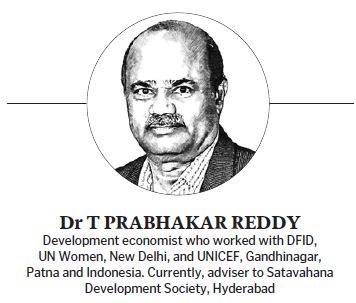
By Dr. T Prabhakar Reddy
We celebrated Earth Day on April 22, 2023, and pledged to protect our Mother Earth from all crises, especially the triple environmental crisis – climate change, air pollution and biodiversity loss. On 22 May, we celebrated Biodiversity Day, which marks the importance of promoting the conservation of biodiversity and its sustainable use and management.
The root of the problem is the use of fossil fuels in the name of industrialization, causing atmospheric pollution and contributing to climate change, which is wreaking havoc on people’s lives. Also, in the name of development, we are still resorting to deforestation, unable to maintain flora, fauna, greenery and a sustainable environment, which ultimately leads to loss of biodiversity.
personal responsibility
Furthermore, the El Niño effect is evident in terms of dry and deficient monsoons (drought conditions) in summer and mild weather in the Indian subcontinent in winter, ultimately putting farming communities in a state of crisis. According to a report, due to the bad southwest monsoon, it will once again adversely affect kharif crop yields in farming communities across India by mid-2023, as happened in 2009, 2014, 2015 and 2018, It will be followed by a three-year-long LA-Nina.
The vision of living in harmony with nature by 2050 has resulted in the 2020 Global Biodiversity Framework, which all governments have signed up to take the necessary steps to protect and promote biodiversity in their countries. The framework’s vision emphasizes that “By 2050, biodiversity is valued, conserved, restored and widely used to maintain ecosystem services, maintain a healthy planet and deliver essential benefits for all”.
While this is a good sign, we should permeate this idea down to the village level so that everyone takes it as a personal responsibility to not only protect but also promote biodiversity.
Therefore, all national governments and provincial/state governments need to design Biodiversity Strategies and Action Plans to implement the Global Biodiversity Framework announced in December 2022 in Montreal, Canada, known as the Kunming-Montreal Global Biodiversity Framework”.
Similarly, 10 state governments in India have so far developed their own Biodiversity Strategies and Action Plans (BDSAP). Although the Telangana government’s Haritha Haram has been hailed as the state’s best move to promote green belts, it has lagged behind in preparing the BDSAP.
four goals
The framework has four long-term targets related to the Biodiversity Vision and 23 action-oriented global targets for urgent action, with urgent action planned for the decade leading up to 2030. Goal A states that the integrity, connectivity and resilience of all ecosystems are maintained, enhanced or restored Significantly increase the area of natural ecosystems while halting the human-induced extinction of known threatened species and improving the recovery of native wild species power level.
Goal B emphasizes ensuring the sustainable use and management of biodiversity, while ensuring that nature’s contributions to people, including ecosystem functions and services, are valued, maintained and enhanced.
Objective C discusses monetary and non-monetary benefits from the use of genetic resources, while ensuring that traditional knowledge associated with genetic resources is properly protected and contributes to the conservation and sustainable use of biological diversity.
Finally, Goal D reaffirms that adequate means of implementation, including financial resources, capacity-building, technical and scientific cooperation, and access to and transfer of technology, to fully implement the Framework are assured and available to all, especially developing countries get it fairly.
Action-oriented and output-based goals broadly include reducing threats to biodiversity, meeting people’s needs through sustainable use and benefit-sharing, and ensuring the implementation and mainstreaming of its tools and solutions.
transformational change
It is therefore the responsibility of national governments to prepare the BDSAP in line with the Global Biodiversity Framework and implement it after appropriate biodiversity expenditure reviews, financial needs Diversity loss and environmental pollution issues.
Beyond that, emphasis must be placed on mobilizing resources from central and state governments, the private sector and businesses willing to contribute to promoting biodiversity conservation. In addition, it is also important to find new sources of private financing, such as corporate social responsibility, market-based financing, and new forms of public financing. In addition, the government could adopt the Brazilian model that supports the idea of ecological fiscal transfers, environmental reserve quotas, payments for environmental services, tourism and forest concessions.
At this juncture, however, it is critical to devise a framework that enables access to private financing. Furthermore, it is crucial to strive for change in the policies, programs and activities of each sector in order to contribute to sustainable development in all three dimensions: environmental, social and economic.