Modi’s visit is the clearest signal that India intends to demonstrate the value of prioritizing engagement with the democratic world
Posted Date – 12:30 AM, Thu – 1 Jun 23

Ian Kamish
Papua New Guinea has been in the international spotlight over the past week, hosting a string of high-profile visits by foreign leaders and high-level representatives.
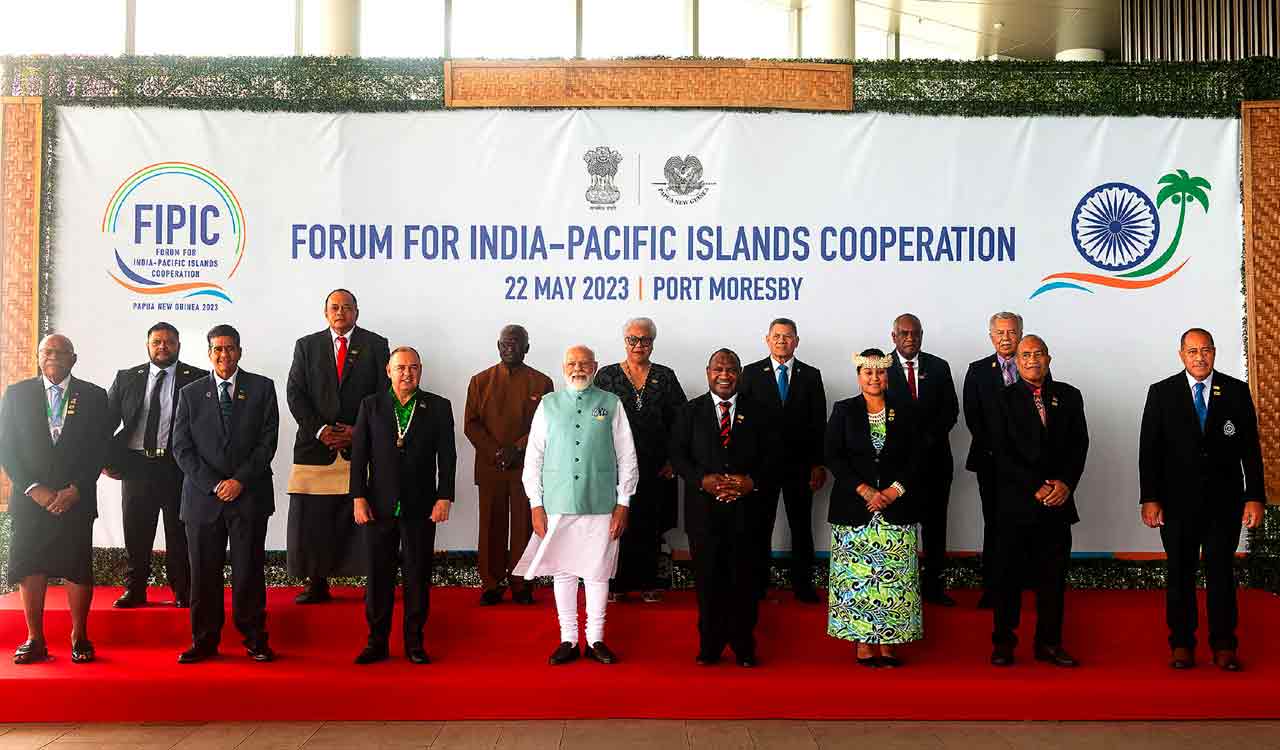
Prime Minister Modi visited Port Moresby for the first time, met with leaders of 14 countries and regions of the Pacific Islands Forum, and was warmly welcomed. Papua New Guinea Prime Minister James Marape bent over to touch Modi’s feet upon his arrival, welcoming him as “the leader of the global south”.
US Secretary of State Anthony Blinken also visited Port Moresby on 21-22 May. Blinken replaces U.S. President Joe Biden, who canceled a highly anticipated stopover in the country and his planned subsequent visit to Australia due to the crisis in Congress over the federal debt ceiling.
Blinken signed two important agreements with Papua New Guinea during his visit: the Defense Cooperation Agreement (DCA) and an agreement on combating illegal transnational maritime activities. While in Port Moresby, Blinken also called the latest in a series of high-level meetings between US and Pacific leaders. New Zealand Prime Minister Chris Shipkins and Australian Senator Pat Conroy were also in attendance.
The two visits are just part of a broader, substantive increase in Papua New Guinea’s external engagement. In April, British Foreign Secretary James Cleverley visited China and signed a defense framework agreement. It is understood that Indonesian President Joko Widodo will visit in June. France also recently signed a status-of-forces agreement with Papua New Guinea. Meanwhile, Australia is negotiating a security treaty that promises to significantly upgrade its longstanding defense cooperation agreement.
important change
The activity all reflects the growing importance of Pacific island nations in the strategic calculations of democracies amid growing Chinese influence and heightened U.S.-China tensions in the region. This is especially true for PNGs. It is by far the largest country in the region, located just a few kilometers from Australia and close to the meeting point of Asia and the Pacific Ocean.
Amid all the color and movement in Port Moresby last week, at least two important changes could be detected in the dynamics of the region.
Modi’s visit provides the clearest signal yet that India intends to join longstanding regional partners in demonstrating to the Pacific the value of prioritizing engagement with the democratic world. With its inspiring development narrative, great power status and cultural ties to the region, India can play an important role if it continues to engage substantively with the region on climate change, security and sustainable development.
defense arrangements
The latest defense arrangement between Papua New Guinea and the United States, combined with the now established model of high-level U.S.-Pacific political dialogue, the recent increase in U.S. support for regional America’s renewed commitment to the Pacific has finally begun.
Biden’s planned visit – which will be the first ever to the Pacific island nation – will symbolically seal that information. Its cancellation is certainly a setback, but its impact should not be overstated given the reality of the US commitment.
The text of the DCA will not be officially published until it is formally incorporated into U.S. law. However, the signatory said it updated the old status-of-forces agreement aimed at strengthening the capabilities of the Papua New Guinea Defense Force, including humanitarian aid and disaster relief capabilities, and would allow for increased joint military training. A draft leaked to Papua New Guinea media ahead of Blinken’s visit suggested that the US may have significant access to Papua New Guinea facilities.
maritime arrangements
The maritime arrangement will enable the US Coast Guard to support surveillance in Papua New Guinea’s exclusive economic zone and help combat illicit transnational activity through joint maritime operations.
Students at several universities in Papua New Guinea have protested what they see as a lack of transparency in the defense deal. They expressed concern that it would place the country more firmly under U.S. control, compromising the country’s independence. Some opposition politicians have spoken of the risk of angering China, with potentially detrimental implications for Papua New Guinea’s economic security.
But Marape and his government stood their ground. Marape argued that the deal had “nothing to do with China” and that Papua New Guinea’s sovereignty remained intact. He also pointed to his government’s “healthy” relationship with Beijing and China’s status as Papua New Guinea’s key trading partner. He strongly denied allegations that the arrangements for visits by US military personnel violated Papua New Guinea law.
Nonetheless, Papua New Guinea will stick to its “friend to all, enemy to no one” foreign policy approach. It will continue to leverage its growing relationships to boost its economy. In recent years, Papua New Guinea’s leaders, like others in the Pacific, have expressed impatience with strategic competition among external partners and warned of signs of increased militarization in the region. India’s refusal to firmly align itself with one side or the other in geostrategic competition will be held up as a role model by many in the region.
China factor
Although China’s investment and development support for Papua New Guinea is still very limited in practice compared with Australia, it is particularly important as a significant trading partner. Chinese state-owned enterprises are now heavily involved in Papua New Guinea, especially in its construction sector.
It is also clear that Australia’s partners have come to understand that they cannot leave Australia alone to shoulder the responsibility for democratic standards in the Pacific. While Modi’s decision not to invite Australia and New Zealand to the formal part of the Indo-Pacific meeting (they were invited to lunch) has raised eyebrows, it could actually be very useful.
If the goal is for India to play a substantive and active regional role, it may help that the symbolism of the Indo-Pacific meeting is not diminished by “traditional” partners detailing their own familiar cooperative efforts with the region.
If Australia wants other countries to share the burden in the Pacific, that doesn’t mean it always has to be involved. Australian government strategists may see it as a good week for Papua New Guinea.
(theconversation.com)