

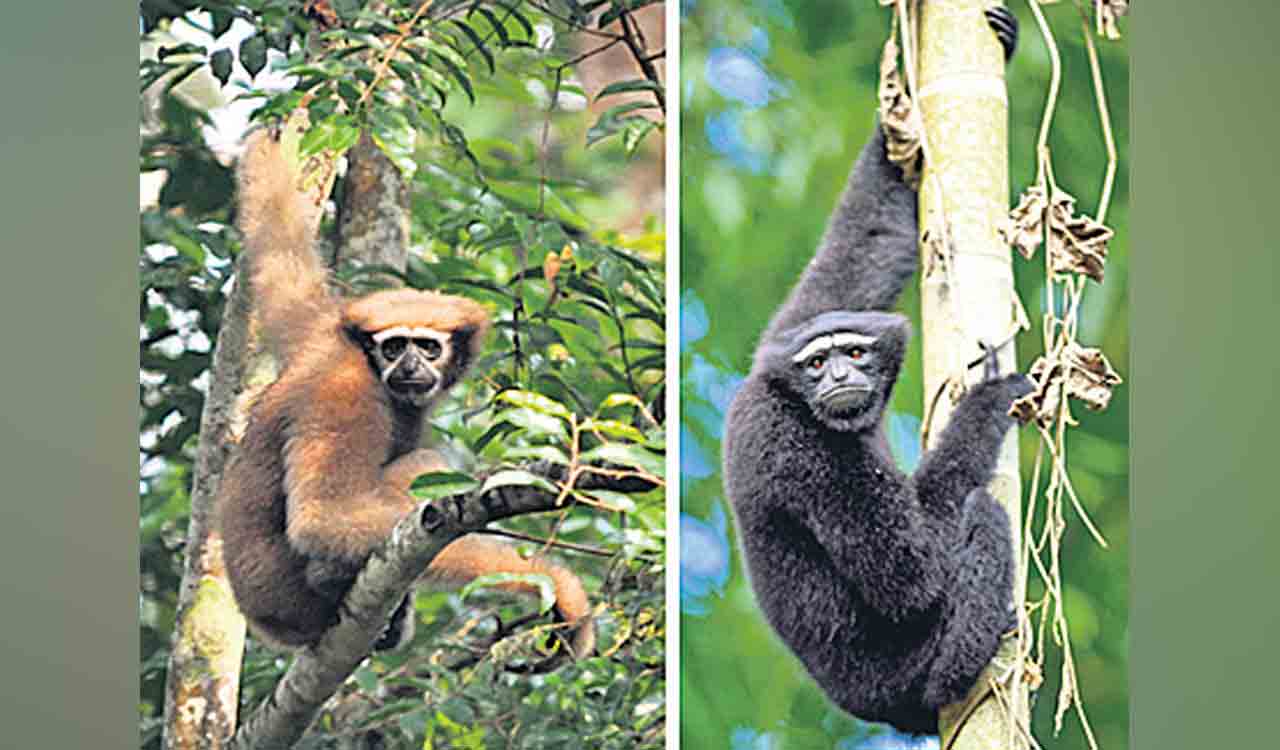
Researchers combined genome sequences from more than 800 individuals from 233 primate species, including 83 samples from 19 major primate species in India
Posted Date – 07:40 AM, Sat – 6/3/23

Hyderabad: Two new surveys by scientists around the world, including researchers from the Center for Cellular and Molecular Biology (CCMB), Hyderabad, provide new information on primate genetic diversity and evolution, important for understanding and conserving the most recent Diversity is very important species to humans, says a press release.
Combining genome sequencing of more than 800 individuals from 233 primate species, including 83 samples from 19 major Indian primate species studied by CCMB scientists, researchers have identified 4.3 million influencing amino acid composition Common missense mutations that can alter function in proteins that lead to many human diseases, CCMB Friday.
The global study was led by the Institute of Evolutionary Biology, Pompeu Fabra University, Illumina and Baylor College of Medicine, with CCMB (Indian collaborators) and published this June in the prestigious journal Science. The release of the unique dataset includes the most complete catalog of primate genome information ever produced, covering nearly half of all living primate species on Earth.
It contains information on primates from Asia, America, Africa and Madagascar. The catalog has enabled researchers to compare genomes, improve understanding of primate evolutionary history, and provide important insights into the nature of our species.
Govindhaswamy Umapathy, Senior Principal Scientist at CCMB, whose team including Shivakumara Manu and Mihir Trivedi contributed to the research from India, said: “Primates have enormous genetic diversity across different geographic regions and taxonomic There are differences. Studying this diversity is critical for the study of human evolution, human disease and its future conservation.”
Furthermore, he added, the study also found that the western white crane gibbon, the only great ape in India, and lion-tailed macaques from northeastern India and the Western Ghats, respectively, had lower levels among global primates investigated in this study. genetic diversity.
He said these primates need to be prioritized in conservation efforts in India. “These studies provide clues about which species are most in need of conservation efforts and help identify the most effective strategies to protect them,” said CSIR-CCMB Director Vinay Kumar Nandicoori.
