

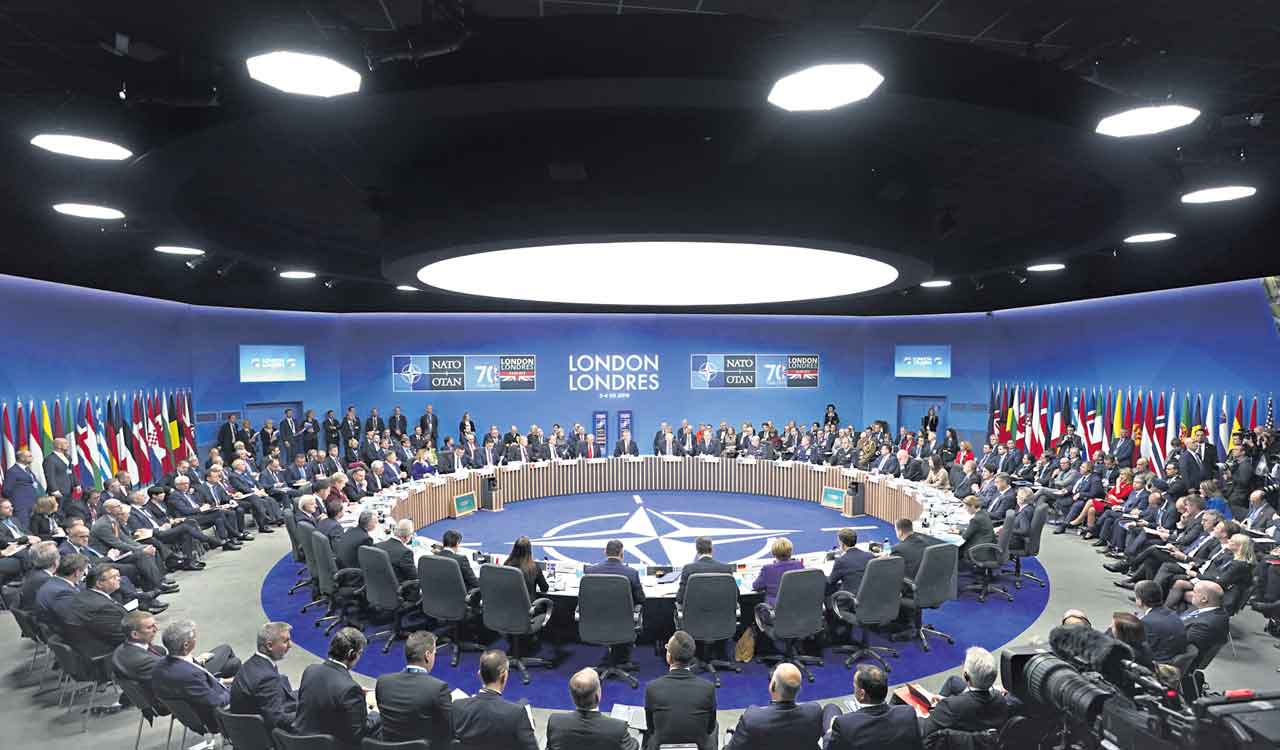
NATO’s growing presence in the Pacific evokes a painful history of colonialism that shaped modern Asia
Posted Date – 12:45 AM, Mon – 6/5/23

Sean Narin
Hyderabad: NATO’s incursion into the Indo-Pacific region is a move to escalate conflict and tension in the region. That’s because NATO cannot be separated from the history of European colonialism and imperialism that shaped modern Asia—and plays a major role in Chinese nationalism today.
In 2022, NATO declared China a “challenge” to the alliance’s “interests, security and values.” More recently, NATO has argued that China’s possible aid in Russia’s war against Ukraine makes China a military threat to Europe.
NATO is opening a liaison office in Japan and is working with Japan, Australia, New Zealand and South Korea. This could be the first step towards a deeper European engagement in the Asian security architecture. Japan sees the war in Ukraine as destabilizing the world and has invited NATO into the Indo-Pacific region to deter China. However, NATO is generally distrusted in the non-Western world.
American puppet?
Since the end of the Cold War, NATO has been an extension of American power. The 1999 NATO bombing of Kosovo and Serbia violated the UN Charter. NATO’s intervention in Afghanistan was authorized by the United Nations, but it facilitated the illegal and destructive U.S. invasion of Iraq by freeing up U.S. military resources.
The UN Security Council also gave the green light for NATO intervention in Libya, but NATO countries violated the terms of the resolution by pursuing their own political and economic goals in the North African country. The result was the devastation of Libya and unrest spreading across North Africa. No country in Africa would call NATO a “defense alliance”.
Few countries supported Russia’s invasion of Ukraine. However, the non-Western world—including much of Southeast Asia—generally accepts Russia’s narrative that it invaded Ukraine to protect itself from NATO expansion. For much of the world, the reality of Western militarism makes Russia’s argument entirely plausible.
regional prosperity
Most Southeast Asian countries have put aside historical grievances with the West. Their commitment to an international system has – somewhat unexpectedly – served them well.
Countries in the region are concerned about China’s rise and its intimidation. However, China is the number one trading partner of most Asian countries. Regional prosperity depends on China’s success.
Asians are wary of Western provocations on issues such as Taiwan. Asians want the US presence to balance China’s power, but that doesn’t mean they want European military alliances operating in their region. In particular, members of the Association of Southeast Asian Nations (ASEAN) want to manage regional security without outside interference.
Southeast Asians’ perceptions of a predatory international system are based on their experiences with European colonialism. Their concern with protecting national sovereignty is directly related to this history. They have expressed a preference for building economic and diplomatic ties to manage regional conflicts.
China also thrives under the existing system and has a stake in its continuation. But it is considered a threat because it will not bow to Western powers, especially the United States. As such, it is surrounded by more than 300 US military bases and is subject to severe economic and technical sanctions from the US.
century of humiliation
From 1839 to 1949, the so-called “century of humiliation” stoked nationalist sentiment in China, when European powers, the United States, and Japan joined in occupying Chinese territory, imposing unequal treaties, and brutalizing the Chinese people.
NATO, a European military alliance, is building a strong working relationship with Japan. This directly raises concerns in China that the same powers that have humiliated it in the past are preparing for a second attempt.
Asian countries that see Russia’s explanation for the war in Ukraine as plausible will clearly worry that NATO’s entry into the region is repeating the same hostilities, cornering its opponents.
For centuries, world politics has been defined by Western colonialism and violence. That era never really ended. After World War II, Europe passed the torch of global Western imperialism to the United States. Since the end of the Cold War, the United States – often with the assistance of NATO countries – has regularly engaged in illegal and violent activities around the world, most notably the invasion of Iraq.
It is therefore not surprising that NATO’s claim that it is only a “defensive alliance” is viewed with suspicion in the non-Western world. Surprisingly, Western powers seem unable to understand why their insistence on representing a “rules-based international order” has failed to resonate with much of the globe.
NATO’s growing presence in the Pacific evokes a painful history that the Western world has never confronted or fully acknowledged. NATO ignores how its recent actions have affected its image in the larger world, and how they have strengthened the trust of countries that see NATO as a threat.
Its presence in the Indo-Pacific region could easily be interpreted as a new attempt to reassert Western military domination of the region. www.theconversation.com
