

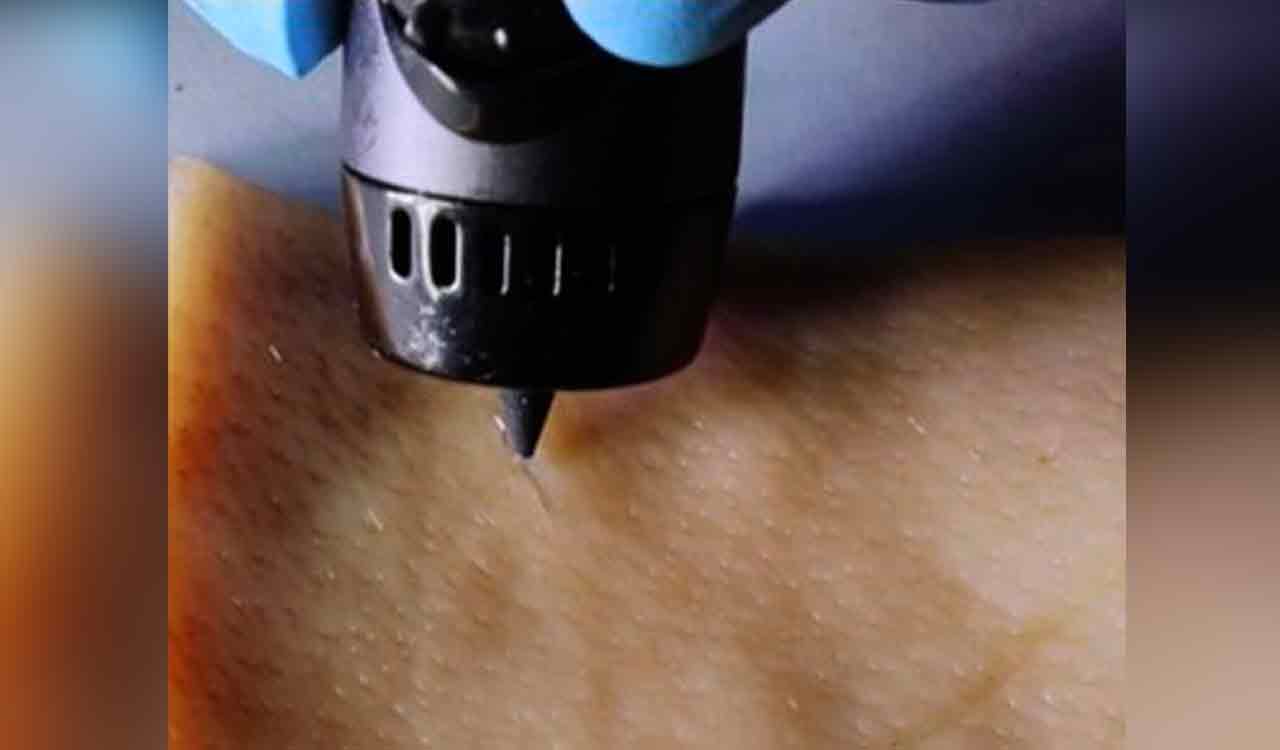
Researchers have developed a wound-healing ink that actively promotes body healing by exposing wounds to immune system vesicles
Posted Date – 11:45 PM, Mon – 6/12/23

Photo: IANS
Beijing: Researchers have developed a wound-healing ink that actively promotes the body’s healing by exposing wounds to immune system vesicles.
According to research published in the journal ACS Applied Materials & Interfaces, the ink can be applied with a 3D printing pen to create any shape of incision, and in mice, the technique almost completely healed the wound in as little as 12 days.
When skin is cut or torn, the body’s natural “constructors” step in to repair it — removing any bacterial invaders and allowing ruptured blood vessels to regenerate and eventually form a scar. Many of the techniques used to heal wounds do little more than help the body function better.
Bandages or stitches are used to prevent further bleeding, while antibiotics are used to prevent complications from infection.
But by adding a builder to a wound-healing treatment or bandage, it can actually speed up the natural healing process. Specifically, leukocytes, or extracellular vesicles (EVs) secreted from them, play an important role in promoting blood vessel formation and reducing inflammation during healing.
Dan Li and other researchers at Nanjing University in China hope to incorporate these EVs into a hydrogel-based wound-healing ink that can be painted into wounds of any shape.
The team developed a system called PAINT, or “Portable Bioactive Ink for Tissue Healing,” that uses EVs secreted by macrophages combined with sodium alginate. The ingredients are combined in a 3D-printed pen, where they mix at the tip and form a strong gel on the injured site within three minutes.
EVs promote blood vessel formation and reduce inflammatory markers in human epithelial cells, shifting them to the “proliferative” or growth phase of healing. PAINT was also tested in injured mice and it boosted the formation of collagen fibers.
PAINT-treated mice healed almost completely from the large wound after 12 days, compared with untreated mice, which hadn’t progressed nearly as far in the healing process at this time point.
The researchers say the work could help heal a variety of wounds quickly and easily, without the need for complicated procedures.
