

ICRISAT and NFSM are launching a project to revolutionize pigeonpea production across the country
Release date – Friday 23rd – 08:10pm – June 23rd

sangaredi: The International Crops Research Institute for the Semi-Arid Tropics (ICRISAT) and the National Food Security Mission (NFSM) are launching a project aimed at revolutionizing pigeon pea production across the country.
Although India is one of the largest pigeon pea producers in the world, domestic consumption in India exceeds its production levels, leading to the need for imports.
The project, which was launched on May 29 and is expected to start in the upcoming planting season, will be in collaboration with the Indian Institute of Pulse Research (IIPR)-Kanpur and 12 national agricultural universities.
The project will be implemented in Telangana, Andhra Pradesh, Karnataka, Maharashtra, Madhya Pradesh, Jharkhand, Chhattisgarh, Rajasthan, Bihar Testing and promoting high-yielding, early-maturing varieties and hybrids in the states of India, Uttar Pradesh, Punjab and Haryana.
ICRISAT Director General Dr Jacqueline Hughes thanked the Government of India, partner institutions and universities for their commitment to increasing pigeon pea production.
ICRISAT officials said that in order to expand pigeonpea cultivation, they need to take advantage of the vast fallow paddy fields across the country as studies conducted by ICRISAT have shown that early-maturing pigeonpea yields good results in paddy fallow.
Dr Aditya Pratap, Coordinator of the All-India Karif Coordinated Research Program on Pulses, said key areas of focus are combating pod borer infestation, stable hybrid production, integration of genomics and reintroduction of marker-assisted selection in breeding.
By providing farmers with a package of agronomic practices as well as new varieties and hybrids, pigeon pea production is expected to increase by 30 percent, Dr Pratap said.
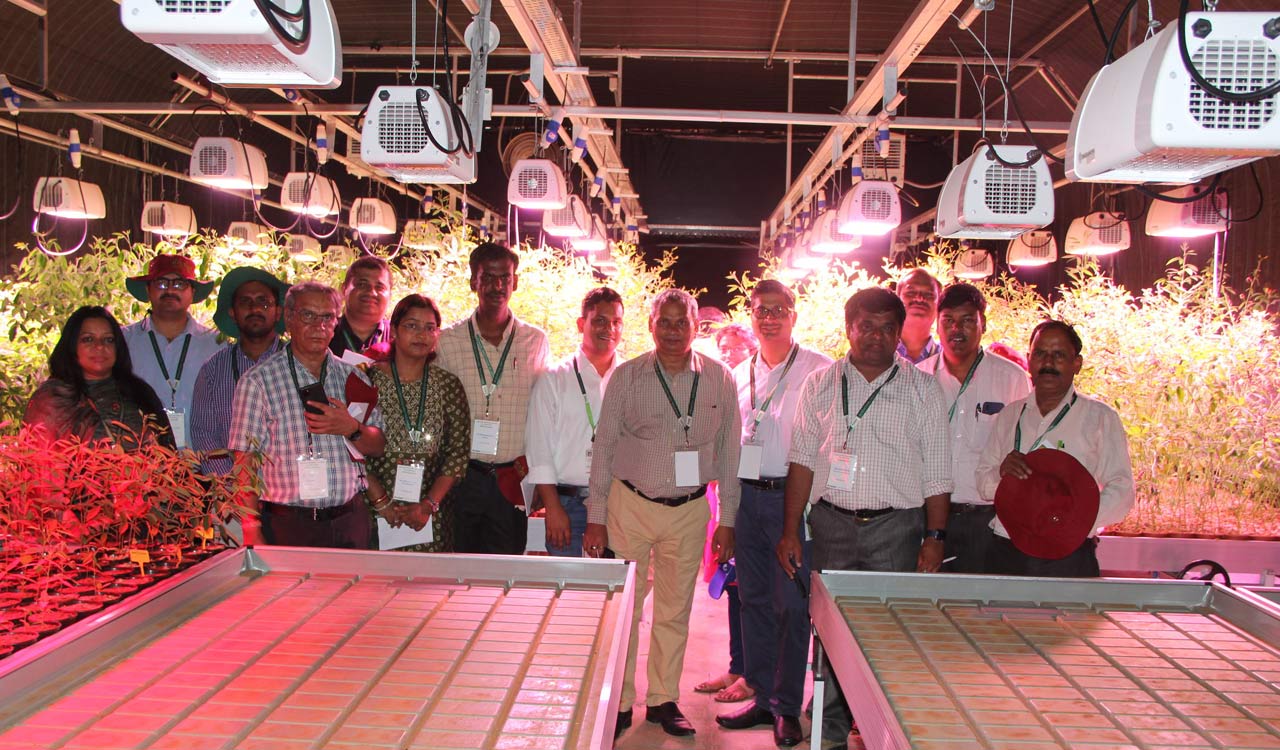
Discussions on the project work plan were moderated by Dr. Prakash Gangashetty, Pigeon Breeding Scientist at ICRISAT, and the project kick-off offered participants the opportunity to visit ICRISAT’s research areas and rapid breeding facilities.
