Current efforts focus on recycling or disposing of plastics, but incentives are needed to replace them in an environmentally friendly manner
Post Date – 12:45 AM, Thursday – July 23rd 13th

Author: AS Kumar
Plastic pollution can have devastating effects on our ecosystems and wildlife, our health and wellbeing, and the global economy. Globally, some 430 million tonnes of plastic are produced each year, two-thirds of which are short-lived products that quickly become waste. However, current commitments by governments and industry are to reduce the amount of plastic entering the oceans each year by just 8% by 2040.
The social and economic cost of plastic pollution is $600 billion a year. Plastic production has exploded over the past 50 years and is expected to double in the next 20 years. Plastic pollution will triple by 2060 if no action is taken. It is therefore important to transition to a healthier and more economically viable circular economy as early as possible.
$4.5 trillion in savings
Global trade in plastics has expanded to more than $1 trillion annually. Widespread plastic waste is reported to cost ecosystems and human health between $300 billion and $600 billion a year. Transitioning to a circular economy could save more than $4.5 trillion by 2040. It would also reduce greenhouse gas emissions by 25%, create 700,000 additional jobs, mostly in developing countries, and improve the livelihoods of millions of workers in the informal sector, mostly in developing countries.
It is estimated that 19-23 million tons of plastic are leaked into aquatic ecosystems every year. Plastic pollution has devastating effects on a wide range of organisms in oceans, rivers and on land. Plastic production is one of the most energy-intensive manufacturing processes in the world.
According to a 2019 assessment, plastics generate 1.8 billion tons of greenhouse gases, accounting for 3.4% of the global total, with 90% of emissions coming from plastic production and conversion of fossil fuels. Most plastics are derived from fossil fuels, and the plastics industry accounts for 6 percent of global oil consumption. Greenhouse gas emissions associated with the production, use and disposal of traditional fossil fuel plastics are projected to increase to 19% of global greenhouse gas emissions by 2040. This is especially a problem with single-use plastics, which make up 98 percent of single-use plastics. The plastic products used are produced from fossil fuels or “virgin” raw materials.
incineration of plastic waste
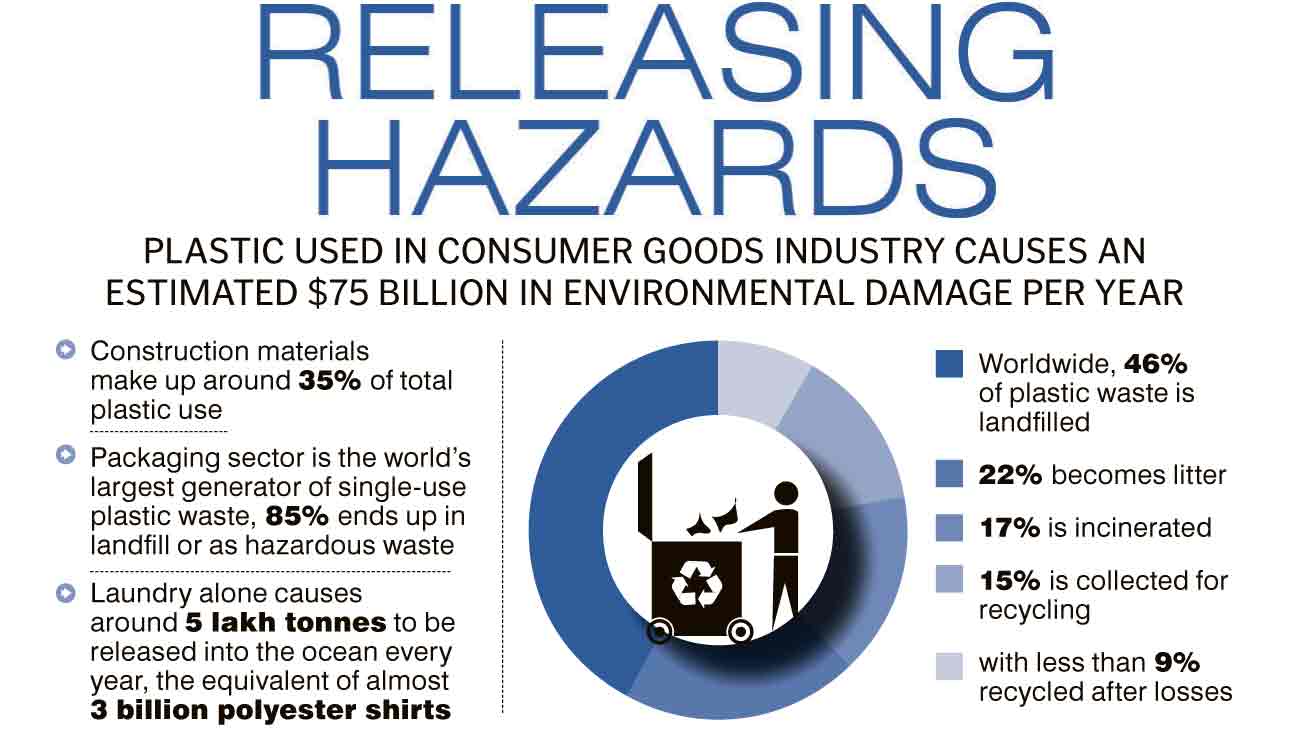
Furthermore, due to inefficient waste management infrastructure, 40% of the world’s waste is incinerated, 12% of which is plastic. Burning plastic waste can have multiple health effects, including increasing the risk of heart disease and exacerbating respiratory diseases. The packaging industry is the world’s largest generator of single-use plastic waste. About 36% of all plastic produced is used in packaging.
Plastics are everywhere from cars and electronics to medical devices and children’s toys, and they include chemical additives that can leach out and affect the health of plants and animals. Plastics used in the consumer goods industry cause an estimated $75 billion in environmental damage each year. Common building materials such as flooring and pipes account for about 35 percent of total plastic usage.
The industry generates around 100 billion tons of waste every year, about 35 percent of which is sent to landfill. Plastics are widely used in agriculture and agricultural systems. About 12.5 million tons of plastic products are used in plant and animal production and 37.3 million tons in food packaging every year. An estimated 20% of the plastic in the ocean comes from fishing, shipping and recreation. Over 45 million kilograms of plastic enter the ocean from industrial fishing gear alone.
The world produces and consumes more textiles than ever before. About 60% of clothing materials are plastic. When laundry is washed, these pieces shed tiny microfibers—a type of microplastic. Laundry alone dumps about half a million tons of waste into the ocean every year, the equivalent of nearly 3 billion polyester shirts. Tourism is a big contributor to the global plastic pollution crisis. Eight in 10 tourists head to coastal areas, adding eight million tonnes of plastic to the ocean each year. Cars are made up of about 30% plastic parts. But most of it ends up in landfill because it’s made from low-cost virgin polymers.
systemic change
The circular nature of plastics requires the simultaneous acceleration of three market shifts: reuse, recycling, and the repurposing and diversification of plastics into more sustainable alternatives. Current efforts have largely focused on recycling or otherwise disposing of plastics, but significant efforts are needed to eliminate harmful plastics. Innovation and incentives are needed to replace them with environmentally friendly options. Much of that need comes from the government. Despite increased legislation to ban plastic bags, systemic changes are needed in the way we produce, consume and store plastic in our economy.
Several initiatives have gained momentum over the past few years, but more progress is needed, including reducing plastic production and consumption; changes across the value chain; efficient, transparent and flexible legislation, and more effective monitoring systems to identify the source of plastic , scale and fate while moving to a circular approach.
There is no single solution, but multiple solutions must be taken simultaneously and at once. Consumer pressure is key, but companies, investors, lawmakers and governments need to take real action. The shift to circular approaches and alternatives to plastic is critical. Tackling plastic pollution requires systemic change, with action across the life cycle to address its root causes, not its symptoms. Since plastic pollution is a global problem, solving it requires a global approach. Every stakeholder must work to curb the plastic threat.
Opinions are purely personal