Upper respiratory infections, especially the flu, are often associated with cooler winter temperatures. As the temperature drops, locally active circulating viruses will find suitable conditions to multiply and infect humans. Over the past few years, however, epidemiologists and public health experts have realized that this annual event has become a bi-annual event. […]
Post Date – 06:00 AM, Thursday – July 20

Upper respiratory infections, especially the flu, are often associated with cooler winter temperatures. As the temperature drops, locally active circulating viruses will find suitable conditions to multiply and infect humans. Over the past few years, however, this annual event has turned into a bi-annual event, as epidemiologists and public health experts have realized that flu cases now have two peaks a year.
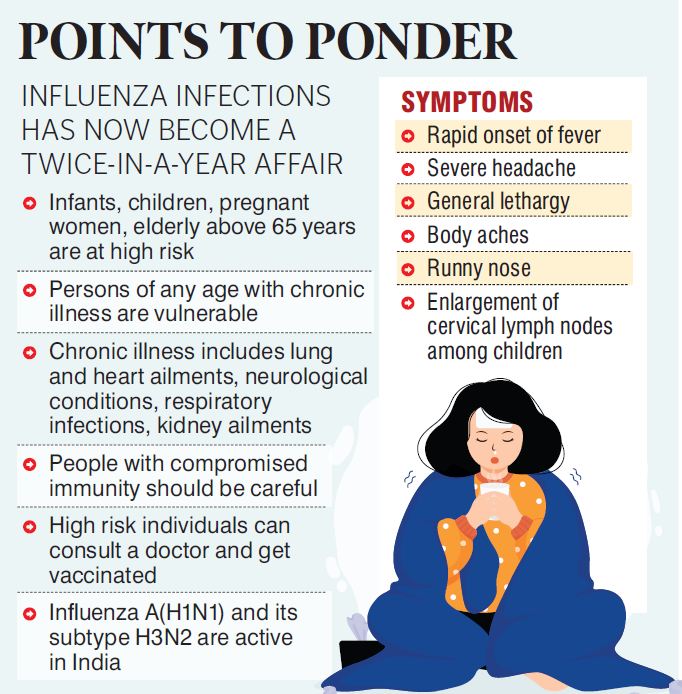
Today, flu cases increase during monsoon (July to September) and winter (December to February). In regions with active monsoons, the possibility of a surge in flu cases increases, which is an important reason why vulnerable groups such as the elderly, children and pregnant women must be vigilant and take preventive measures.
As the monsoon becomes active, public health experts say there is a risk of an increase in flu cases in the coming months, largely due to the H3N2 subtype detected earlier this year in Maharashtra, Telangana, Kerala and many other Indian states.
H1N1 (swine flu) and its subtype H3N2 flu have started to rise in parts of Maharashtra especially Mumbai over the past week due to widespread rainfall. Patients who become ill from H3N2 infection recover after 8 to 15 days, but they remain lethargic for a period of time.
H3N2 symptoms are typical of any type of influenza infection. The Indian Council of Medical Research (ICMR) highlights the symptoms of influenza in its guidelines, saying that “influenza is characterized by sudden, rapid onset of symptoms. Influenza symptoms may include fever, chills, body aches, sore throat, dry cough, runny nose, and headache. Gastrointestinal symptoms and muscle inflammation occur more often in young children, and infants may develop a sepsis-like syndrome.”
Hyderabad tests for flu twice a year
During the peak of Influenza A (H1N1) (formerly swine flu) from 2016 to 2017, district-level monitoring of positive infections, ground observation, and secondary data analysis of positive patients have clearly shown that influenza has become a bi-annual event.
A secondary data analysis of positive swine flu cases in Hyderabad clearly stated that “a bimodal peak in the increase in the number of cases was observed starting in January, with a second peak to occur between July and August”. A H1N1 influenza data analysis study conducted by epidemiologists in Hyderabad has clearly identified the timeline for possible future outbreaks of influenza infection in Telangana.
A similar flu study conducted by epidemiologists and researchers at the Sri Venkateswara Institute of Medical Sciences (SVIMS) in Andhra Pradesh after the bifurcation in 2017 and 2018 also showed a similar trend, with swine flu outbreaks happening twice a year in Andhra Pradesh.
Public health experts also calculated the case fatality rate (CFR) for influenza, which was higher among women between the ages of 15 and 44 and among women over 60. Among men, the case fatality rate was higher in the 45 to 59 age group.