

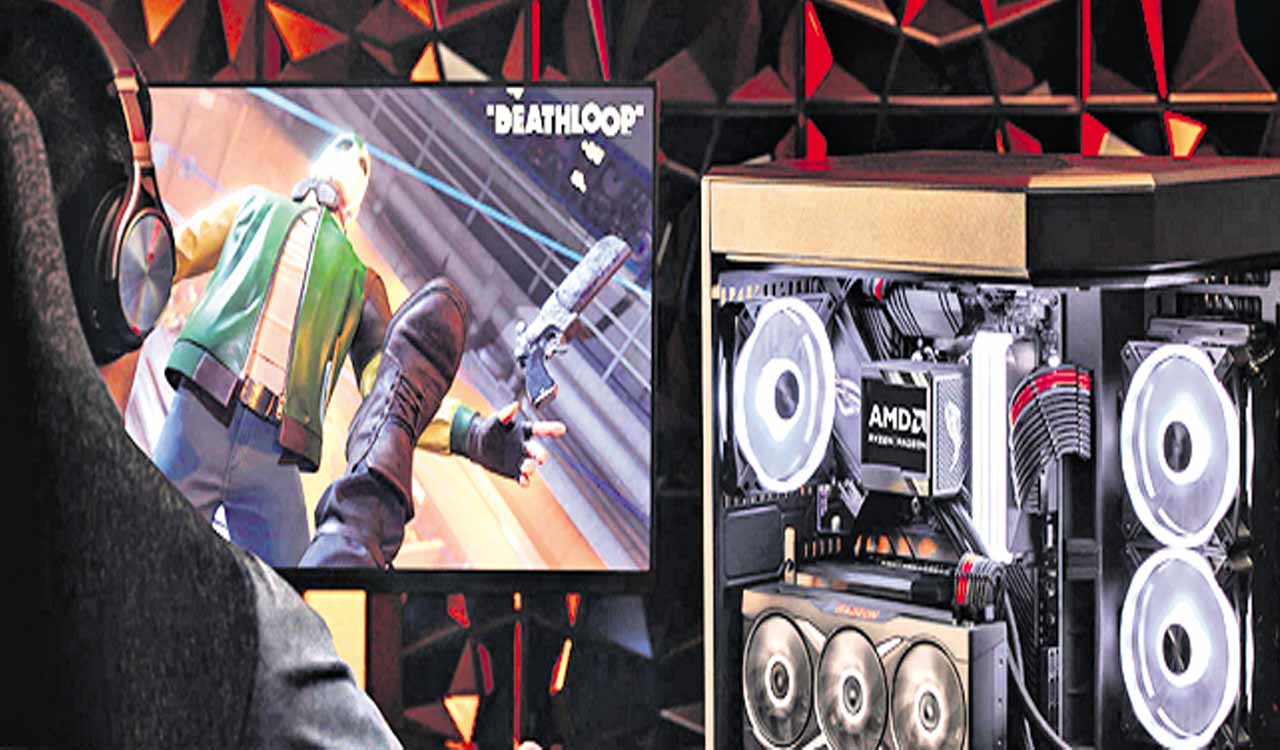
Building a gaming PC or gaming rig is often a tedious task that requires constant tinkering and careful management as gamers strive to squeeze out every last bit of performance possible.
Post Date – 12:45 AM, Mon – Nov 28 22
by Aditya Deshbandhu
Building a gaming PC or gaming rig is often a tedious task that requires constant tinkering and careful management as gamers strive to squeeze out every last bit of performance possible.
Gamers who build such setups are often thought of as a bunch of purists who prefer unfettered and unoptimized gaming, and terms like “overclocking” and “liquid cooling” are often used.
Over the past 15 years, I’ve had the opportunity to be a part of this select team as I carefully build my setups taking into consideration things like cooling and power consumption in an attempt to build efficient machines to pack when needed. This task has become increasingly daunting as components become more expensive and demand for more power grows. This combination is so worrisome that I recently offered to give up on building a gaming CPU.
Just when I’m about to give up — enter AMD’s approach to gaming desktop dominance.
In early November, the company announced its next-generation RDNA3 graphics cards, and with most industry watchers focused on their pricing strategy, promises of 4K gaming, or support for the upcoming DisplayPort 2.1, they announced their “Project Advantage” for PCs.
One program they claim can provide benefits similar to the program of the same name in the laptop world. I understand this development as a potentially transformative change that could change the way custom gaming rigs are built and provide a method for madness (if it works the way AMD envisions it).
Let me elaborate – historically, building gaming rigs has been all about power, thermal management, and wise capital spending. How much power can one buy, how much cooling do these parts need, can one afford all these parts? I often see friends buy less powerful parts because they can’t afford liquid cooling, or they end up overheating their setups and damaging them.
AMD hopes to eliminate trial and error in this process by controlling the cooling of the part and the entry. In other words you’re not building from scratch you’re picking a desktop from a pre-configured list like you would for a laptop but in this new system you’re getting tested and optimized hardware and the AMD Hope to punch above its weight thanks to the synergy between its components. AMD’s pursuit of a whole that is greater than the sum of its parts has not been possible before in PC gaming.
AMD’s Advantage initiative promises standardization, which it hopes will provide an intangible boost by using architectures and parts it can control. I find this to be a logical next step for AMD, as it has been making strides towards efficient performance and surpassing peak clock speed numbers.
Whether it will work, though, is the bigger question that only time will answer, as the intangibles need to be worth the extra premium.
It’s a tricky moment, though, as Valve’s experiments with the steam engine are evidence of that. AMD may seem enthusiastic, but who are we gamers to say no to when an assembler offers us better value?
