The image of toughness cultivated through action has been shattered by the timidity of the Election Commission.
Posted on – 12:42 AM, Fri – 23 December 22

by Vineet Narain
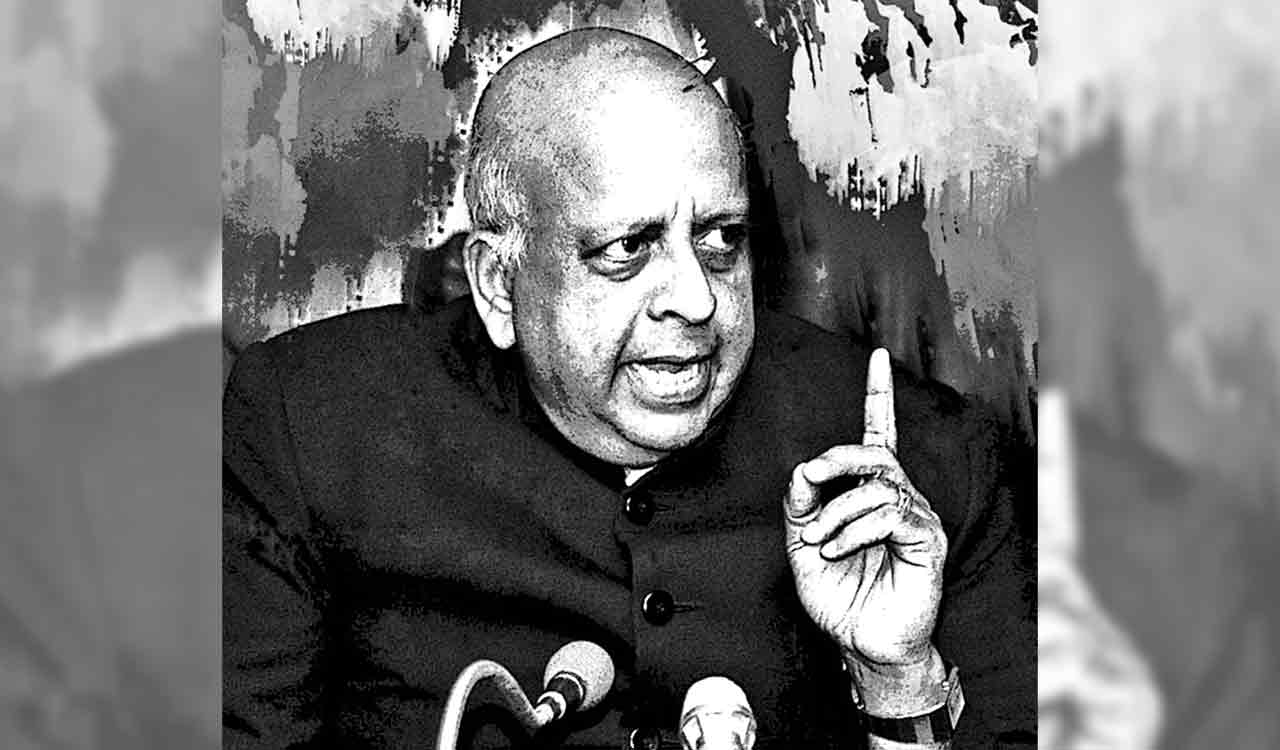
HYDERABAD: The operation of India’s Election Commission over the past eight years has drawn harsh criticism from opposition parties as well as citizens who believe in a healthy democracy. By subpoenaing the appointment papers of the recently appointed Election Commissioner Arun Goyal, the Supreme Court has created an uncomfortable situation for the coalition government. However, the gesture by the constitutional judge sent a positive signal across the country. In commenting on the controversial operation of the ECI, the Supreme Court reminded them of TN Seshan who was the CEC from 1990-96. “The country needs TN Seshan,” the court noted.
In subpoenaing Goyal’s appointment papers, the government’s position appears to be that the Supreme Court cannot interfere with the functioning of the executive branch. This is not the correct location. Let me remind readers that even Seshan was reprimanded by SC for some of his offensive public speeches towards politicians during his tenure as CEC. Despite his bruised ego, his lawyers convinced him that in a democracy, all institutions operate on the principle of checks and balances. If any one pillar of democracy becomes irresponsible, authoritarian, or out of line, the democratic edifice is weakened.
This incident should serve as a reminder that the executive branch is not immune to scrutiny by other agencies, be it the legislature, the judiciary or the media. The SC acted on certain facts before it and it is now the government’s duty to cooperate.
EC selection
The Supreme Court constitutional justices gave their opinion while hearing a series of PILs demanding transparency in the appointment of electoral commissioners. These petitions, pending since 2018, pray that EC appointments should be made in accordance with the College system. During the argument, Justice KM Joseph commented, “Now that the CJI is involved in the appointment of the CBI Director, the threat to democracy and the judgment of the court, has been accepted by the executive branch.” He referred to the 1997 “Vineet Narain judgment”.
It is beneficial for a committee consisting of CJI, PM and LoP to select the electors. This appeal is justified because the Election Commission is not a subsidiary body of the Central Committee, but a constitutional body that deals with all political parties. If these candidates are only appointed by the central government, obviously the government is more willing to appoint these people who are inclined to the ruling party.
Although Seshan was also appointed according to the current system, he took office when the minority government led by Chandrashekar ruled the country. Sesan is thus free to take bold steps that might not be possible for a stronger government appointee.
It is well known that before Seshan ordinary people knew very little about the powers entrusted to the Election Commission of India. Sesan seized the moment, and his radical measures took the committee’s profile to astonishing heights.
Booth-scraping and election violence became very common in the 90s. Suddenly, the country witnessed the political rise of thugs, criminals and the mafia, creating anxiety in the hearts of the people. It is precisely in order to change this atmosphere and build confidence in the system that Seshan decided to reform the electoral process.
radical reform
Seshan positioned the “Desabhakta Trust” as a “research-cum-action” group. Media moguls, activists, intellectuals, top bureaucrats and industrialists weigh in on the debate on electoral reform. Seshan and I used to travel around the country speaking at public meetings and professional groups to raise awareness about the reforms. These marathon efforts paid off handsomely. The electoral commission has acquired an image of being run by a hardline overseer.
Sesan’s strict guidelines have caused major unrest in the party, putting some pressure on the prime minister. This was reflected in a surprise decision by Prime Minister Narasimha Rao. While the Sesan couple was on vacation in the United States, the Election Commission added two new election commissioners, making the Election Commission consist of three members instead of a single member. Seshan called me from the US and said, “Narasimha Rao lied to me and I’m hurt. How am I going to make a radical decision now? Come to think of it, we’ll be back next week.”
After joining the Jain Hawala movement in July 1993, I was also trying to bring transparency to the national polity, which led us to join forces in 1994. After he returns, I suggest that he change the popular support for his efforts to achieve the election. Reform, building a broad base of supporters at home. I told him, “Let’s create a ‘People’s Electoral Council’ in every town and state.” Public figures in every district not affiliated with any political party would be members of these councils. Their job is to keep tabs on every election in their district and ensure transparency and ethics in public life. Seshan took the idea. Together, we developed detailed guidelines for establishing such committees and distributed thousands of printed leaflets across the country so that people could volunteer to establish people’s elected committees in their districts.
As a result, several such commissions started to appear. I also advised him to quit his job as he felt uncomfortable with his two new colleagues and declare himself Chief Election Commissioner of the People of India. The move would spark a popular movement demanding electoral reform. But Seshan is unwilling. As a result, we had only limited success in the mission.
Nonetheless, his efforts have given the Election Commission a new profile and taken it to new heights, setting the standard for future Election Commissions. Today, that image has faded. The commission’s repeated actions in recent years have raised questions about its independence. That’s why even after 26 years, TN Seshan is still hugely relevant.