

Rythu Bandhu is helping marginalized communities dependent on farms to economically mainstream
Post Date – 12:45 AM, Tuesday – Dec 27 22

By Dr. Vakulabharanam Krishna Mohan Rao
More irrigated land, more agricultural land, record agricultural production, introduction of new crops, increased irrigation infrastructure, record forest cover and Haritha Haram’s benchmark green cover under Chief Minister K Some achievements of TRS government Chandrashekar Rao.
NITI Aayog appreciated the land cleansing approach as part of the Rythu Bandhu program and, apart from praising the Rythu Bandhu program’s dashboard software, suggested others to follow Telangana’s lead in updating land records.
Under the scheme, the Telangana government ensures rural livelihood stability for the farmers’ communities, especially for BC in the state, based on the socio-economic status studies conducted by various agencies on marginalized groups. Notably, out of the Rs 57,901.46 crore disbursed under the scheme, nearly 50% (Rs 27,792.70 crore) went to farmers belonging to BC and SC (Rs 7,527.19 crore) and ST (Rs 5,211.13 crore). The MIT Abdul Latif Jameel Poverty Action Lab (J-PAL) conducted a timeline survey of farmers using Rythu Bandhu and were very satisfied (86.5%).
A total of Rs 15,000 crore has been earmarked for the scheme and every acre of land owner is entitled to Rs 10,000 crore during rabi and kharif season.
collect inspiration
The center’s Pradhana Mantri Kisan Yojana (PMKY) program was inspired by the robust design and implementation of the Rythu Bandu program. But it is an open fact that the PMKY scheme is only applicable for 2 acres, while in Telangana, there is no such restriction, which facilitates the increase of agricultural land.
Shortly after independence, the Indian government under JC Kumarappan (1942) established the Agrarian Reform Commission to examine the land and agricultural crisis. It proposed the abolition of intermediaries, which led to the abolition of the zamindari system and benefited 20 million sharecroppers who became owner farmers. Beneficiaries mainly belong to ST, SC and BC. More land was thus confiscated by the government and distributed to the landless. With the enactment of legislation (early 1950’s) to regulate the rent payable by growers, the fair rent was fixed at 20-25% of the total production.
Another broad category of land reform laws is the Land Cap Act. Simply put, the quota refers to the upper limit that individual farmers and households are not allowed to own land according to the law. By 1961-62, all state governments had passed the Act. But the upper limit varies by state. For uniformity, a new land cap policy was instituted in 1971. National guidelines were issued in 1972, and caps vary from region to region, depending on land type, productivity, and other such factors.
Besides breaking the vicious cycle of rural debt, investment is the surest way to boost agricultural productivity and farmers’ incomes. To ensure that farmers do not fall into the debt trap again, the Telangana government has introduced the Agricultural Investment Support Scheme or Rythu Bandhu.
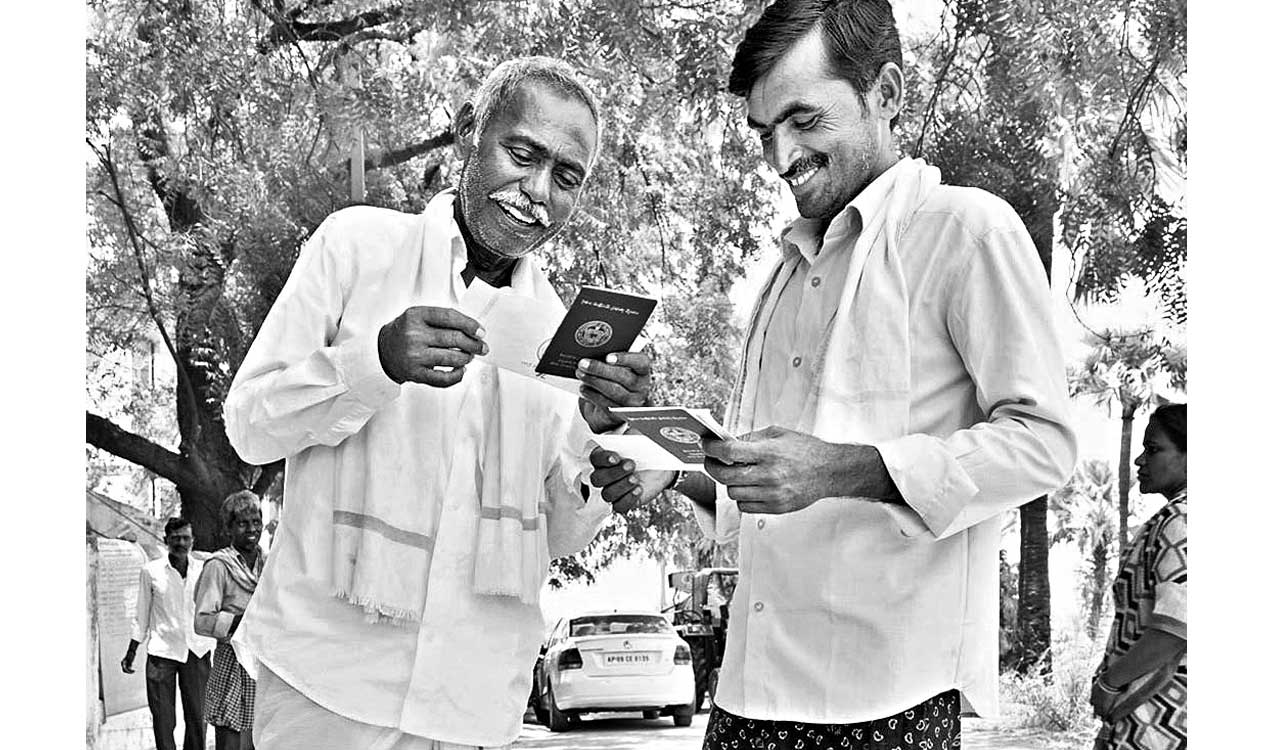
Under the AP Land Cap Act of 1976, a person cannot own more than 51 acres of dry land and 21 acres of wetland. Shareholders were excluded from the scheme to prevent legal disputes arising from tenancy (Hyderabad Tenancy and Agricultural Land Act, 1950). Therefore, the rental column has been removed from the newly issued Pattadar passbook. After cleaning the land records, it was found that the state’s arable land area is 142 million acres and the number of farmers is 7.175 million.
silver lining
According to available data, 97.2% of farmers own less than 10 mu of land. It is also proposed to exclude non-arable land from the scheme. The government has completed a survey of farmers’ currency payment methods. Although there is a demand for direct cash payment, bank checks are preferred. Now, direct cash transfers to farmers’ accounts are operational.
Every state has seized on the silver lining of the Rythu Bandhu scheme to strengthen the rural economy. Annadatha Sukhibhava is a welfare scheme initiated by the government of Andhra Pradesh which provides investment support of Rs 15,000 per annum to small and marginal farmers’ families. This includes a Pradhan Mantri Kisan Samman Nidhi stake of Rs 6,000. The government is supporting nearly 7 million farmers, including sharecroppers. The Farmer Investment Support Scheme, which provides direct cash disbursements into bank accounts linked to Aadhaar, will cover all farmers in the state on a “household basis” without strings attached. This shows the influence of Rythu Bandhu in the country.
Despite historic land reforms in the 1950s, 60s, and 70s, the government was unable to provide farmers with the irrigation infrastructure, financial assistance (to avoid debt traps), and insurance they needed. The government of Telangana has tailored solutions to the problems of farming communities. Under input subsidies, subsidy of Rs 10,000 per acre of agricultural land per annum is quite assured.
Rythu Bandhu and Rythu Bima have reached a population of about 2.5 million or nearly 6.5 million households with an amount of over Rs 50,000 crore. Today, Telangana is not only a million acres of fertile land but also a granary for more than 30 million tonnes of paddy, which exceeds the storage capacity of the Food Corporation of India (FCI). The country is on the verge of five revolutions – Green (Agriculture), Pink (Meat), White (Dairy), Blue (Fish) and Vegetal (Haritha Haaram).
Numerous academic institutions are focusing on the success of Rythu Bandhu and its meticulous approach and implementation at the grassroots level, as well as the economic mainstreaming of marginal communities dependent on agriculture in BC, ST and ST.
The author is the Chairman of the Backward Classes Committee of Telangana State
