

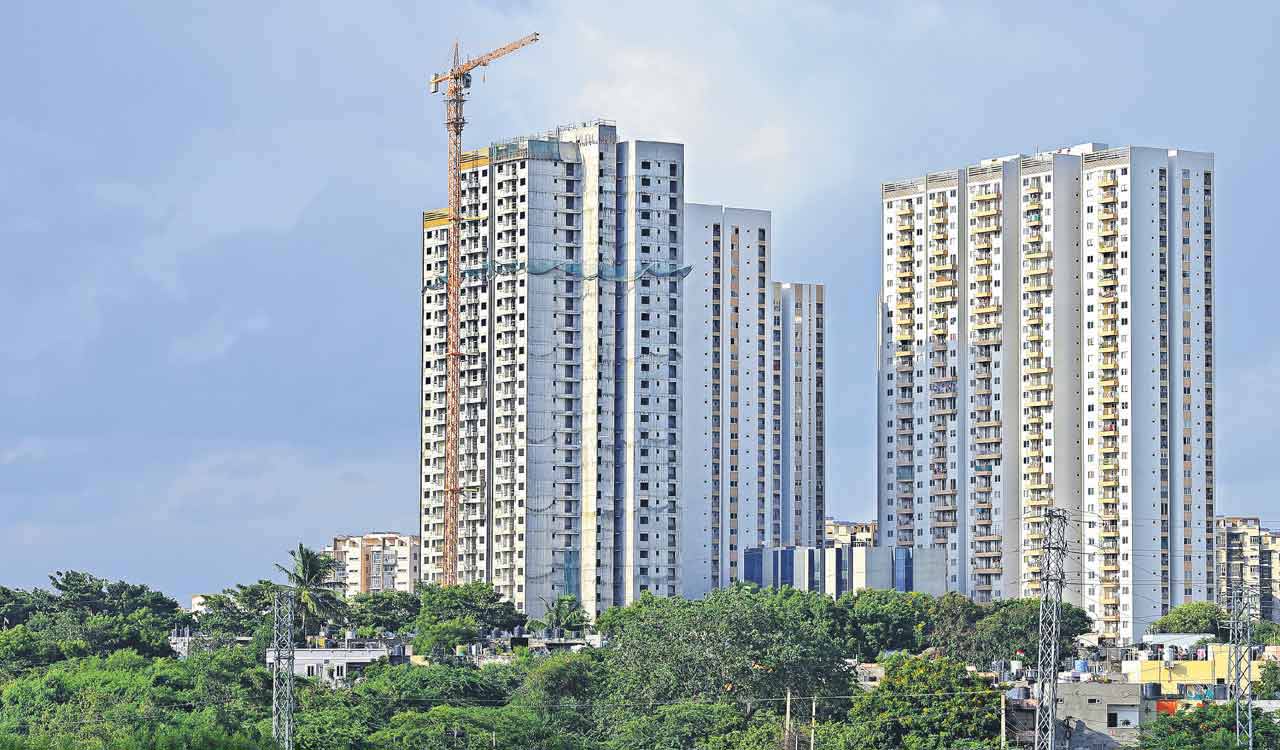
High-rise condominiums in cities help build housing in residential areas with modern amenities
Posted Date – 06:00 AM, Sun – 4/16/23

representative image
Hyderabad: The Confederation of Real Estate Developers’ Associations of India (CREDAI) and others have pushed back against allegations made about the growing number of high-rise apartments in the city, saying such structures boost growth and further stimulate housing demand.
TPCC president Revanth Reddy has accused high-rise apartments of having a detrimental impact on the ecosystem and infrastructure.
At a press conference a few days ago, the TPCC chairman claimed that the approval of building permits violated the regulations. He charged that the state government allowed 2.5 million square feet of building area to be built on 5 acres of land, while the allowed building area was 600,000 to 700,000 square feet.
CREDAI, in association with the National Real Estate Development Council (NAREDCO), Telangana Builders Federation (TBF) and Telangana Developers Association (TDA), dismissed the allegations as false and baseless.
High-rise apartments in cities help to build housing in residential areas and provide modern facilities. In a statement issued on Saturday, they said that when constructing any residential or commercial building, all necessary safety protocols are maintained in accordance with the National Building Code (NBC).
In addition, the TS-Bpass building approval system, a pioneering initiative by TS-Government, further simplifies the process.
P Ramakrishna Rao, president of CREDAI Hyderabad, said Hyderabad was the first city in the country to adopt the unlimited FSI code (see GO 86) in 2006, with subsequent amendments allowing the construction of tall buildings.
He noted that building codes average 200,000 to 250,000 square feet and 300,000 to 350,000 square feet per acre and do not allow permits for more.
CREDAI secretary V Rajashekar Reddy said there has been an increase in demand for luxury apartments in Hyderabad as reflected in the February building registrations. The contribution of apartments above Rs 1 crore increased from 8% to 10% year-on-year, while the contribution of the affordable segment remained at 18%.
All high-rise condominiums must follow NBC 2016 guidelines and receive a NOC after a full fire safety assessment. Fire protection systems in all high-rise buildings will also be checked by third-party auditors, he said.
“Concerns about fire safety hazards in high-rise apartments are overblown. Authorities and builders are taking appropriate steps to make buildings safe for residents,” said Rajashekhar Reddy.
