

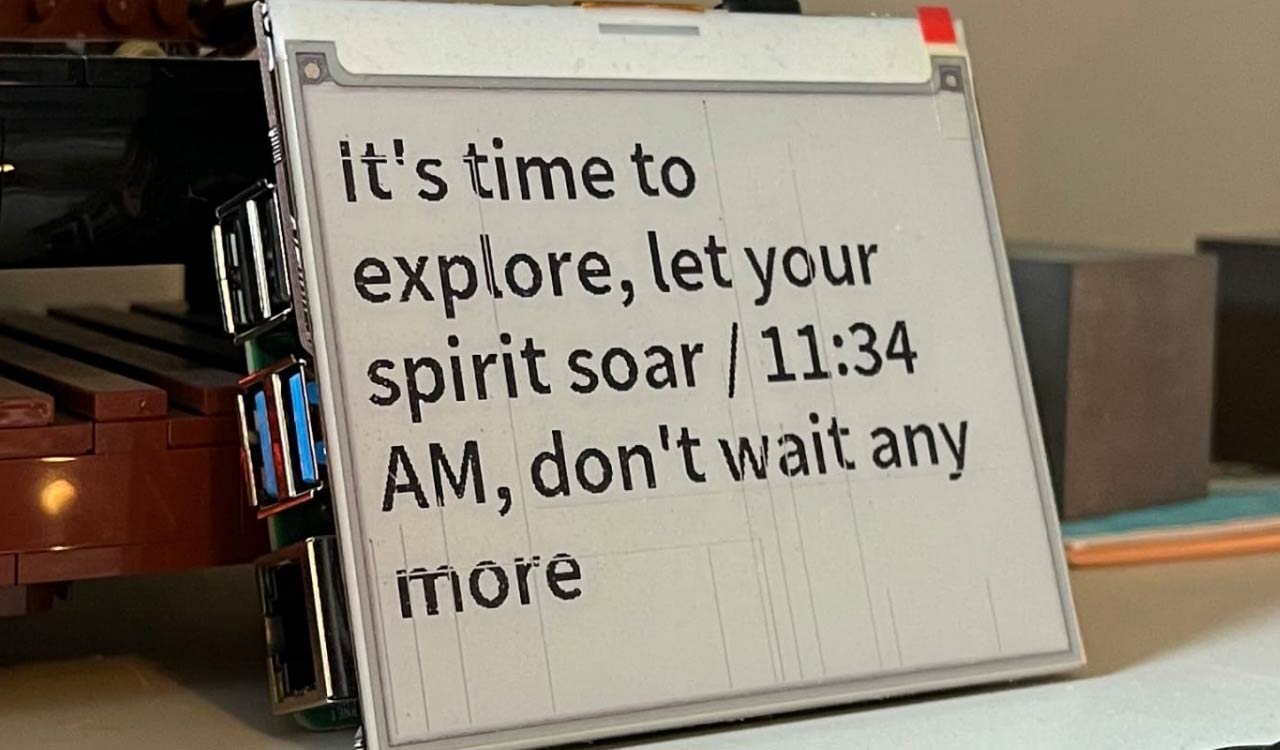
Matt Webb developed a rhyming AI clock using ChatGPT, which creates a short two-line rhyme that also tells the time of each minute of the day.
Posted on – Wed 05 Apr 23 at 01:57pm

Photo: IANS
San Francisco: With the introduction of ChatGPT, a conversational artificial intelligence (AI) chatbot, users all over the world are buzzing and figuring out what experiments they can do with it, and now it turns out that a designer has used ChatGPT to create an artificial The smart clock tells the time in short poems.
As The Verge reports, designer and blogger Matt Webb used ChatGPT to develop this rhyming E Ink clock, which creates a short two-line rhyme that also tells the time of each minute of the day.
According to Webb, the clock was powered by an old Inky wHAT screen and a Raspberry Pi that he had previously set up as a regular text clock. He had been experimenting with language models from OpenAI (creator of ChatGPT) and came up with the idea of linking the two, the report said.
“ChatGPT has a hint, and the clock uses OpenAI’s API. The time is a parameter of the hint. The hint instructs the AI to respond with two lines that rhyme, and encourages it to be imaginative and provocative,” Weber said.
He further mentions that the clock generates new text for each display, rather than drawing from a preset directory, and he uses ChatGPT because it is the cheapest option, but prefers to connect it to GPT-3.
“If I were an AI sommelier, I’d say ChatGPT is an easier drink, with a long finish and very smooth, but GPT-3 is more complex and spicy,” says Webb (who also credits his work described as “AI Sommelier”). “It’s tighter and has a better vocabulary. But it’s not worth 10 times what I have on my bookshelf,” Webb said.
Additionally, the designer says the response to his rhyming AI clock has been overwhelming, and he’s now exploring two routes to making the project mainstream.
According to reports, first there will be kits for hackers to build themselves, and then there will be plug-and-play commercial products. At the same time, OpenAI launched the ChatGPT plugin, which allows chatbots to access third-party knowledge sources and databases, including the web.
The company said it will start providing access to the plugin to a small group of users, with plans to gradually roll out access to a larger scale as they learn more.
