

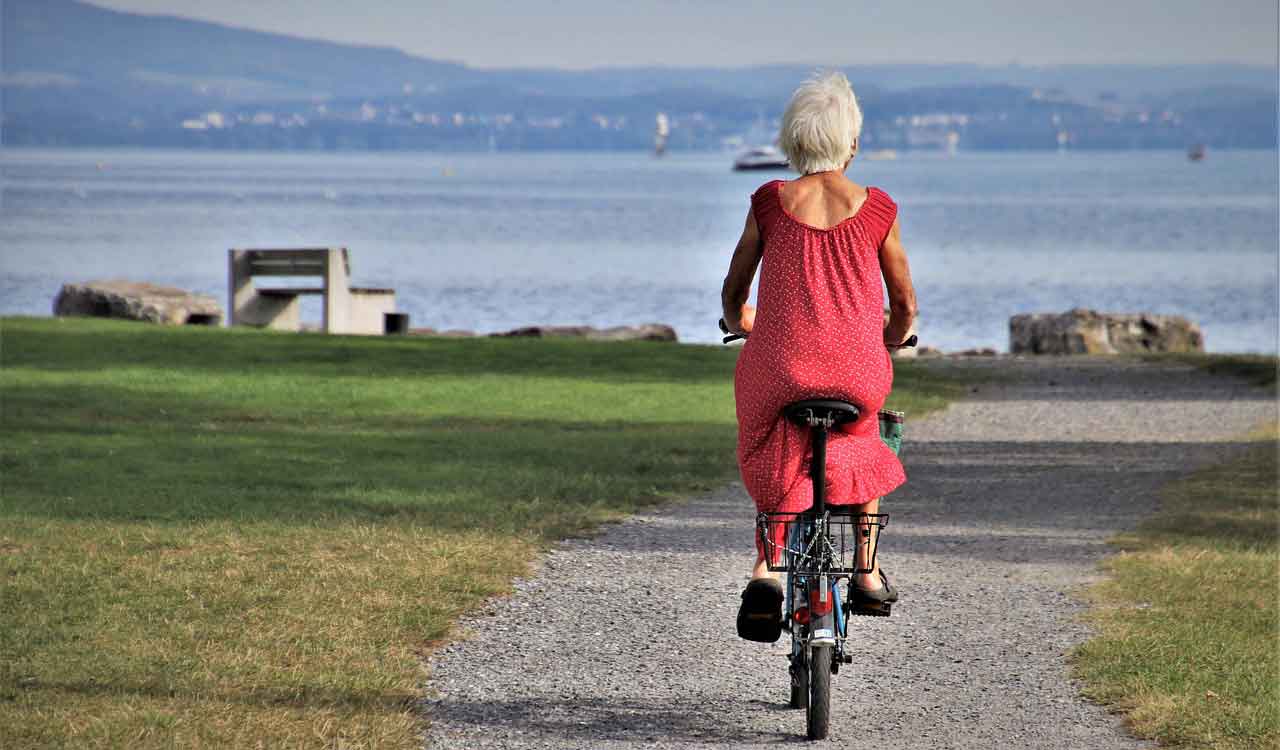
Engaging in activities such as cycling, walking, gardening, cleaning, and exercising may reduce the risk of Parkinson’s disease.
Posted Date – Mon, 5/29/23 at 2:15pm

Representative images.
London: Women who regularly engage in activities such as cycling, walking, gardening, cleaning and playing sports may have about a 25 percent lower risk of developing Parkinson’s disease, according to one study.
The study, published in Neurology, the medical journal of the American Academy of Neurology, does not prove that exercise reduces the risk of Parkinson’s disease. It only shows one association.
“Exercise is a low-cost way to improve overall health, so our study sought to determine whether it was associated with a lower risk of Parkinson’s disease, an incurable and debilitating disease,” said study author A. Alexis Elbaz said. Inserm Research Center, Paris, France. “Our results provide evidence for planning interventions to prevent Parkinson’s disease,” Elbaz said.
The study included 95,354 female participants with an average age of 49 and no Parkinson’s disease at the start of the study. The researchers followed the participants for up to 30 years, during which time 1,074 participants developed Parkinson’s disease.
During the study, participants completed up to six questionnaires about the type and amount of physical activity they performed.
They were asked how far they walked each day, how many flights of stairs they climbed, how much time they spent doing housework, and how much time they spent doing moderate leisure activities such as gardening and vigorous activities such as exercise.
Among participants in the highest activity group, there were 246 cases of Parkinson’s disease, or 0.55 cases per 1,000 person-years, compared with 286 cases, or 0.73 cases per 1,000 person-years among participants in the lowest activity group. Person age represents the number of people involved in the study and the time each person spent in the study.
After adjusting for factors such as place of residence, age at menarche and menopausal status, and smoking, the researchers found that when it came to physical activity, the group that was most active was 25 percent less likely to develop Parkinson’s disease than the group that was least active before diagnosis Assessments were performed up to 10 years; the association remained when physical activity was assessed up to 15 or 20 years before diagnosis.
The results were similar after adjusting for diet or medical conditions such as high blood pressure, diabetes and cardiovascular disease.
The researchers also found that in the 10 years before diagnosis, people with Parkinson’s disease experienced a faster decline in physical activity than people without Parkinson’s disease, possibly due to early symptoms of Parkinson’s disease.
A limitation of the study is that the participants were mostly health-conscious educators who voluntarily participated in a long-term study, so the results may differ from the general population.
