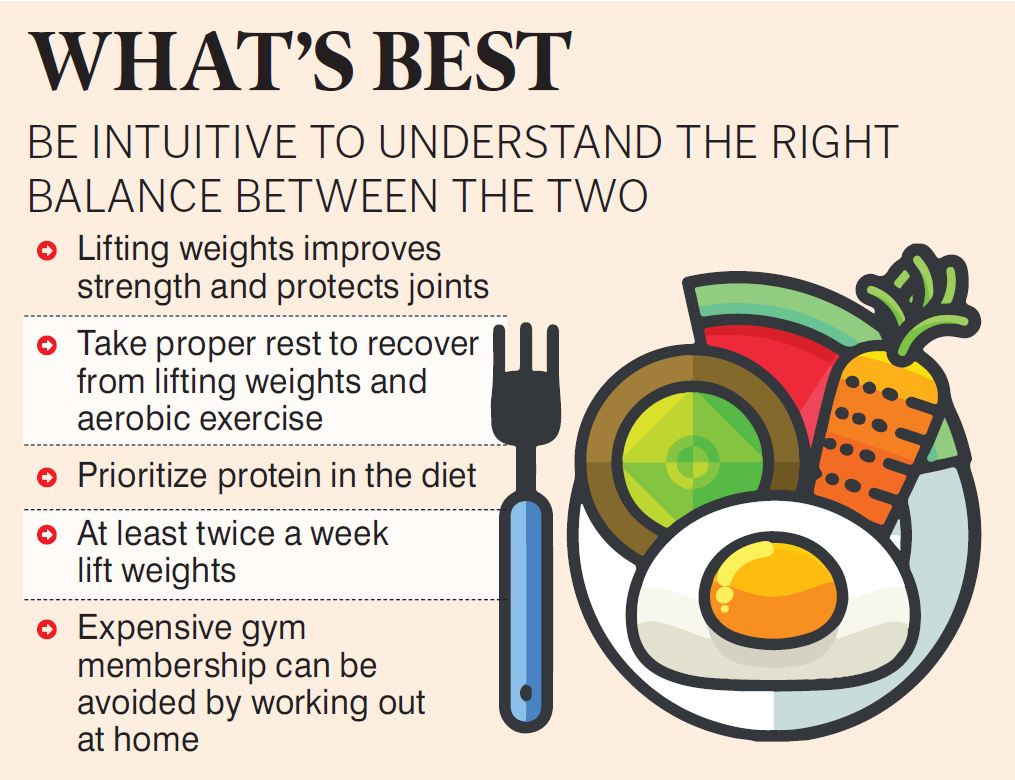
Combining aerobic and muscle-strengthening physical activity has more benefits than either activity alone
Post Date – 12:45 AM, Thu – 29 Jun 23

Should you lift weights at the gym or do aerobic or aerobic exercise (such as cycling or running) to lose weight and improve your health? The debate between weightlifting and cardio has been going on for a long time and often confuses those looking for an active and healthy life.
The long-running debate between cardio and weightlifting is so profound that long-distance marathoners and powerlifting enthusiasts often disagree.
Marathon runners are hesitant to hit the gym for fear that adding muscle will slow them down while running. On the other hand, people who like to lift weights and build muscle rarely show up to the track or field for fear that doing a lot of cardio might lead to muscle loss.
The upshot of this debate is that the average person who is only interested in losing a few “kilograms” and not planning to become a marathon runner or bodybuilder often doesn’t get the best advice. Many times, these individuals tend to forego cardio exercises such as cycling, swimming, brisk walking, etc. or lifting weights because they are not achieving the desired results.
Effects of weightlifting on body metabolism
It is undeniable that if a person is able to lift weights long term while maintaining a calorie deficient diet and adding more protein sources to their diet, they will develop muscle which in turn will ignite a dormant or sluggish body metabolism. .
Most Indians do struggle with body fat easily because their bodies convert food into energy rather slowly. Sometimes, ingested food tends to be converted into fat and deposited in the abdomen, leading to various complications including cardiovascular disease, high blood pressure, diabetes, etc.
Essentially, metabolism is the body’s ability to convert the food it consumes into energy. Many factors affect an individual’s metabolism, including genetics, diet, sleep, lifestyle and exercise habits.
When an individual builds muscle through weight training, the body begins to burn calories rapidly, which increases the body’s metabolism. In layman’s terms, when the body has more muscle, it begins to burn calories efficiently.
Benefits of Aerobic Exercise
Aerobic exercise or aerobic exercise is physical activity that raises the heart rate and maintains it for the duration of the physical activity. Aerobic exercise can be in any form, including brisk walking, cycling, swimming, Pilates, Zumba, running, and more.
Broadly speaking, aerobic exercise, or aerobic exercise, can be divided into steady-state aerobic exercise and high-intensity interval training. Steady-state cardio involves keeping your heart rate steady for extended periods of time through cycling, jogging, walking, brisk walking, etc. High-intensity interval training (also known as HIIT) involves pumping your heart rate up to maximum and then allowing it to continue. Take short breaks to regain stability.
So should you be doing cardio or lifting weights?
Emerging evidence from a range of different studies in Europe, Canada and the United States suggests that combining aerobic and muscle-strengthening physical activity provides superior and more comprehensive health benefits than either activity alone.