Several “sensitive”, residential and industrial areas of the city experienced a sharp increase in noise pollution.
UPDATE – 12:15 AM, Sunday – Dec 11 22
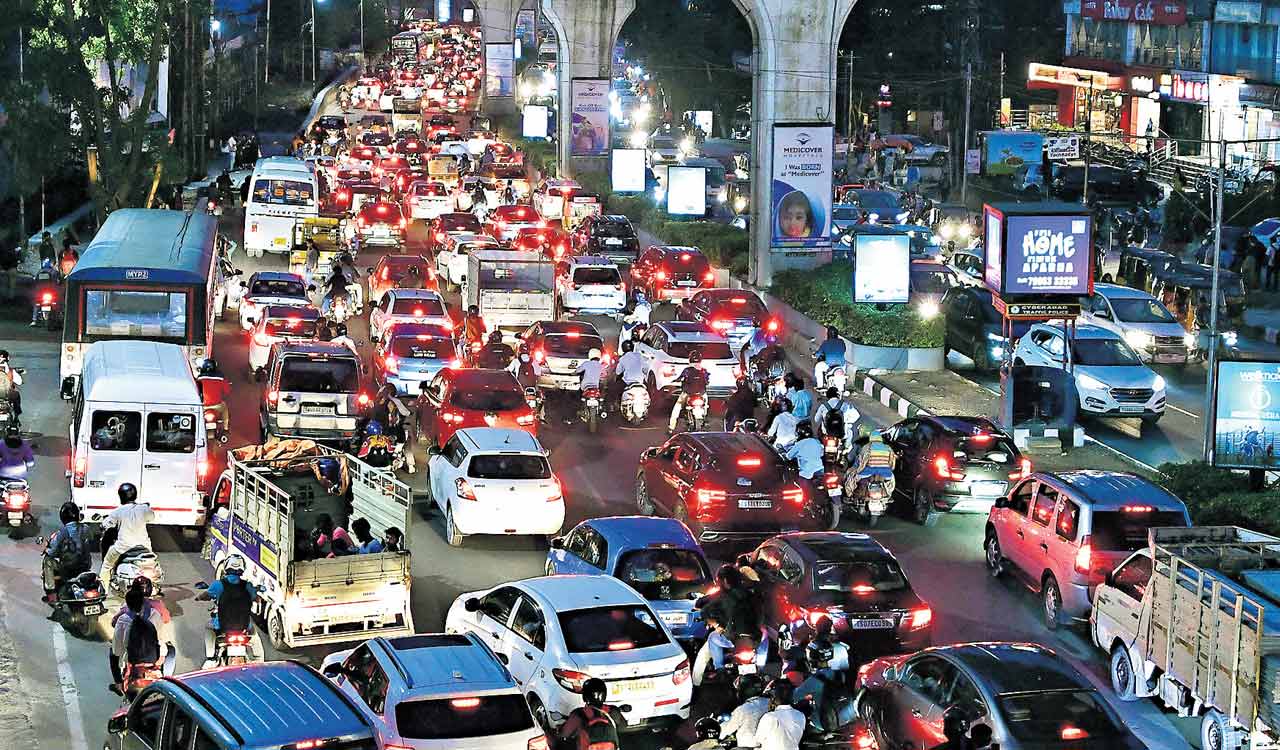
To measure noise pollution, the Telangana Pollution Control Board divides the state capital into residential, commercial and industrial areas. – Photo: Anand Dharmana.
Hyderabad: Until a few decades ago, Gachibowli was known for its tranquil and wholesome environment. Now, the “sensitive” part of the city has undergone drastic changes, bustling with traffic, making it one of the noisiest areas in Hyderabad.
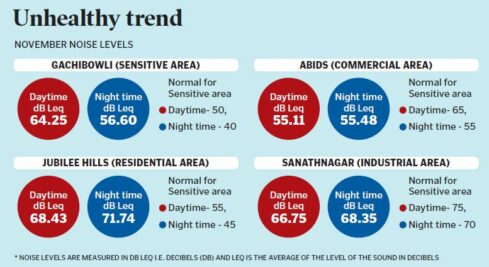
In the past six years, noise levels here have started to exceed prescribed limits. From this year through November, Gachibowli has seen a sharp rise in decibel (dB) levels, a unit for measuring noise pollution.
In January, the daytime noise level in Gachibowli was 59.57 decibels out of the acceptable range of 50 decibels. At the end of November, the noise level in the same area was 64.25 decibels. In its second week, it hit 66.83 decibels, almost the standard decibel level for a “commercial district”, compared to its “sensitive” subdivision.
Over the past few months, nighttime noise levels in Gachibowli have also exceeded 55 decibels, and even reached almost 65 decibels, while the acceptable range is 40 decibels.
Even the Nehru Zoo area, another sensitive area, is now one of the noisiest in the city. Decibel levels here have been rising steadily since March, with nighttime figures reaching 70 decibels in recent months.
Noise levels in residential areas are also increasing. The daytime noise level in Jubilee Hill in November was 68.43 decibels, while the nighttime noise level in the area was 71.74 decibels. Similarly, noise pollution in Tarnaka reached 64.96 decibels during the day and 56.53 decibels at night, while the acceptable noise levels in both areas were 55 decibels during the day and 45 decibels at night.
Continuous exposure to sounds of 85 decibels or higher may even lead to hearing loss, according to ear, nose and throat specialist Dr. Shakuntala Ghosh. “People may also complain of recurring headaches, irritability, difficulty concentrating, sleep disturbances, and hearing fatigue due to constant exposure to high volumes. Prevention is the use of protective earplugs or earmuffs at work or in noisy environments. Early detection can delay damage and prevent deafness,” she added.
Meanwhile, Abidz was also one of the noisiest areas in the state capital prior to August. The situation flipped like a switch and this once loud place is now less affected by noise pollution. According to the Noise Pollution Report of the Telangana State Pollution Control Board (TSPCB), in November, the noise level here was kept below 60 decibels during the day and night, while the acceptable range was as high as 65 decibels and 55 decibels respectively.
To measure noise pollution, TSPCB divides the city into different areas, including residential areas (Jubilee Hills and Tarnaka), commercial areas (Abids and JNTU), industrial areas (Sanathnagar, Jeedimetla, and Gaddapotharam) and sensitive areas (Zoo Park and Gachibowli) . Acceptable daytime and nighttime decibel levels for an area depend on the type of area it is in.