While stakeholders are increasingly aware of the need for a vaccine program for adults, the MoHFW has yet to develop national adult immunization guidelines.
Release Date – 12:15 AM, Thu – 24 November 22

While stakeholders are increasingly aware of the need for a vaccine program for adults, the MoHFW has yet to develop national adult immunization guidelines.
Hyderabad: India’s highly successful Universal Immunization Program (UIP) has historically focused on ensuring that all children from infancy to age 15 are vaccinated against a range of vaccine-preventable diseases (VPDs). In contrast, the concept of adult vaccination, which is very popular in Western countries, has not taken root in India, and adult immunization coverage and awareness are poor.
However, over the past few years, GPs and even specialists have begun recommending vaccinations for adults, especially those with comorbidities, so that they can lead a quality life rather than get sick, which often leads to life-threatening event.
All major Indian associations representing physicians, surgeons and specialists, the World Health Organization (WHO) and the US Centers for Disease Control and Prevention (CDC) advocate a sound immunization schedule for adults.
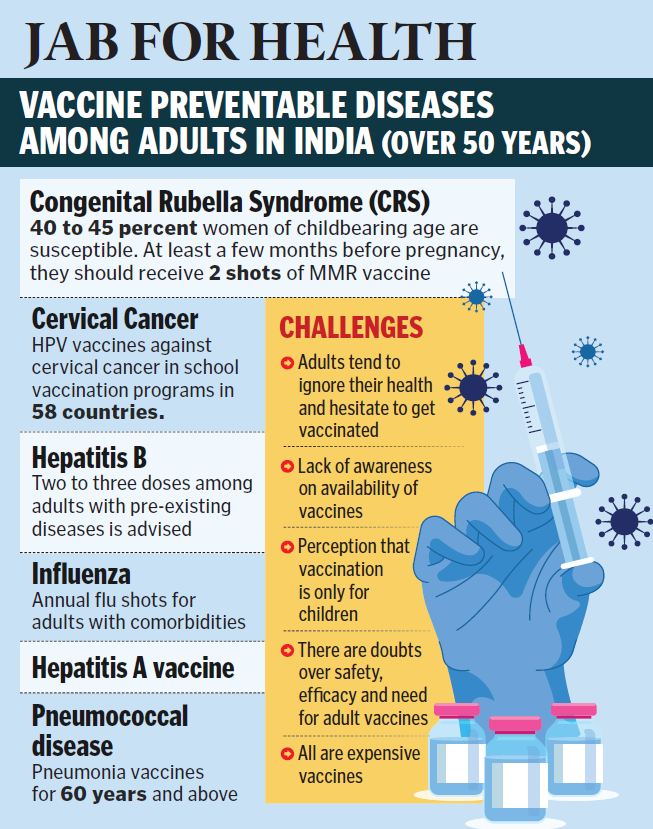
In India, doctors routinely prescribe some of the most common vaccines for adults over the age of 50, including the annual flu shot, hepatitis B vaccine, pneumococcal vaccine, and HPV vaccine for cervical cancer. However, almost all such vaccines are expensive and only available to those who can afford them.
While stakeholders are increasingly aware of the need for a vaccine program for adults, the Ministry of Health and Family Welfare (MoHFW) has yet to develop national adult immunization guidelines. Therefore, there is no clear way to decide who should get what vaccine based on age and medical history.
“Under the UIP, there is a lot of focus on making sure every child in the country is vaccinated, but the concept of adult immunization is still in its infancy in India. Due to advances in medical technology, several vaccines are recommended for adults, especially Those with pre-existing medical history. However, currently, such vaccines are limited to patients who can afford them,” said Dr Mahaboob Khan, Senior Pulmonologist and Director, Chest Hospital.
Despite the lack of guidelines from MOHFW, several associations including Indian Physician Association, Indian Society of Nephrology and Indian Society of Geriatrics have highlighted the need to promote vaccination in adults.
Why does India need an adult immunization program?
The projected growth of the elderly population in the coming decades is the justification for a robust framework for India’s adult immunization programme. According to the National Statistics Office (NS), Ministry of Statistics and Program Implementation, GoI, the country’s elderly population (60 years and above) is expected to increase from 138 million (138 million) in 2021 to 194 million (194 million) in 2031 , an increase of 41% in ten years.
The report pointed to concerns about an aging population and highlighted the need for India to plan for a changing demographic, which it says will have 93 million men (9.3 million) and 101 million women (10 million) by 2031 , up from 67 million (6.7 million) men and 71 million women (7.1 million) by 2021.
Needless to say, the incidence of various diseases will rise dramatically in the coming decades as India’s population ages and immunity declines. India’s elderly population, especially those with comorbidities, are prone to infectious diseases such as pneumonia, flu, hepatitis, etc. The ideal way to tackle this challenge is to have a well-tested vaccination program that will increase the immunity levels of the elderly in India.