

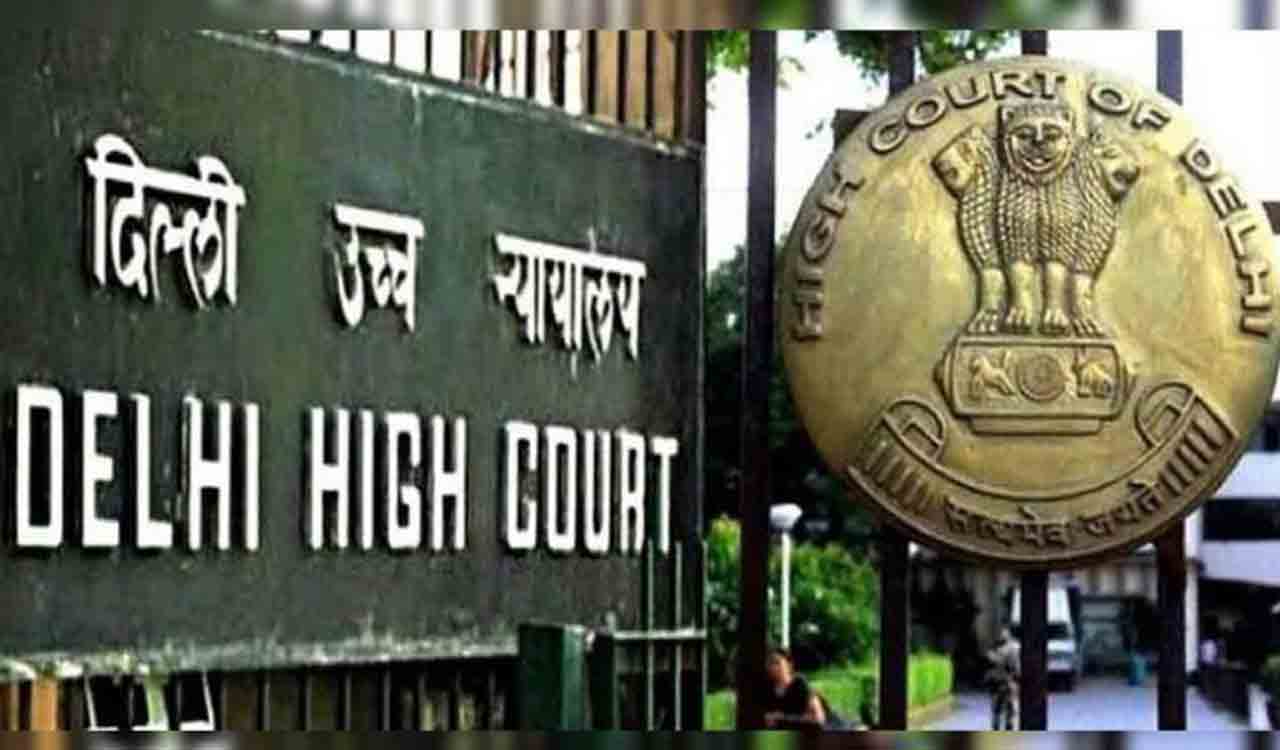
The CBI made this argument while opposing Sisodia’s request for bail on par with the other defendants
Post Date – 10:45 PM, Wednesday – 4/26/23

New Delhi: The CBI told the Delhi High Court on Wednesday that the now-abandoned Delhi Excise Duty Policy 2021-22 was rigged to support cartelization and monopoly in the national capital’s alcohol trade, with former Deputy Chief Minister Manish Sisodia and businessman Vijay Nair being the main conspirators.
The Central Bureau of Investigation (CBI) argued against Sisodia’s bail request, which sought equality with other defendants who received relief, claiming that senior AAP leaders could not influence witnesses or tamper with evidence in the case.
Judge Dinesh Kumar Sharma asked Solicitor General (ASG) SV Raju representing the CBI to explain the whole scam to him so that he could understand.
ASG Raju said the accused wanted to make money but at the same time they wanted to show that they were transparent which was not the case.
“It’s a scam, a scam to make money. But they want to show that they are transparent. Manufacturers, wholesalers and retailers of liquor are all connected. Rs. Bribery. Manish Sisodia’s involvement is at the helm of everything,” the law enforcement official argued.
He also informed the High Court that a charge sheet in the case had been filed with the Court of First Instance on April 25 and has yet to be adjudicated.
The ASG further stated that the policy was not discussed nor approved by the Deputy Governor of Delhi, adding that the new policy was implemented because it was not possible to generate kickbacks in the previous policy.
“Manish Sisodia conspired with the other defendants to institute policies that were not approved by LG,” he said.
The high court asked the CBI to file a short note on its submission and listed the matter for further hearing on Friday.
In its written reply against Sisodia’s bail plea, the CBI claimed that AAP leaders were involved in serious economic crimes and were key to uncovering the criminal modus operandi.
It said the bail request was baseless and an attempt to abuse the complexities of the law to hinder the progress of the case investigation.
While the CBI argued that Sisodia was the “principal figure and architect of the conspiracy” and that his clout and influence made him no match for his co-accused who was released on bail, the AAP leader urged the High Court to grant him bail, claiming no Any financial leads have linked him to the proceeds of the alleged crime.
After several rounds of questioning, the CBI arrested Sisodia on February 26 on charges of corruption in formulating and implementing the now-defunct Delhi Excise Duty policy for 2021-22.
On March 31, the trial court here rejected Sisodia’s bail request in the matter, saying he was “prima evidence” of a “scam” and played “the most important role” in a criminal conspiracy related to the alleged payments. and vital role” The Rs 90-100 crore upfront kickback is for him and his colleagues in the Delhi government.
Sisodia’s lawyers had earlier said the lower court had not considered the medical condition of the AAP leader’s wife, who had multiple sclerosis. He said the condition of Sisodia’s wife was deteriorating.
He has said that all charges against Sisodia carry a maximum sentence of seven years in prison, which should benefit AAP leaders.
The lawyer has said allegations that he was the recipient of the proceeds of crime are “completely unresolved” and that no trace of funds has been found pointing to him.
In its response, the CBI said Sisodia was arrested on February 26 due to his non-cooperative behavior during the investigation and the fact that he has been facing sensitive documents and witnesses.
The CBI said the case involved a deep-rooted, multi-layered conspiracy.
“The applicant was a key link in unearthing the modus operandi. The applicant has been uncooperative and evasive throughout the investigation in order to undermine the immediate investigation,” it said.
The agency said there was substantial documented evidence that Sisodia, which at the time held significant portfolios including financial and excise taxes, was the master architect of a conspiracy to tweak and manipulate the formulation and implementation of excise tax policies to create pecuniary advantages, and Continue to wield unparalleled influence in government.
“Under the guise of bringing about a revolutionary change to GST policy, the applicant has abused his position and introduced favorable clauses in the new policy.
“This was done to facilitate the South Group’s defendants to monopolize the wholesale and retail liquor trade in Delhi in order to take 6% in lieu of advance payment/ South Group paid 90-10 crore kickbacks,” it claimed.
The CBI accused Sisodia of abusing her official position and dishonestly introducing changes to GST policy under the influence of South Group through her close associate Vijay Nair.
It claimed that the changes introduced by the applicant not only facilitated the cartelisation of the Southern Group’s liquor trade in Delhi, but also enabled them to recoup the kickbacks they had paid up front.
The High Court had earlier issued a notice to the CBI to respond to Sisodia’s bail plea, which claimed he was “completely innocent” and a “victim of political persecution”.
In a plea filed with the court, Sisodia said there was no material to suggest his involvement in the offenses alleged by the FIR.
“The applicant is completely innocent, he is a well-respected citizen who has the highest respect for the law. The applicant is a victim of political persecution which led to his arrest by the accused (CBI) on the grounds that the application people’s reputations in the mud,” his petition said.
The petition says GST policy is the “collective responsibility” of Cabinet, drafted by the GST department and then implemented. The petition adds that it has been duly sanctioned and that Sisodia cannot be held criminally liable for a collective decision of the cabinet, tax department, finance department, planning department, legal department and LG.
