

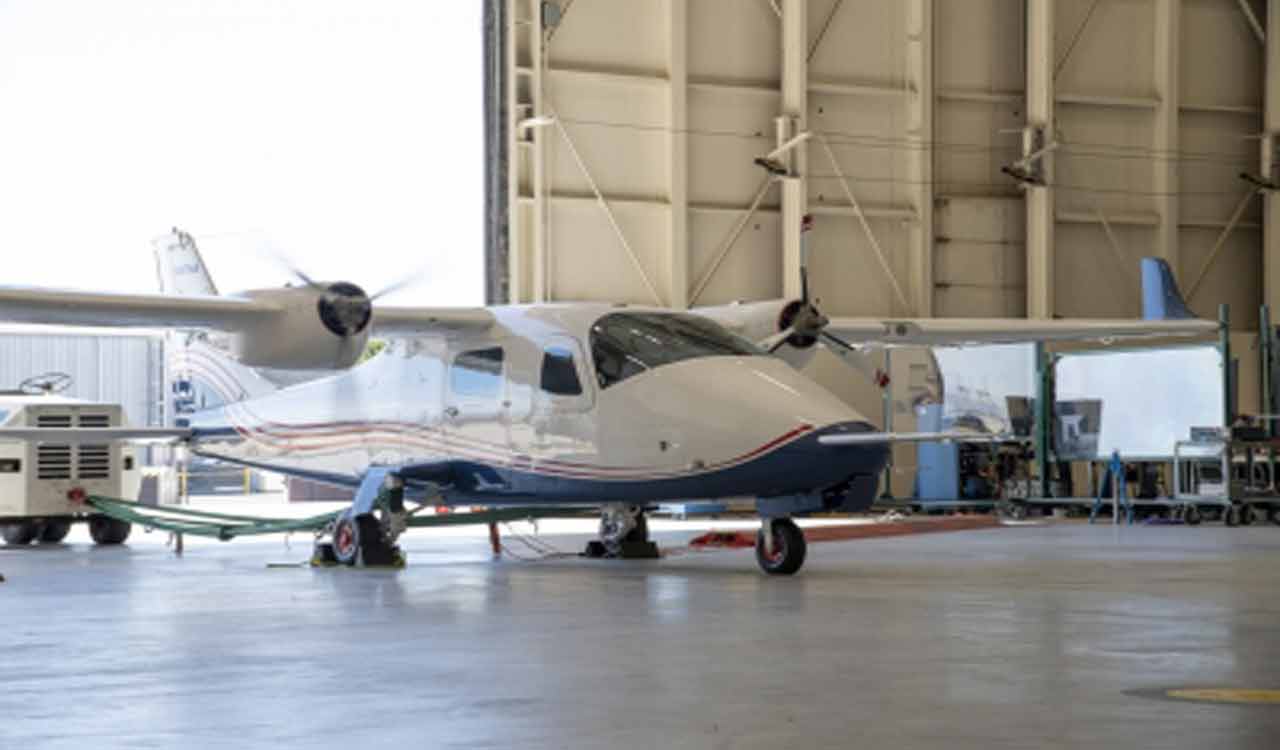
The aircraft is a modified Italian Tecnam P2006T powered by an electric propulsion system
Post Date – 23rd June 25th at 12:15pm

Washington: NASA has created an all-electric aircraft that will not only pave the way for electric aviation, but will also support the U.S. climate goal of achieving net-zero greenhouse gas emissions from aviation by 2050.
NASA’s X-57 Maxwell all-electric aircraft program will conclude aircraft operations activities at the end of September, with documentation and closeout activities continuing in the ensuing months.
Research on the X-57 has provided aviation researchers with hundreds of lessons learned, as well as revolutionary developments in areas ranging from battery technology to cruise motor control design.
The aircraft was built by modifying an Italian Tecnam P2006T and is powered by an electric propulsion system.
“I am incredibly proud of their tenacity and ingenuity as they lead the way in advancing electrified propulsion. The future of electrified propulsion is possible because of their contributions.” Brad Brad, director of NASA’s Armstrong Flight Research Center in Edwards, California Flick said.
Completion of aircraft operations by September 2023 will not include the first flight of the X-57, NASA said.
The project encountered several challenges to flying safely, including mechanical issues late in its lifecycle and a lack of key components needed to develop experimental hardware.
Given the approaching end of the Aircraft Operating Program, the team was unable to achieve acceptable flight conditions within the timeline.
While most of the development of the X-57 will be complete by September 2023, the team will formally wrap up its work with more technical publications a few months later.
NASA said the main goal of the X-57 program is to provide regulators with knowledge about the aircraft’s electric propulsion design and airworthiness process.
NASA added: “Our goal is not to develop a prototype, but to develop a test bed for technology and design methods.”
“They did something that had never been done before, and it was no easy feat,” Frick said. “As we prepare to complete this project later this year, I see a long list of achievements to celebrate and an industry that is better today because of their work.”
Early in the project, X-57 team members found they needed to make major developments in battery technology.
Lithium-ion batteries installed on airplanes heat up as they release energy, and excessive heating can lead to overheating.
The project worked with North Logan, Utah-based Power Systems to address this issue.
Engineers demonstrated that the new battery system design would remain within acceptable safety limits when powering the aircraft.
The design of the cruise motor controller was another success of the X-57 project. These controllers convert the energy stored in the aircraft’s lithium-ion batteries into electric motors to drive the propellers.
NASA said it will continue research into electric aircraft through other programs, including an electric powertrain flight demonstration.
