

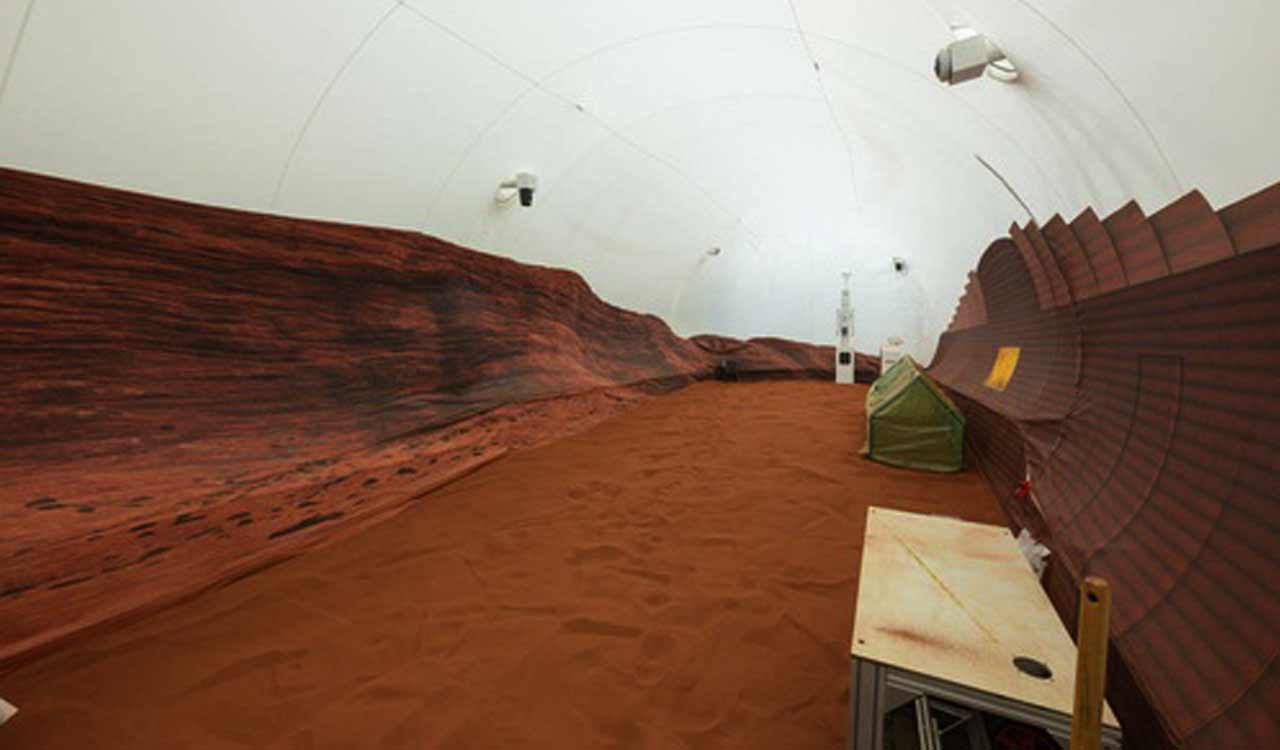
The mission is the first of a planned year-long Mars surface simulation, during which astronauts will live and work for a year in a 3D-printed, 1,700-square-foot habitat called Mars Dune Alpha
Post Date – 12:20 AM, Wednesday – July 5

Washington: NASA has placed four participants on the agency’s first year-long simulation mission, simulating life on Mars in a habitat.
CHAPEA, or Crew Health and Performance Exploration Simulation, is a ground mission at the agency’s Johnson Space Center in Houston. The mission is the first of a planned year-long Mars surface simulation, during which astronauts will live and work for a year in a 3D-printed, 1,700-square-foot habitat called Mars Dune Alpha .
The crew of four includes biologist Kelly Haston, structural engineer Ross Brockwell, doctor Nathan Jones and naval microbiologist Anka Serra Stay (Anca Selariu).
During the simulation, astronauts will perform different types of mission activities, including simulated spacewalks, robotic operations, habitat maintenance, personal hygiene, exercise and crop growth, among others.
Crews will also face environmental pressures such as resource constraints, isolation, and equipment failures in order to achieve Martian reality as closely as possible. “The simulation will allow us to collect cognitive and physical performance data, allowing us to gain a deeper understanding of the impact of long-duration Mars missions on astronaut health and performance,” CHAPEA principal investigator Grace Douglas said in a statement. potential impact.”
Douglas added: “Ultimately, this information will help NASA make informed decisions to design and plan successful human missions to Mars.”
The mission also included two backup crew members: Alyssa Shannon, a former lead crew member and advanced practice nurse; and Trevor Clark, an aerospace engineer before and after the backup crew member.
Live media events include the opportunity to speak with subject matter experts and take footage and photos inside the habitat. The crew will not be able to participate, as they arrive on NASA’s Johnson later this spring to begin training for the simulated mission. Tasks 2 and 3 of CHAPEA will be implemented in 2025 and 2026, respectively.
NASA is leading the return to the moon for long-duration exploration. Through the Artemis missions, NASA will land the first woman and first person of color on the Moon, using innovative technology to explore more of the lunar surface than ever before. Lessons learned on and around the moon, along with activities like CHAPEA on the ground, will prepare NASA for its next giant leap: sending astronauts to Mars.
