India needs to invest heavily in R&D, people and environmentally friendly government regulations to break Chinese supply chains
Post Date – 12:30 AM, Tuesday – 27 June 23

Author: Taj Singh Kadan
Lithium (Li) was discovered in 1817 by Swedish chemist Johan August Arfwedson while studying and experimenting with the mineral petalite (lithium aluminum silicate). Because the metal does not exist in pure form, William Thomas Brande isolated the element in 1821 by electrolysis of lithium oxide. Since then, the metal has seen little use other than as a lubricant and in the glass industry, among other things. Manufacturing of lithium batteries took off in the 1990s, and today an estimated 70% of lithium battery production is used in batteries.
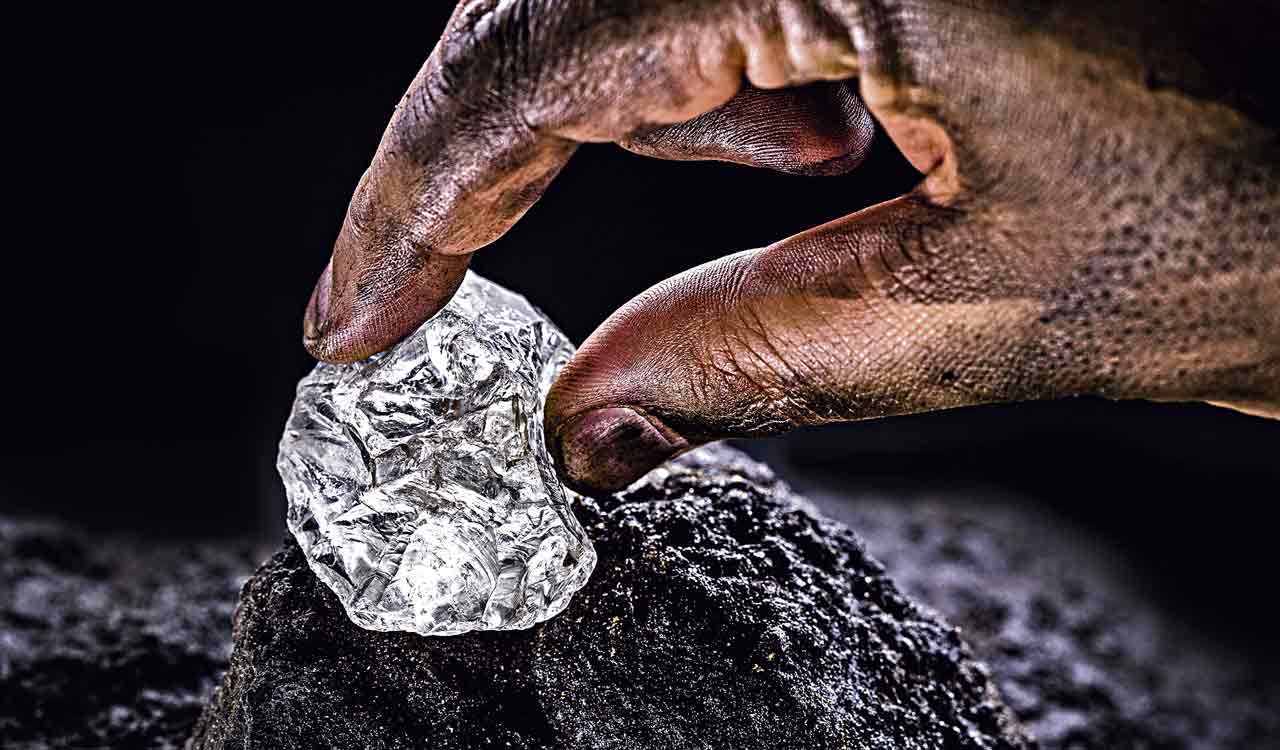
Lithium is the lightest solid element, and the metal itself is soft, silvery white, and shiny. Lithium-ion batteries are used in wind turbines, solar panels, smartphones, laptops, cameras and devices that use rechargeable batteries. Lithium is often referred to as “platinum” given its potential to revolutionize other industries, such as electric vehicles (EVs), which are critical to a green economy. As the eyes of the world turn to the metal and the mining industry, Lee is being hailed as the future of clean energy. Thanks to their unique chemistry, lithium-ion batteries are able to store large amounts of energy, which could help pave the way for a decarbonized future.
Rich
Lithium is abundant in the Earth’s crust, but very finely distributed. Researchers estimate that the world’s oceans contain about 200 billion tons of light metals. Mineral deposits in rock and brine are believed to total 98 million tonnes, of which 26 million tonnes could be economically exploited in the coming decades. From a global perspective, the lithium reserves of Bolivia, Argentina and Chile are 21 million tons, 19 tons and 9.8 tons respectively, accounting for about 65% of the global lithium reserves. Among them, the lithium reserves in the underground salt lakes of these three countries are 42 million tons. In 2022, about 45,000 tonnes will be mined from the mine. The process involves pumping brine from deep into the basin to be evaporated, then filtering the concentrated brine to obtain lithium carbonate, the basic material for battery production. The United States (9.1 million tons) and China (5.1 million tons) are other countries with large reserves.
Recently, India discovered estimated reserves of 5.9 million tonnes in the Salal-Haimana area of the Reasi region of Jammu and Kashmir. Experts at the International Institute for Sustainable Development say lithium deposits in the region could alter the country’s clean energy ambitions. If mining is carried out in the area, apart from saving foreign exchange and enhancing national energy security, it can also reduce India’s dependence on China and other countries. The finding is also seen as a huge boost to India’s ambition to expand EV penetration to 30% by 2030.
Currently, the largest volumes of lithium are extracted from solid rock by open pit mining in Australia – around 61,000 tonnes will be mined in 2022. This accounts for 47% of global lithium demand. Lithium ore is mined by drilling, blasting, and breaking blocks in factories, where the lithium is separated from the topsoil through chemical and mechanical processes. In addition, 35% of demand came from salt lakes in South America, 15% from China, and about 1% from Zimbabwe, Portugal and North America. Much of the lithium mined in these countries is exported to China, where it is processed into batteries. Lithium extracted from ore is about six times more energy-intensive than extraction from salt lakes, according to the US R&D Center.
challenges in production
The main challenges facing lithium production in South American countries are soil degradation, water scarcity and pollution, air pollution and biodiversity loss. In addition, Salim Ali, a professor of energy and environment at the University of Delaware in the United States, said that more than 2 million liters of water are needed to produce one ton of lithium. According to the International Energy Agency, about half of lithium-producing regions face water stress.
In addition, major lithium-producing regions in China, Africa and Australia have experienced high temperatures or flooding, posing challenges to sustainable supply. With regard to the Indian discovery, experts and environmentalists are concerned about the impact of mining development on the fragile and disaster-prone Himalayan region. Most worrying is that mining companies do not follow environmentally friendly practices due to lax environmental regulations in India.
The Johnson & Johnson Himalayas are ecologically sensitive, and mining could lead to serious loss of biodiversity. Additionally, extracting lithium from hard rock mines requires open pit mining and then using fossil fuels to roast the ore. The process may release 15 tons of CO2 for every ton extracted. Mining for lithium in the Himalayas could pose significant risks, such as subsidence like the one at Joshimath. The Himalayas are the source of many rivers and any mining activity would pollute the entire riparian ecosystem.
In addition, surface mining, refining and waste disposal in these processes will severely degrade the environment, including depleting and polluting waterways and groundwater, reducing biodiversity and releasing large amounts of air pollution.
opportunity in india
India plans to buy plums to ensure supplies that could last for decades and make India self-reliant. The Indian government has started a huge effort to make India a world leader in lithium batteries. Lee is the enabler of an age of technology that can determine the future of civilization. This metal is vital because it powers our smartphones, tablets, cameras, laptops and cars. As a result, in 2019-20, India spent $1.2 billion importing batteries mainly from China.
India will turn to sources with the largest reserves such as Bolivia, Chile and Argentina as it looks to manufacture batteries domestically by importing raw materials from these countries. Currently, India is partnering with Australia to supply lithium, and a lithium refinery in Gujarat is in the pipeline, which will process lithium ore to produce battery-grade lithium. Once China starts producing lithium-ion batteries, it will monopolize China’s supply to the global market.
India can learn many lessons from China. In the past 10 years, China has actively developed the electric vehicle battery market, occupied all links of the supply chain, and become a leader in the electric vehicle industry. Therefore, India needs to invest heavily in R&D, human and environment-friendly government regulations, FDI flows, and aggressive global acquisition of raw material resources to speed up the manufacturing process to break the supply chain in China and become the next generation of electric vehicles. Market leader cars.