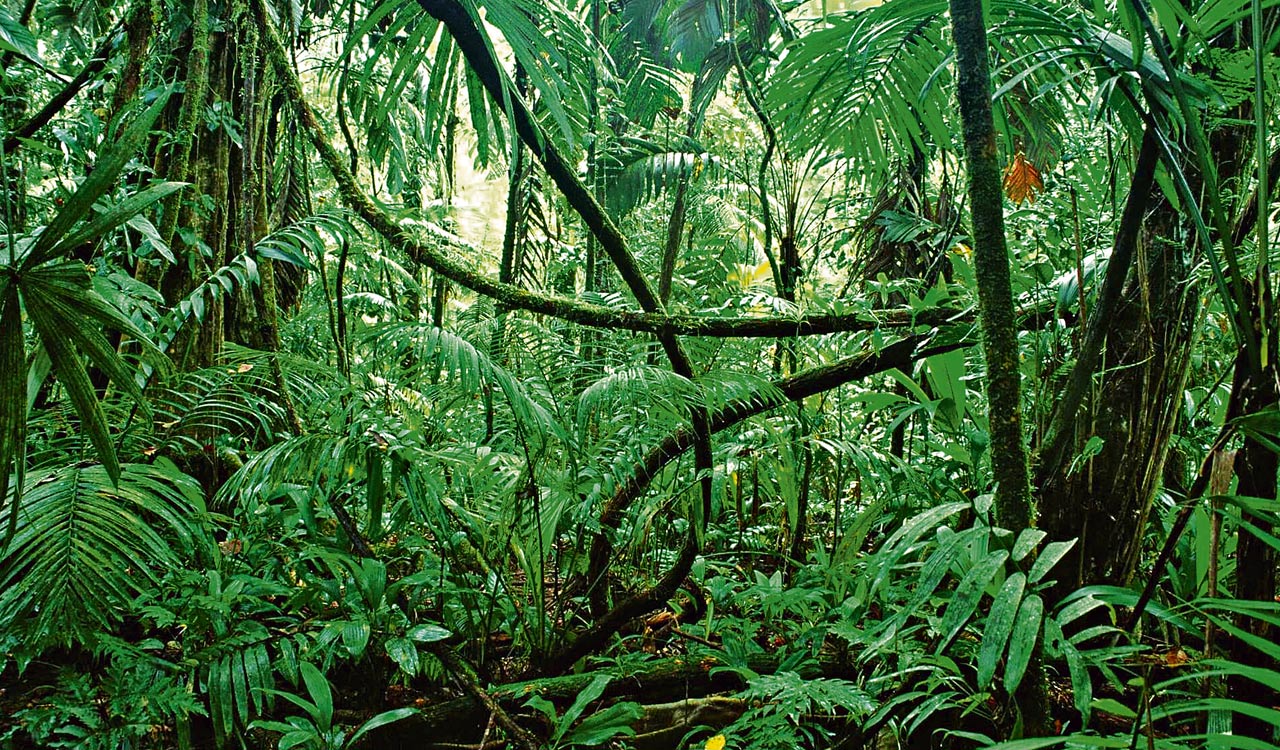
Communities close to nature must be at the center of our actions as there is no one-size-fits-all approach
Post Date – 23rd Sunday 16th July 11:50pm

Author: Taj Singh Kadan
Biodiversity refers to the variability among living organisms from all sources, including terrestrial, marine and other ecosystems and the ecological complexes they belong to; includes diversity within species, between species and of ecosystems.
In simple terms, biodiversity is the number of species of organisms found in a given geographic area. It refers to the species of plants, animals and microorganisms, the genes they contain and the ecosystems they form. The concept of conserving all biodiversity gained traction in the late 1980s with the understanding of the extent of genetic variation within individual species. Biodiversity has taken center stage in the planning and strategies of environmental and conservation agencies around the world.
biodiversity crisis
According to the October 2022 Living Planet Report by the World Wide Fund for Nature (WWF), more than 99.9% of all species on Earth (more than 5 billion in total) are projected to be extinct. Over the past 50 years, the global population of wildlife such as mammals, birds, reptiles, amphibians and fish has declined by approximately 69%. The largest drop was in Latin America and the Caribbean, at 94%. Wildlife populations fell by 66 percent in Africa and by 55 percent in the Asia-Pacific region. The global population of freshwater species has decreased by 83%.
Mangroves continue to disappear at a rate of 0.13 percent per year due to aquaculture, agriculture and coastal development, the report states. Many mangroves have also been degraded by overexploitation and pollution, as well as by natural pressures such as storms and coastal erosion. The report further mentions that about 137 square kilometers of Sundarbans mangroves in India and Bangladesh have been eroded since 1985.
drivers of loss
The main drivers of biodiversity loss are:
Habitat Loss: It is one of the main drivers of plant and animal extinction. Land clearing and deforestation for agriculture and other activities cause wildlife species to lose important natural habitats. According to the Living Planet report, the amount of wetlands used for things like agriculture has decreased by 30% over the past 40 years.
Species Overexploitation: Overfishing has depleted much-demanded tuna. Overhunting and poaching of species quickly lead to biodiversity decline. Star manatees, passenger pigeons, Tasmanian tigers and cheetahs from India (albeit reintroduced) are among the species that have been wiped out by poaching.
Introduction to invasive species: This can lead to loss of biodiversity. These are non-native species that can significantly alter or disrupt the ecosystems they inhabit. For example, the accidental introduction of the brown tree snake to Guam led to the extinction of 10 native bird species in less than two decades of its arrival. Pollution is another driver, because in polluted areas, the quality of food, water or other habitat resources declines, and sometimes species have to migrate or die out. Such events lead to a loss of genetic diversity of species in the region.
climate change: is a huge challenge. In 2014, the temperature in eastern Australia exceeded 40 degrees Celsius, and half of the black flying fox population in the region died. Thousands of bats died from the high temperature in one day. Therefore, it is clear that among the 9 planetary boundaries – safe operating space for humans; biodiversity loss, climate change, land use change, geochemical cycles, freshwater use, ocean acidification, chemical pollution, atmospheric loading and ozone depletion, The first four items have exceeded the standard. According to the Global Outlook report, these violations are directly linked to human-induced desertification, land degradation and drought.
situation in india
India covers 2.4% of the world’s land area and has 8.1% of the world’s species diversity, including 45,000 recorded species of plants and 91,000 recorded species of animals. Conservation International has identified 17 mega-biodiversity countries, including India, and four global biodiversity hotspots. Biodiversity hotspots are critical to maintaining ecosystem balance, and geographic areas rich in endemic, rare and threatened species are threatened by habitat loss.
These hotspots are the eastern Himalayas, home to evergreen forests, including oak and alpine trees, and fauna such as herons, loris and snowgrouse. Indo-Myanmar, including Cambodia, Laos, Thailand, Myanmar and the area around the Brahmaputra. It includes threatened species such as the gray-crested crocodile. The Sundaland hotspot is located in the Nicobar Islands and extends to the tectonic plate beneath the Indian Ocean. It is home to Sumatran rhinos and orangutans and is home to the world’s largest flower, Rafflesia (one meter in diameter). The Western Ghats hotspot has mountainous rainforests and is home to black panthers, hog-nosed purple frogs and more.
indian wetlands
India has 75 Ramsar wetlands, all of which are the largest in Asia. The Government of India has announced the Amrit Dharohar scheme, under which these wetlands will be protected to maintain aquatic biodiversity and generate income for local communities. The recent intervention by the Ministry of Environment, Forest and Climate Change to stop the drainage of Hyderpur, a Ramsar wetland in Uttar Pradesh, to protect migratory waterfowl is encouraging. The Government of India has also launched MISHTI Yojana (Mangrove Initiative for Shoreline Habitat and Tangible Income) to revive mangrove and coastal ecosystems.
Although biodiversity loss is a global problem, it can only be tackled through local solutions. There cannot be a one-size-fits-all approach. This could be zero-budget natural farming in Andhra Pradesh and Telangana, or community-driven forest conservation initiatives in the North East. It would be even better if communities close to nature were at the center of our actions.
The importance of the planet’s biodiversity was strongly articulated at the United Nations Biodiversity Conference in Montreal, Canada, in December 2022, with member states adopting an agreement to “prevent and Reversing” biodiversity loss. % of the world’s oceans by 2030. The Government of India has endorsed the National Biodiversity and Human Wellbeing Mission. The mission explores the use of skills and interdisciplinary knowledge to green India and its economy, restore and enrich our natural wealth for the benefit of our people, and position India as a leader in biodiversity conservation.
India is home to over 17% of the world’s population and 17% of the world’s biodiversity hotspots, putting it at the helm to steer the world to become a biodiversity champion.
Humans are an integral and influential component of biodiversity. Our culture shapes the biodiversity around us, and biodiversity shapes our culture and our future on Earth. Prakruti: Rakshati Rakshita (if protected, nature will protect her).