

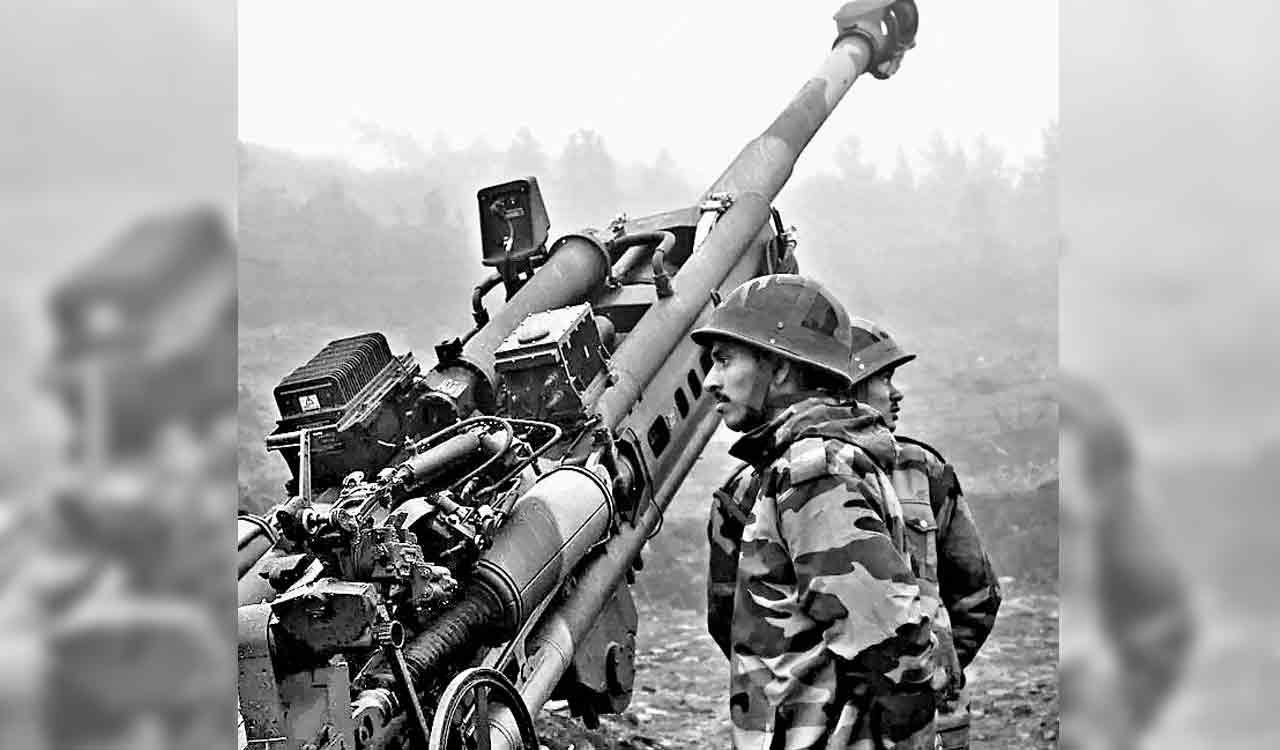
The current Sino-Indian border conflict must be viewed in the current geopolitical and strategic context.
UPDATE – 12:56 AM, SAT – 12/24/22
Major General SB Asthana
Hyderabad: The Dec. 9 standoff near the LAC in the Tawang section of the Yangtze River was neither the first nor the last, but clashes in which soldiers from both sides were injured indicated an increasingly aggressive and violent attempt by both sides to strengthen their control over the actual situation. Controlling view.
After the Galwan conflict in 2020, the Indian side was not surprised by the irresponsible behavior of the Chinese People’s Liberation Army (PLA), which had scrapped all the old agreements of peace and tranquility. Therefore, the Indian Army firmly opposes the PLA approaching the LAC near the Yangtze River, presumably to change the status quo.
Despite the immediate withdrawal of both sides from the area and the holding of flag meetings to de-escalate the situation according to structured mechanisms, such attempts may be repeated in the future and each time must be responded positively, resolutely and resolutely, as has now been demonstrated.
What complicates the Sino-Indian border issue? The People’s Republic of China (PRC) refused to ratify the 1914 Simla Agreement between British India and Tibet, initialed by Chinese representatives. India’s position on the border roughly followed the Johnson Line (1865) in Ladakh and the McMahon Line in the east. When Maharaja Hari Singh signed the Instrument of Accession, Aksai Chin was a part of it; so it rightfully belonged to India. Before recognizing Tibet as part of the People’s Republic of China, India should force China to accept the Simla agreement. Hence, there is no mutually agreed boundary treaty between independent India and the People’s Republic of China.
China rejects any treaty with Tibet or prior to its annexation that does not suit it, and selectively refers to them when it serves its interests, as it referred to an 1890 treaty during the Doklam crisis that seems to work in its favor, despite the fact that it was later superseded by many other treaties.
LAC and complex management
Both countries have their own views on LAC, and in some areas, these views overlap (eg Tawang, Pangong Tso). As the LAC is not demarcated, the Chinese took the undemarcated as an opportunity to build up new claims (Arunachal Pradesh) followed by army build-up/infrastructure development until resistance and within a short period of time Stop the conflict.
The opposing actions/build-ups of Indian troops lead to a “stand-off/confrontation” every time. In order to avoid accidental triggering, the two sides have been taking measures other than live ammunition to prevent the other party from violating its perception of the actual control line, which is increasingly evolving into violent conflicts.
current standoff
Line crossings, patrol conflicts, standoffs and flag meetings to resolve it have been a common feature and will continue to be until the LAC is delineated. If viewed in the current geopolitical and strategic context, the current standoff in Tawang is somewhat different from previous ones for a number of reasons:
* Chinese President Xi Jinping may try to play the victim card to divert domestic discontent over the zero-Covid policy, China’s economic downturn, etc., stirring up nationalist fervor with his aggressive nationalist stance.
* Xi Jinping’s aggressive stance in Ladakh and Taiwan and his sinicized narrative fit to cement his position as a strong leader securing a third term. So he wanted to keep going.
* Disgruntled with fastest growing economy, winter standoff could spark political debate in Democratic India, Indian government could be forced to deploy more troops to all sectors throughout winter, increasing financial cost of India’s LACisation.
* Attempts to test India’s response on the eastern border after it committed large numbers of troops in Ladakh and Kashmir.
* Tawang’s strategic and cultural relevance is gaining prominence as the next Dalai Lama’s nomination draws near. Tawang Monastery has always been a cultural powerhouse and the birthplace of the sixth Dalai Lama.
* The Indian side of the Changjiang region is hard-line and relatively remote in winter; therefore, the Chinese could have considered risking an invasion there.
* China has long been favored by severe asymmetries in infrastructure development and is uncomfortable with India’s efforts to catch up. Therefore, disrupting development along the border is in line with its design.
looking to the future
A change in mindset is required, from reactive to proactive, using additional intelligence, surveillance and offensive capabilities to demonstrate the ability to intrude into sensitive areas of China, otherwise China would not take on the threat from India.
If the Chinese pass a border defense law, India should also pass some laws to facilitate border construction and extend programs under the Border Infrastructure Authority as close to the LAC as practicable.
India must continue to build capacity in all areas, including maritime, where China’s vulnerable sea lines of communication may be threatened. In addition to the ongoing border infrastructure development, there is a need to expand the scope of the Border Area Management Plan.
It is suggested that states/UTs along the LAC should allocate concession land to security forces such as Regional Scouts, ITBP, Sashastra Seema Bal and families from the area (according to the soil concept) ready to settle in the villages thus constructed, along with their own contribution to the LAC view. This will improve inclusive growth and integration and justify our claim on the border to fend off Chinese plans to develop hundreds of new villages along the LAC.
Efforts to forge strategic partnerships with like-minded democracies and adopt a collective naval posture to create a multi-front situation for China should continue.An alternative supply chain, trade and technology ecosystem independent of China is needed, for which the Quad countries need to take some initial steps
(asthanawrites.org)
