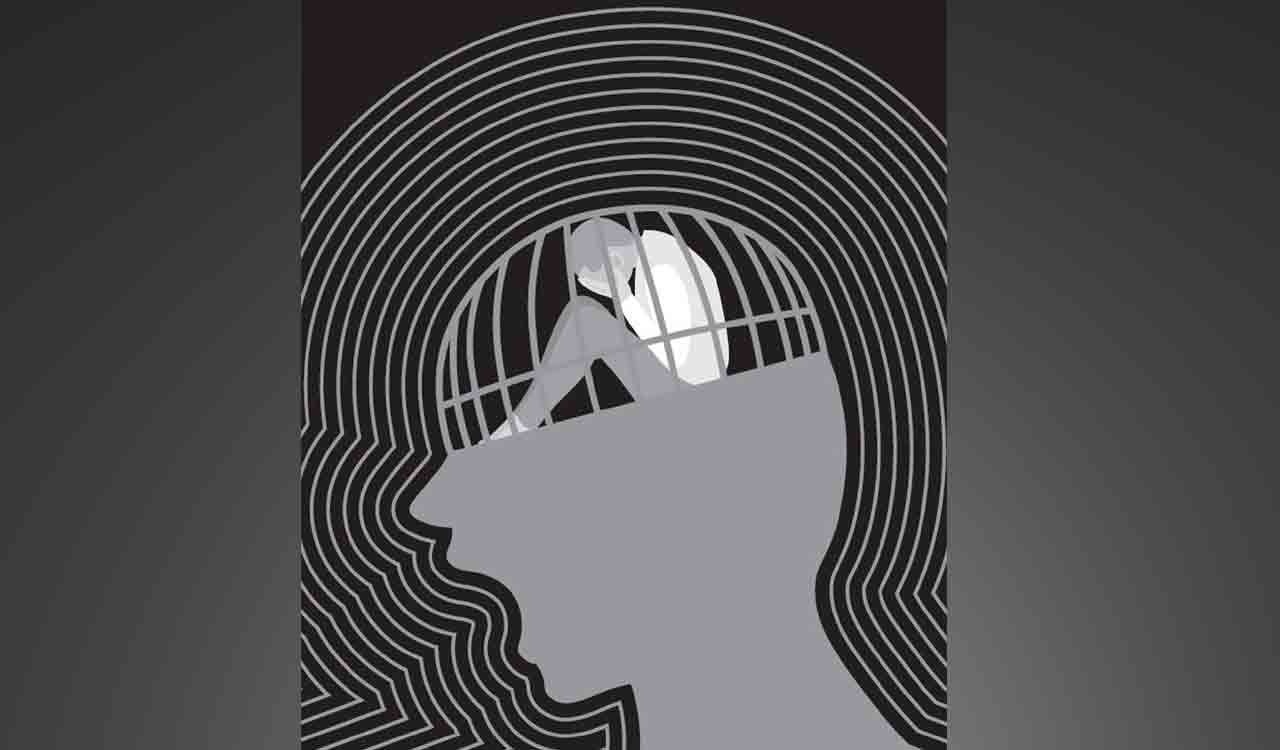
Higher education institutions must reassess systems and processes that do not allow students to maintain good mental health
Updated – Tue, 3/28/23 at 12:19am

By Prathyusha Madhu, Anup Tripathi, Moitrayee Das
According to the National Criminal Records Bureau (NCRB), the student suicide rate has increased by 35.15% since 2017, with 13,089 suicides nationwide in 2021 alone. It is critical that we examine the actions and arrangements that academic institutions have in place to help students cope with mental health issues.
Suicide is not an isolated phenomenon that can be dismissed as a personal problem.
Instead, addressing mental health problems and suicide must involve a three-pronged strategy that spans the individual, community, and institutional levels. It is important to avoid placing the burden entirely on students to solve their own problems, and instead focus on holding the system accountable for organizational changes that can reduce suffering. Instead of hiding behind ambiguity, higher education institutions (HEIs) should actively work to make it a safe space—especially for students belonging to marginalized communities.
policy failure
It is worrying to see the reluctance or neglect of many educational institutions to address mental health issues. The vast majority of higher education institutions don’t even have a dedicated unit to address students’ mental health needs. This lack of prioritization is especially worrisome given the steady rise in student suicides over the years. In fact, it was only last year that the UGC made it mandatory for every university to have a mental health team.
Interestingly, there are no strong mechanisms in place to ensure compliance with this mandate. Maybe it’s just a cosmetic measure rather than addressing mental health head-on. Furthermore, higher education institutions setting up such units face many challenges, so they can only partially alleviate the problems faced by students.
One of the biggest problems is their lack of investment in finding strong psychiatrists, psychologists and counselors. In most cases, institutions stop after hiring a few therapists for an entire student population (which can number in the thousands).
This lack of resources is simply not enough to meet the mental health needs of students. Higher education institutions must have sufficient number of psychologists licensed by the Rehabilitation Board of India who are trained to serve the entire population of students with different needs.
Additionally, students are reluctant to use on-campus counseling resources due to concerns that personal information may be misused. Such concerns are not unfounded, given past examples of universities misusing classified information. (Flaherty, C, 2022. Jancer, M, 2018)
supportive environment
It is therefore critical that institutions of higher education either outsource mental health resources such as counselors, psychologists, and psychiatrists, or give them institutional independence.
This will ensure that mental health professionals remain separate from administration or management. This will allow students to seek help without fear of repercussions. By doing so, universities can help create a healthy and supportive environment for students, which is essential for their academic and personal growth.
HEI should conduct mandatory training for teachers from organizations such as Suicide Prevention Foundation of India (SPIF), Mental Health Foundation of India (MHFI) and Question. persuade. Please refer to (QPR Institute, USA) Identifying warning signs of suicide, which will allow them to classify psychological crises.
As part of their awareness-raising, students are expected to take a comprehensive foundational course in mental health during their first semester. This course should provide an in-depth introduction to different mental health issues, and ways to identify and deal with them. The basics of psychological issues should not be taught only to students of the psychology discipline, but should be accessible to everyone. The administration must be steadfast in developing and enforcing policies on mental health, not just enforcing them.
Social Roots of Suicide
The famous sociologist Emile Durkheim’s analysis of suicide made people realize that suicide is not an individual behavior, but a social phenomenon influenced by social structure. This is often dismissed in the larger context when discussing suicide.
Instead of restructuring systems and processes to be student-friendly and engaging in dialogue with their student bodies, higher education institutions spend their energy and resources on superficial behaviors such as observing Mental Health Awareness Day or posting signs sex posters to encourage their students to be kind. While raising awareness is important, institutions must introspect and rethink systems and processes that do not allow students to maintain good mental health and opportunities for growth.
It is critical for institutions of higher education to reassess their purpose in society. It shouldn’t be about assessing how well a person can retell what they’ve learned, but it should be a place for learning, growth and a sense of fulfillment. Learning is not a linear process, so why not expect the same from students? A university must resemble a sandbox—a place where mistakes can be made without costing them.
Allowing students to make up lost credits or retake exams they failed would help remove this highly competitive and rigid environment. It is important to understand and make students feel that receiving help is not a weakness and it does not reduce their intelligence in any way. If colleges work with their students, they will be able to realize their true potential and maybe even go beyond it.
Student suicide is hard to deal with. The loss of many young lives just highlights the fact that there is something fundamentally wrong with the current system. Just as a student’s success is reflected in college, so is their failure. Institutions should be catalysts for growth, and this can only be achieved by breaking down stereotyped understandings of academic success.
Losing a life is too much
If you or someone you love is struggling with suicidal thoughts, call the Prevention Line. Your life matters.
AASRA: 91-9820466726
Kieran: 1800-599-0019
Niemhans: 91 80461 10007
Tel: 022-25521111
Van der Vala: 91 99996 66555