allies can dissuade the United States from taking the path of division, but their own weaknesses make them complicit
Release date – 12:45, Wednesday – July 23rd 12th

Sean Narin
In pursuit of permanent global domination, the United States has pushed the world into unnecessary conflict, especially through its two-year “war on terror.” America’s allies can hold back America’s propensity to go down dangerous and divisive paths, but their own vulnerabilities and commitment to the status quo are making them complicit.
war on terror
Conflicts related to the War on Terror have killed an estimated 4.6 million people since 2001, according to Brown University’s Watson Institute. Some 1 million people die from direct violence, but others, disproportionately women and children, fall victim to political, economic and economic problems. and social instability in many of the countries that have been targeted in the war on terror.
This conflict has defined 21st-century world politics more profoundly than the Ukraine war. It was driven by the messianic impulses of former US President George W. Bush and neoconservative ideologues eager to use military power to reshape the Middle East in America’s image.
The US Congress voted overwhelmingly for Bush’s war. The Iraq War was an unprovoked and illegal invasion of a sovereign nation, demonstrating the dangers of unfettered US power and hubris.
disregard for international law
The Watson Institute report explains why countries targeted by the United States have reason to fear U.S. violence and interference. International law does not necessarily constrain the United States—it is often willing to abuse its power and privileges for political, economic, and strategic advantage.
This reality partly explains Russia’s response to NATO expansion and its invasion of Ukraine.
Concerns about U.S. overreach have also shaped China’s policy in the South China Sea, where it fears economic suffocation from a U.S. naval blockade. China has done little to the United States other than to grow to a level of economic size and technological innovation that challenges US global dominance.
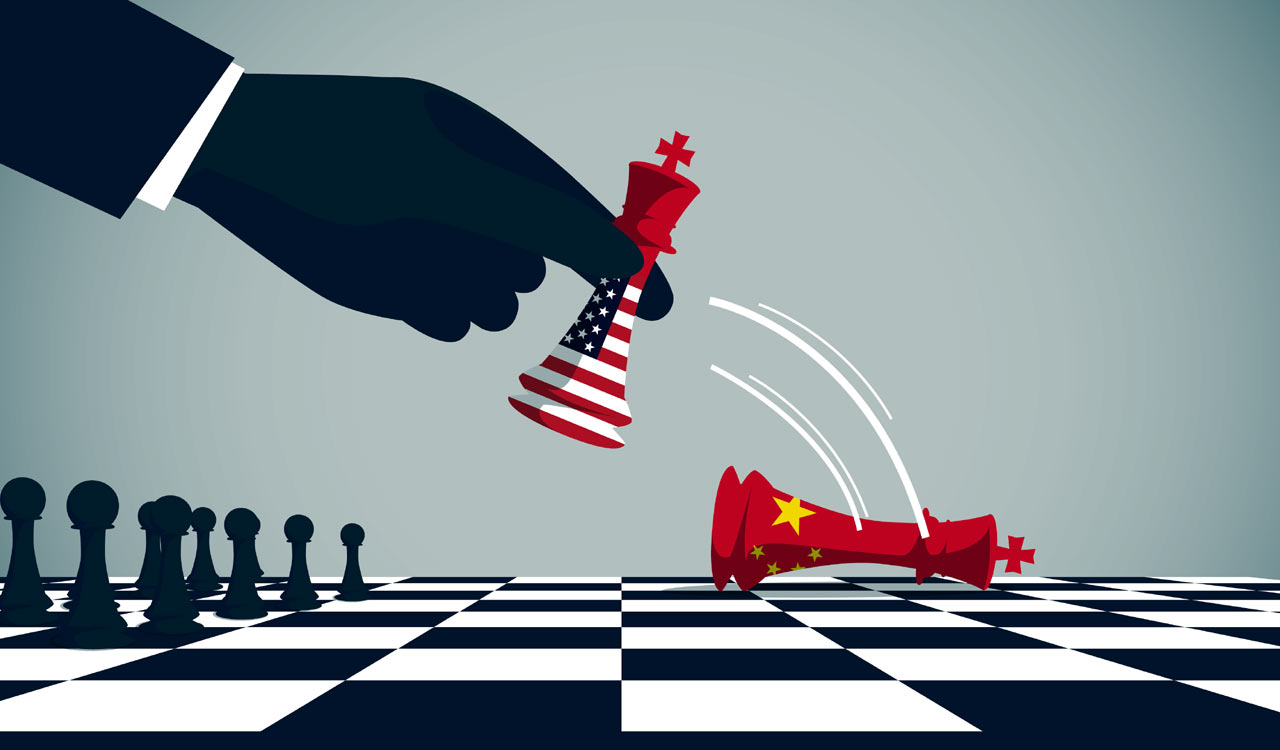
In response, the US is attacking China’s economic and technological development. It is building economic and military alliances against China. American leaders apparently believe that a country with four times the population of the United States must always submit to American power. China has indeed threatened Taiwan and shown aggression in the South China Sea. Even so, China’s foreign policy has been relatively restrained compared with that of the United States.
Many countries around the world refuse to support Western sanctions against Russia, in part because the West’s credibility has been damaged by its hypocrisy on issues of global violence and interference. Instead, many countries are pursuing “non-alignment” — choosing to avoid getting drawn into any future tussle between China and the United States.
gather allies
Still, the US has united its established allies against China. Canada has become a vassal of the US, which means it is basically dominated by the US. Japan has increased its military spending. The EU has taken a tougher stance on economic and technological engagement with China. There are signs that France and Germany recognize that their interests may not align with those of the United States, but they have yet to confront U.S. officials on those issues.
Why do U.S. allies refuse to discuss U.S. global violence, despite its dire consequences and its apparent impact on the worldviews of U.S. competitors and the non-Western world? Why are they so tolerant of American militarism—even often complicit in it—while condemning the militarism of other countries?
This may be because U.S. allies benefit greatly from a U.S.-supported status quo, even as they have to deal with the fallout from Western militarism—particularly in Europe, where an influx of refugees has made regional politics worse. They are used to following America. Many have willingly embraced, imitated, and even amplified American propaganda.
politics of fear
This attitude is understandable for a narrowly self-interested, immoral country, but it is short-sighted. U.S. allies willfully ignore the extent of deep social, political, and economic divisions within the United States and their implications for credible and coherent U.S. leadership and policy.
Political instability in the United States may eventually prompt the United States to adopt a more aggressive foreign policy. The United States has never shied away from fear politics and exaggerated threats. It is especially dangerous to China’s escalating demonization and provocation.
China is a country of 1.4 billion people with an ancient culture and a huge economy. It cannot be locked in a box without consequences, as the US is trying to do.
China has benefited a lot from the current international system. It justifiably supports most of the existing economic order.
Adapt to China’s current situation and make adjustments. This means abandoning the triumphalist Western worldview that has been embraced by many Western democracies since the end of the Cold War.
Is maintaining America’s globally privileged position really that important to the rest of the world? Is it possible to maintain such an unbalanced world order, or, given the consequences, is it really worth it?
US allies need to learn the lessons of the war on terror and the 4.6 million deaths it has caused. Leaders need followers. U.S. allies can offer support to the U.S. on the condition of a commitment to loosen militarism and focus on greater global cooperation.
theconversation.com