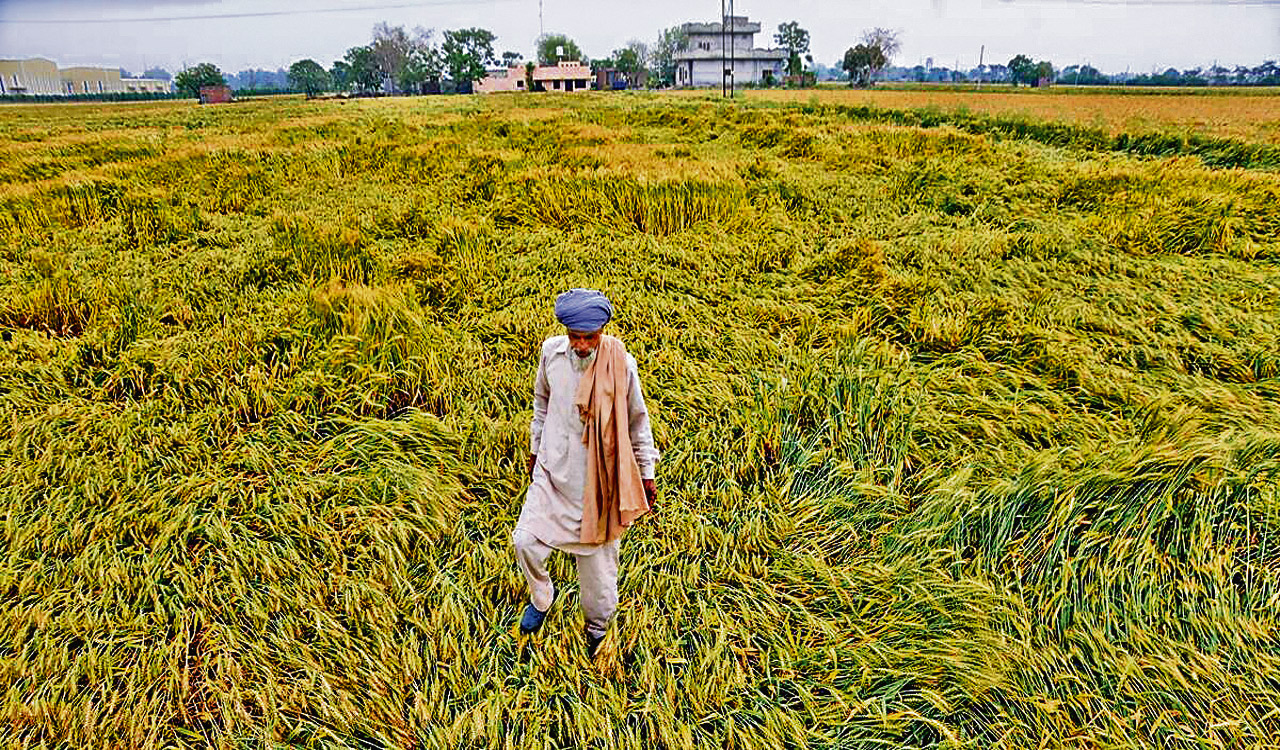
On paper, the Pradhan Mantri Fasal Bima Yojana scheme seems good, but in reality things are different
Release date – 12:45, Tuesday – July 23rd 11th

By Dr. Seela Subba Rao
Pradhan Mantri Fasal Bima Yojana (PMFBY) was launched on 18th February 2016 with many improvements and hopes, replacing the three existing schemes namely National Agricultural Insurance Scheme (NAIS), Revised National Agricultural Insurance Scheme and Weather-based crop insurance programs. PMFBY was created to target 50% of the country’s farmers and promises to compensate when crops are lost.
The scheme aims to support sustainable production in the agricultural sector, provide financial support to farmers who suffer crop loss/damage due to unforeseen events, stabilize farmers’ income to ensure they continue farming, encourage farmers to adopt innovative practices, and ensure the flow of credit to agriculture sector, crop diversification and improving agricultural growth and competitiveness.
On the surface, the plan presents a farmer-friendly picture. But in reality, things are different. Farmers face many issues such as delays in receiving settlements/claims and technical glitches.
Operation Guide
The new crop insurance scheme should be in line with the theme of “one country, one plan”. Its salient features are:
• Insurance rate caps have been removed so farmers can get full insurance claims without any reduction in the amount.
• Technology will be widely used. For example, smartphones are used to capture and upload crop harvest data to reduce delays in paying claims to farmers. Using remote sensing technology to reduce the number of crop harvesting trials.
• Significant reduction in insurance premiums paid by farmers. There is no upper limit for government subsidies, even if 90% of the balance premium is borne by the government.
• Consider multiple localized risks and post-harvest losses to ensure that no farmer is left alone.
• The premium subsidy model in the northeastern states has been adjusted from 50:50 to 90:10 between central and state governments.
The previous model of PMFBY was a claims-based insurance plan. The old scheme (NAIS) was backed by the government-funded insurer AgriInsurance of India, which collected premiums from farmers without any subsidies and then used the money to pay claims at the end of the season. PMFBY, on the other hand, allows subsidization in a premium-based system, which is implemented through a multi-agency framework coordinated by selected insurance companies, the Ministry of Agriculture and State governments with various financing banks.
major failure
PMFBY is being touted as a panacea for farmers facing unpredictable monsoons, out-of-season rains, drought and other unpreventable risks. The scheme used to be mandatory for loan farmers, but the center changed it in 2020 to make the scheme available to all farmers (lenders and non-lenders). In February 2020, the Center also decided to limit premium subsidies to 30% for non-irrigated areas and 25% for irrigated areas (from the existing unlimited).
Certain states such as Telangana, Andhra Pradesh, Gujarat, Bihar, West Bengal and Jharkhand, after implementing the scheme for a while due to fiscal constraints and lower claims rates in normal seasons, opted to Leave the program. However, Andhra Pradesh decided to rejoin the scheme after talks between the Center and the government. Recently, Maharashtra threatened to withdraw from the scheme if it did not consider certain changes suggested by the scheme.
The process of using the “Crop Insurance App” and making a crop loss report has become a nightmare for farmers. In addition to the aforementioned technical glitches, according to PMFBY, insured farmers are obliged to call their insurers within 72 hours to inform them of crop damage or they will lose access to crop insurance benefits. Public sector insurers reportedly settle nearly 90% of claims, while private sector companies lag far behind in claims settlement, depriving farmers of the benefits.
the road ahead
Although PMFBY has improved on its previous plans, it still faces certain structural, logistical and financial hurdles. There are still certain uncertainties in its adaptability and the realization of the goal of “one country, one policy”. An effective crop insurance system is essential to mitigate farmers’ loss of income, finance agricultural production inputs, and increase access to agricultural credit to increase productivity.
Many countries still use crop harvesting experiments at the local level to estimate crop yields, and since insurance companies are profit-oriented, they are vulnerable to manipulation through corruption. The use of remote sensing drones, satellite imagery and digitization of land records should be urgently promoted to effectively implement the plan.
Strict compliance with the time limit for claims settlement to ensure adequate and timely compensation is the current need. Specific changes in operational guidelines to ensure quicker resolution and quicker response to land crises, such as charging insurers a 2% annual interest rate for paying farmers who delay claims beyond the stipulated deadline by two weeks. date.
Likewise, the state government shall pay an annual interest rate of 12% in case of a delay in disbursement of the state share subsidy after three months from the application deadline stipulated by the insurance company.
Providing at least two or three mixed private and public sector insurance companies in a group of villages in a country will help farmers benefit from competitive pricing of insurance products. This will avoid monopolistic practices by primary insurers.
According to a study by the center, 42 percent of farmers surveyed were unaware that they could report crop loss through a centralized toll-free number, the toll-free number of the relevant insurance company, or to a neighborhood agriculture department office. Appropriate outreach programs regarding the benefits and procedures of crop insurance must be developed and made available to farmers through radio, media, word of mouth, awareness campaigns, farmers meetings, etc.
Delays in the transmission of yield data, delays in some states announcing their share of premium subsidies, yield-related disputes between insurers and states, non-receipt of farmers’ account details for claim transfers and NEFT-related issues are some of the Reasons for late payment claims. An effective grievance redress system must be established to help struggling farmers resolve these issues.