Demarcation process risks fostering secessionist narrative in southern states
Published Date – Mon, 19 Jun 23 at 01:00am

Dr. Mahesh Manikya
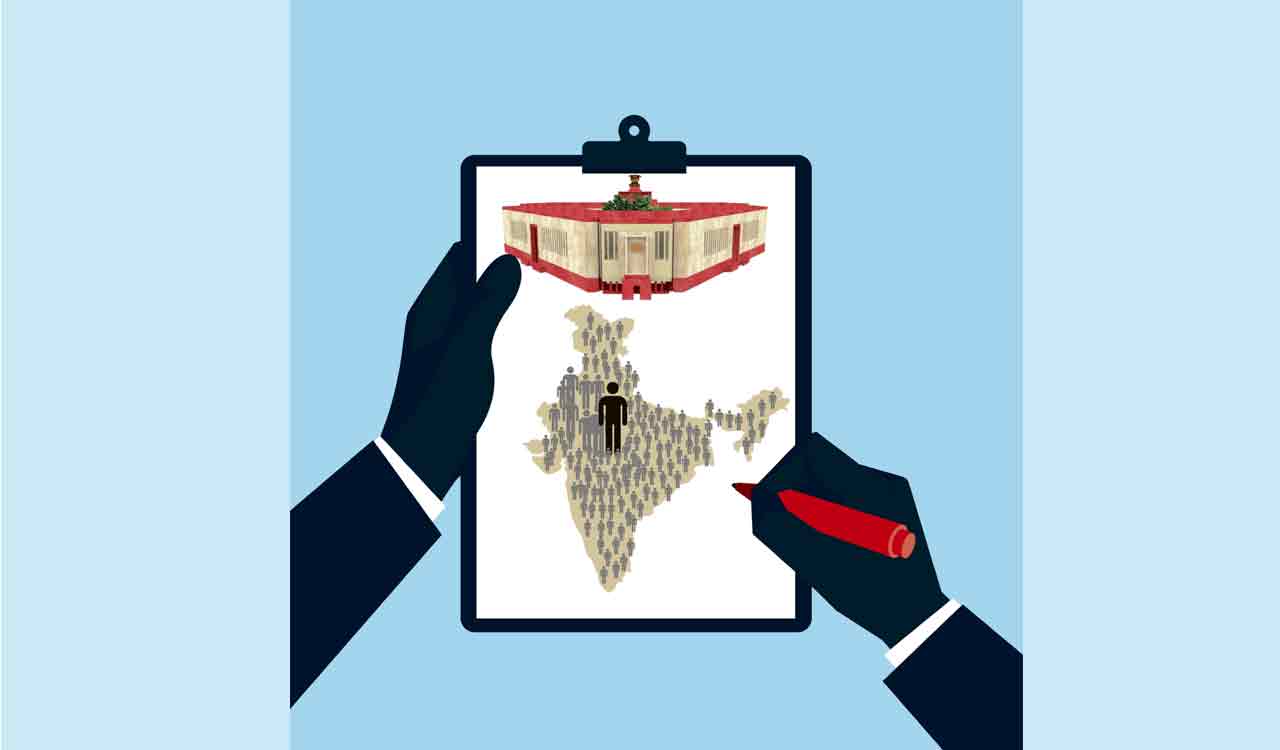
In a country plagued by political self-interest and ideological divisions, the upcoming lower house demarcation process has become a hot topic of discussion. Scheduled for 2026, the entirely population-based process has raised eyebrows, especially for southern states. These countries, once at the forefront of implementing strict population control measures to help the country cope with its population burden, now find themselves grappling with the consequences of their success.
Over the past three decades, southern states have made significant improvements in various human development indices, including effective population control measures. Their experience in implementing large-scale welfare programs, consistent with the New Economic Policy introduced after 1990, led to significant improvements in the quality of human resources and social change in the industrial infrastructure sector. Southern states have become beacons of progress, embodying the spirit of population control slogans such as “Two of us—Two of us, one is enough—Two is the limit” that once inspired the nation and pushed the respective states moving forward.
return to governance
India’s demarcation exercises date back to 1952, when the first major exercise was held ahead of the country’s first general election. Demarcation exercises have since been conducted in 1963, 1973, 2002 and 2008. Notably, after 2002 delineation did not increase the number of seats in the Lok Sabha due to constitutional constraints and the complexities involved in ensuring equitable representation based on imbalances in the population growth of the states.
The demarcation process, originally scheduled for 2002, was delayed until 2026, according to the census at the time. This could lead to serious differences in the number of Lok Sabha seats between northern and southern states due to population controls and other human development indicators in each state. Ignoring this widening gap and advancing a demarcation process based solely on demographics would be akin to accepting regressive governance standards and rewarding underperforming governments.
Notably, intellectuals from political parties in the southern states have begun to voice their concerns. It is believed that this discussion will be critical in shaping the outcome of this issue beyond 2026.
BJP’s Political Interests
However, under the Bharatiya Janata Party (BJP), the central government has a record of making decisions without consulting political parties or relevant sectors of society, often prioritizing its ideological and political interests. From demonetization to the implementation of the flat tax system and the repeal of Section 370, and the controversial new farm law, many decisions have been made in favor of its political ideology or majoritarianism, disregarding the diverse needs of the country.
Likewise, the BJP appears poised to press ahead with its plans to increase seats in the Lok Sabha, which could exacerbate the existing gap between North and South. The party is likely to focus on states like Uttar Pradesh, Bihar, Madhya Pradesh, Rajasthan and Gujarat to significantly increase seats, capitalizing on their political prospects and potential majority decision-making power. It is worth noting that the BJP’s attempts to gain a foothold in the south have been largely unsuccessful for decades.
In order to take advantage of the demographic advantages brought about by the increased seats in the Lok Sabha, the BJP may present various arguments in favor of the demarcation process. These could include constitutional requirements for fair representation based on population growth, the value of one person, one vote, and the promise of better services to the people. However, it must be noted that the Constitution has been amended 105 times since independence to ensure equal opportunities for all citizens. Relying solely on population as the basis for adding seats could cause serious injustice to the southern states, especially if the delineation commission’s guidelines are not changed.
new method
It is therefore imperative to adopt a new approach that ensures representation of all states in Parliament. Until then, the central government should focus on implementing population control methods in the northern states and conduct public awareness campaigns. Also, part of the solution may involve increasing the number of Lok Sabha seats according to existing ratios, regardless of population growth. Currently, parliamentary constituencies in mountainous areas have lower numbers of voters compared to cities or other parts of the country. Therefore, if the North’s seats increase substantially based on population size, it is only fair for the South to increase proportionally without affecting current overall state representation.
However, given the current record of the central government prioritizing political interests and discriminating against southern states in the allocation of funds and programs, there is little hope of adequately addressing southern concerns. Political parties in the region must therefore step up their efforts to keep putting pressure on the center to transcend its political affiliation and agenda. It is crucial to form a dedicated committee or study group to provide meaningful recommendations and alternative solutions, which should be brought to the central government with firm determination to ensure their implementation.
The potential for the central government to implement the demarcation process without regard to the concerns of the southern states could have significant implications for the country’s cooperative structures. Since independence, various parts of India have grappled with secessionist rhetoric and movements against the state. However, South India has always been firmly integrated into the Union of India, maintaining its true federal structure. The region has been showing a lack of anti-India sentiment and movement. If the proposed demarcation operation does not adequately address the concerns of the developed southern states, it risks sowing the seeds of separatist sentiment among the people of these states.