the challenge is to keep countries including brazil, india and south africa within its sphere of influence
Posted Date – Fri, 5/19/23 at 12:45pm

representative image.
Jose Caballero
Hyderabad: The reluctance of some countries to support the West’s position on Ukraine is a wake-up call. Western leaders must now determine what they can offer to powerhouses including Brazil, India and South Africa to keep them on their toes.
A new generation of alliances can begin to redistribute global power and involve emerging economies more in decisions that affect and reflect their interests. New alliances could also include fairer terms of trade and more effective development or aid programmes.
This should help ensure the sustainability of broader global coalitions, such as backing Ukraine. For now, the global consensus in favor of Ukraine appears to be splintering. For example, Brazil has not directly condemned Russia, despite its support for several UN resolutions in favor of Ukraine.
Brazil has also rejected calls to send military supplies to Ukraine. During India’s membership of the UN Security Council, it abstained in conflict-related votes. All of this points to growing dissatisfaction with the West’s leadership in global institutions and global decision-making, which some believe has too much power over other countries.
Game of Thrones
International power is largely determined by the relative economic and military power and historical influence of countries. For example, permanent membership of the UN Security Council is based on post-World War II strength.
Power relations are often described as relations between superpowers or “big” and “non-big” powers. These power gaps have resulted in large economies such as Brazil, India and South Africa being seen as less important in international affairs.
Some believe that international institutions such as the United Nations have given non-great powers a “greater say” in influencing global affairs, but at the same time limit their autonomy and drain their already limited diplomatic resources. Their lack of veto power (granted only to China, the UK, the US, France and Russia) often forces them to align their policy positions with those of the superpowers.
This power structure has ultimately led to the marginalization of countries that may lack military power but are seen as economic power in their own right, such as Brazil, India and South Africa.
China and the West
Amid this discontent with historical power inequalities, China has added its own agenda and power play: providing and enhancing alternative sources of political and economic influence.
For now, China is eager to show that it has more to offer Brazil, India, South Africa and others than the West. One sign is that Brazilian President Luiz Inácio Lula da Silva’s visit to China in April 2023 included many agreements and investment commitments.
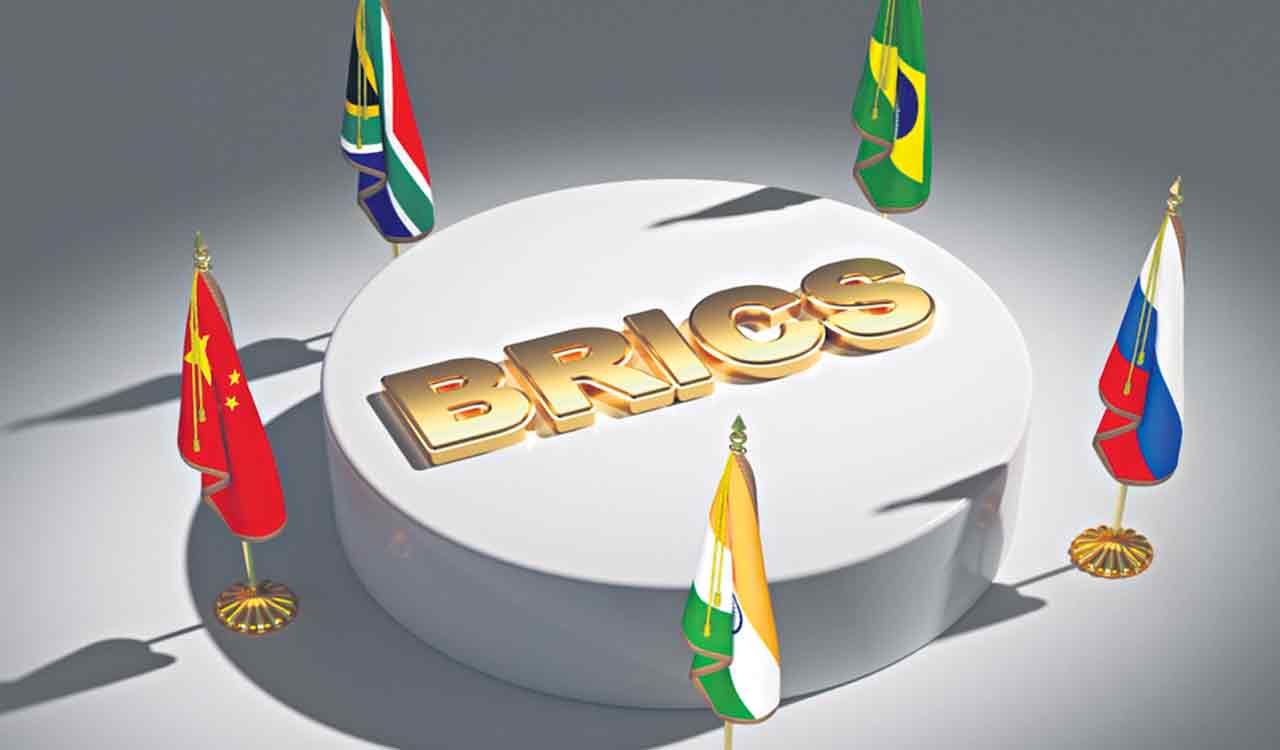
There is also evidence of a shift in politics and economics from the US to China, notably by reducing reliance on the US dollar and strengthening the BRICS alliance of Brazil, Russia, India, China and South Africa.
The group was formed in 2009, arguably to reduce the political dominance of the US and Europe. In 2015, member states established the New Development Bank as an alternative to Western-dominated economic institutions such as the World Bank and the International Monetary Fund as a way to secure infrastructure funding.
Then in 2022, the group began discussions to expand membership to other countries, with Argentina, Indonesia, Nigeria, Saudi Arabia, Thailand and the United Arab Emirates expressing interest. The group’s goals are to represent a portion of the world with 30 percent more GDP than the United States, more than 50 percent of the world’s population, and control 60 percent of the world’s natural gas reserves.
rise of china
At the same time, China’s military power in Asia may soon surpass that of the United States, so the United States sees a need to counter China’s influence in global institutions.
China’s clear stance of non-interference in the internal affairs of other economies seems to be more beneficial to other countries. This is often compared to Western interference in the internal affairs of other countries, especially the United States’ long history of interventionism around the world.
The expanded BRICS alliance provides an institutional platform for non-major countries such as Brazil and India to gain a greater say in international affairs. It could also give them a more prominent role in decisions affecting their national interests. Importantly, any increase in membership will also increase China’s diplomatic clout.
The challenge for the West is to balance these trends so that countries including Brazil, India and South Africa remain within its sphere of influence. A new agreement, especially for these large democracies, could be crucial and an alternative model needs to be pushed to address the current state of international affairs.
www.theconversation.com