Given that this is an election year, the wish list will be long and it will be a challenge to put it in order.
Posted Date – 12:40 AM, Sat – 1/14/23

by B Yerram Raju
Hyderabad: Budgets, whether union or state, always get people excited. Loud murmurs from finance ministers and wild expectations from policymakers and economists added to the excitement. Well, everyone knows that a budget is an expectation at best. Not all expectations lead to fulfillment. With gasoline prices soaring and inflation pushing up the prices of all household consumer goods, the housewife is more eager than anyone else to keep an eye on what awaits her.
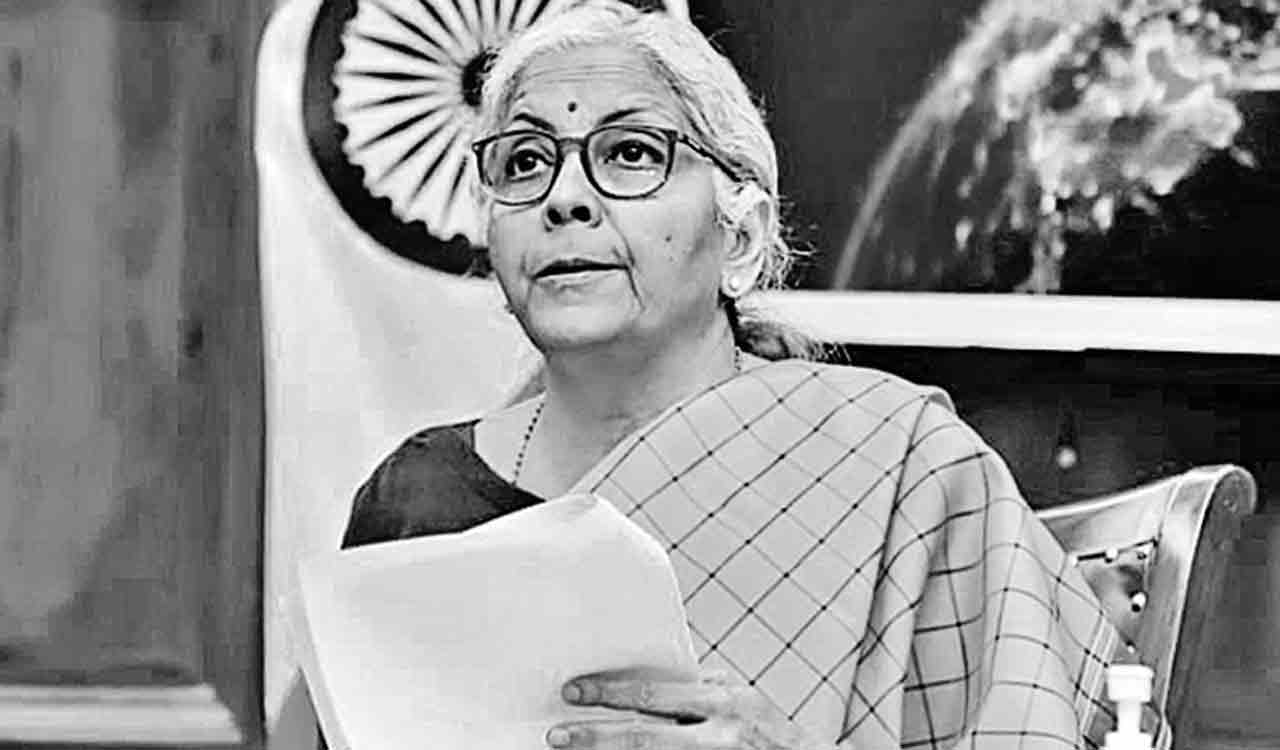
Nirmala Sitharaman knows that this is an election year, and even her party is looking up to her. The prominent capitalist Bharatiya Janata Party is waiting for a budget with a socialist agenda. The World Bank’s latest growth estimates put India’s GDP growth at 6.6% in 2023-24 before slowing further to 6.1% the following year. If reports so far are any indication, the union budget will be growth-oriented and likely boost manufacturing and exports.
Non-BJP countries resisted. Party discipline silences the country ruled by the BJP. The states’ legitimate share of tax revenue has been swallowed up by unaccounted-for taxes collected by the Center in multiple sectors. There is a lag in sharing revenue with the states under the 15th Finance Commission.
good and bad
Sitharaman is sure to take advantage of some good things happening on the policy front, PM Gati Shakti, National Logistics Policy, National Education Policy, achievements in the health sector, post-Covid economic rebound, G20 presidency, CoP commitments approaching timelines.
The failures are also staggering: failures of national farm policy and laws, slowing service sector growth, interstate water disputes, unfinished drinking water mandates, rising inequality, unhappy cooperative federalism, and more. The upcoming election is bound to put pressure on any logical approach to the budget.
Ahead of the budget, the center approved the National Green Hydrogen Mission Project, which is expected to bring in Rs 8 trillion in investment and has an eye on the global market. PLI is hyped across 14 industries but has yet to show up in growth in manufacturing. Front-end micro and small businesses have yet to gain momentum and the government is doing everything it can to transform these businesses into organized businesses through massive digitization efforts.
2020-21 and 2021-22 have been painful and stressful pandemic years. Investors still see India as a desirable destination as it is one of the few countries breathing fresh growth air despite a weaker-than-expected growth rate of 7% for the current fiscal. India’s sovereign spread was broadly stable at 1.4% in December, the World Bank said, as India used its international reserves ($550 billion, or 16% of GDP in November) to curb excessive exchange rate volatility, thereby helping to limit rupee depreciation. The levels are similar to those in the five years before the pandemic.
India’s domestic consumption surge, festive market boom and December 2022 GST collection tops 14950.7 despite global slowdown, severe supply chain disruptions and Russia-Ukraine war sparking uncertainty in oil and commodities markets billion rupees. The contribution of inflation to this growth should not be underestimated.
challenging times
The aluminum industry has called on the government to provide appropriate help to meet the challenges of foreign imports amid rising costs and declining market share. It expects India’s demand for aluminum to grow exponentially from the current 4 million tonnes per annum (MTPA) to 10 MTPA by 2030, requiring around Rs 4 trillion to expand capacity to meet the growth in demand.
Export-sensitive industries, which already received 74 percent of the incentives, may get a special exemption in the budget. These include gems and jewelry, ceramics and glassware, leather and leather goods, pharmaceuticals, engineering and electronics, drones, wearable devices, specialty steels, textiles and textile components, automotive components. Due to the global economic slowdown, these industries will be adversely affected. Even those in dire need, as their priorities have shifted to survival, won’t openly import. Resilience and sustainability require a very careful assessment by the finance minister.
In its December report, TransUnion CIBIL mentioned that loans to micro, small and medium enterprises (MSMEs) reached Rs 73 trillion in FY22. But only one-third of the 6.3 million units paid GST, according to the MSME ministry. Trends and progress reported by the Reserve Bank of India mentioned that Covid-19 fueled NPAs and they grew by 12.59% in the last quarter of FY22. While credit grew by 18%, 17% of ECLGS (Emergency Credit Line Guarantee Scheme) accounts totaling Rs.104 crore became non-performing assets.
To give MSMEs a sense of accomplishment under the Atmanirbhar Bharat scheme, the Minister included several service sectors such as tourism and hospitality as eligible for additional credit. The whole scheme, especially the SME subprime debt scheme and the credit guarantee scheme, needs to be overhauled to ensure that these front-end people in the manufacturing supply chain get a real boost.
Rising inequality is worrying. Money Life, a year ago, according to an Oxfam report, stated that the 98 richest Indians had the same wealth as the bottom 552 million people, and that a 4% tax on the rich could generate enough revenue for the country to drive PM Gati Shakti, Infrastructure and Logistics.
Wealthy farmers earning more than Rs 5 million per annum can be taxed at 5%, while those with farm income above Rs 1 million can be taxed at 10% and there should be no GST on agricultural products. So far the center has cut fertilizer and food subsidies and they need to be better positioned, especially since FCI has enough remaining stock. All agricultural exports should also be incentivized, which would be cheered.
share more
Taxes in all sectors should be abolished, as it is a cunning means of depriving states of their share of legitimate revenue. Since all stock transactions are demat, increasing the percentage of tax on stock transactions without changing the corporate tax rate could result in an immediate increase in revenue.
Public debt is a serious problem all over the world and India is no exception. While the statistician’s show can mask the impact to some degree, any future debt will be a decade-long burden on the next generation. It is necessary to view debt as a poor substitute for supplementing income. Social freebies are hard to contain in this year’s election, but require a high degree of calibration. One way to do this is through evaluation studies to determine the impact of such freebies on the target demographic. They have been handed out for 75 years, yet inequality has grown. Therefore, the delivery system had to be overhauled. The gap is largely bridged by direct payments to the expected vulnerable through Jan Dhan accounts, pension payments, etc. This needs to be strengthened.
When calculated and monetized properly, carbon credits can be a great additional resource that can be used for infrastructure and defense projects. Defense is a sensitive area and assignments can be made in secret. The budget for space science and related technologies deserves adequate attention. Health and education should each account for at least 6 per cent of the allocation.
Budget announcements are a platform for introducing new policies. Against a backdrop of interstate discord and the continuing need for better governance, the wish list will be long, but cutting it rationally is the art of budgeting.