The Center must work to reform its customary law to end discrimination against women, not the UCC
Post Date – 23rd Sunday, July 23rd at 11:50pm

Author: Arun Sinha
While pushing for a unified civil code, the BJP has suddenly turned cautious: It has heard alarm bells in tribal areas. India’s more than 700 tribes have their own customary laws governing marriage, divorce, inheritance and inheritance. They consider them sacrosanct. The BJP sees a major risk in forcing them to abandon tribal codes and accept a unified code. It sees risks to the country: racial violence, setbacks to national integration and a reversal of the peace process in the Northeast. It sees the political risks it faces: shrinking tribal electoral bases, frustrated tribal leadership elections, defections from allies and loss of power in Northeastern states.
United Opposition
Some local political parties, community organizations, and religious groups in the Northeast openly opposed the unified civil code. The chief ministers of Nagaland, Mizoram, Meghalaya and Arunachal Pradesh all objected. The parties led by these chief ministers are all allies of the BJP. Still, they objected, as the tribes they represented all opposed it.
Nagaland Chief Minister Neiphiu Rio, who led a delegation of ministers to Delhi in early July to meet Union Home Minister Amit Shah, argued that a unified civil code would violate Article 371(A) of the constitution, which guarantees the protection of customary laws and traditions of the Naga people. Days before the meeting, Rio’s party, the nationalist DPP, assured the Nagas: “We … are steadfast in protecting and preserving our identity, customs, traditions and unique history.”
No wonder Sushil Modi, a BJP MP and chairman of the Standing Committee on Laws in Parliament, has suggested that a unified civil code should not apply to tribes. Vanvasi Kalyan Ashram, an organization in Rashtriya Swayamsewak Sangh that works among the tribes, echoed Sushil Modi’s statement that the Law Commission should visit the tribal areas “to gain insight into the traditional systems of the tribal communities on matters such as marriage, divorce, adoption, succession, etc… before submitting any report to the government…”. Media reports, citing Nagaland government sources, said Amit Shah had assured a delegation led by the chief minister that tribes would not be affected by the proposed unified civil code.
Rolling autonomy
After independence, India designated tribal areas as special governance areas, and the Indian state respected the autonomy of tribal councils. It gives tribes special rights and privileges to preserve and pursue their way of life. They are free to follow customary law in family affairs, resolve interpersonal disputes through tribal village committees, own and use forest land, utilize and manage natural resources, and so on.
For many years, however, the state suppressed tribal autonomy in making decisions about the development of natural resources in tribal areas. Tribal autonomy exists only in family and social affairs. If the tribes were forced to abide by a uniform civil code, they could even lose this last self-governing island.
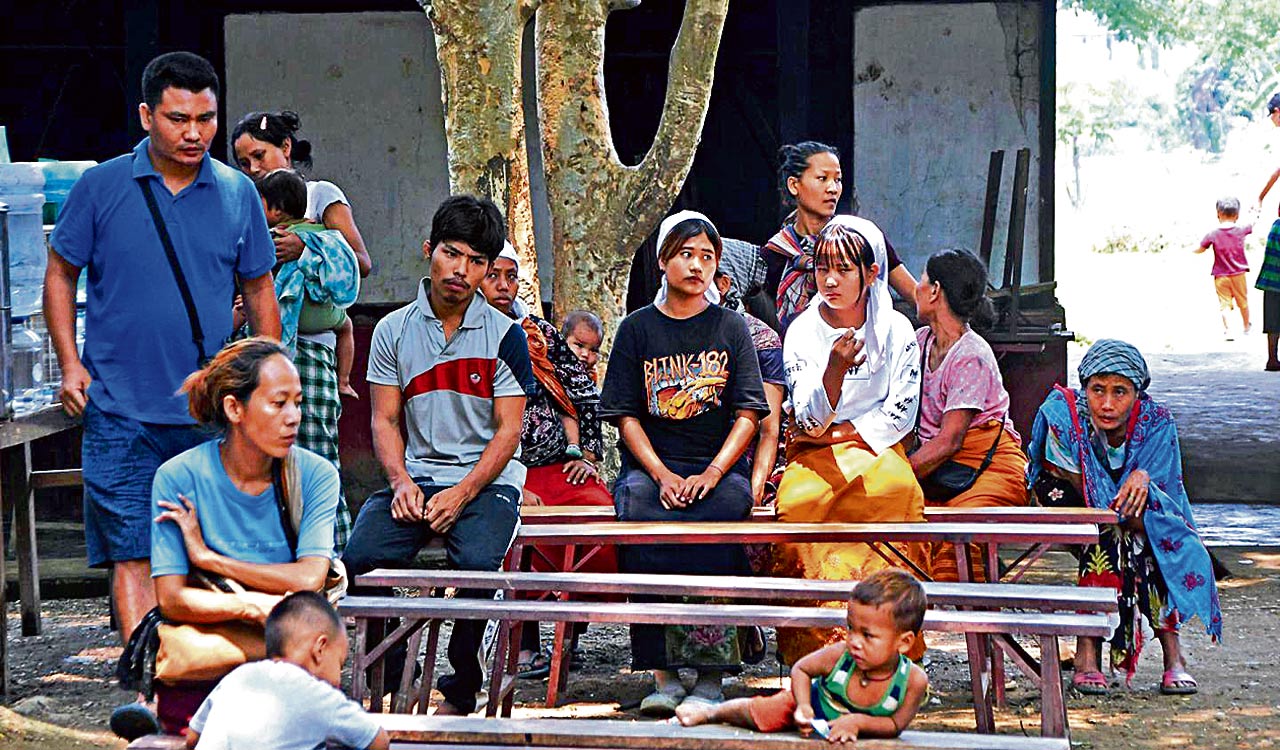
The central government must stop invading the last island of tribal autonomy. At the same time, it must slowly advance with the participation of the tribe, correcting the deformities and abnormalities of its landscape. Because this island is not Eden for every resident. This is certainly not a female Eden. It is the men who enjoy the fruit; the women get the leftovers; often they get nothing.
women’s rights
According to Mizo customary law, the youngest son inherits his father’s property. Daughters cannot share in the father’s property. Among the Geelong and Wancho of Arunachal Pradesh, sons receive their father’s property, not daughters. Among the Naga, the youngest son inherits most of the property, including the ancestral home. Real estate such as land is equally distributed to the sons. But the daughters got nothing. Even without a son, they get nothing. Property is owned by close male relatives such as the father’s brother or his son. The same goes for the Santhal and Oraon of Jharkhand, the Jamathya and Haram of Tripura, and the Dongariya-Kanda and Baudhi-Buyan of Odisha. A father in a tribe may give his daughter a small piece of land as a gift, but this is rare. In any case, the daughter got it as a gesture of goodwill, not out of justice.
Divorced women are no better off than their daughters. According to Mizo customary law, a man can divorce his wife and deprive her of any rights to family property simply by saying “Ka ma che” (I divorce you). This is worse than muslim men abusing the rule of spaced triple talaq to fire their wives.
Not all married women in the tribe lived happily either. Polygamy is common in wealthy families. The Fifth National Family Health Survey (2019-20) found the highest prevalence of polygamy among Northeastern tribes. The wives had to work at home and on the land. They are excluded not only from ownership and management of assets, but also from important decisions in households, villages and communities. No wonder, women MPs are rare in the legislatures of Nagaland, Mizoram, Meghalaya and Arunachal Pradesh.
All in all, imposing a uniform civil law on the tribes was whimsical, arbitrary, and tyrannical. They must be allowed to retain the last self-governing island. However, the central government should start a dialogue with them to reform their customary laws to end discrimination against women. Daughters must have equal rights to their parents’ property, divorced women must receive an adequate share of family property, alimony and polygamy must end.
In 2014, Mizoram passed a law (Mizo Marriage, Divorce, Property Inheritance Law) to reform customary law. It shows evolution. The central government can create an atmosphere through dialogue among other tribes to reshape their ancient family laws. This may not happen in a day. It could take decades. But the dialogue must begin. Tribal women are full of yearning for this.