


UPSC does not expect academic knowledge and understanding of “tools of mind” to tackle case studies, but conceptual clarity from candidates
Posted Date – Friday, 5/26/23 at 12:45am
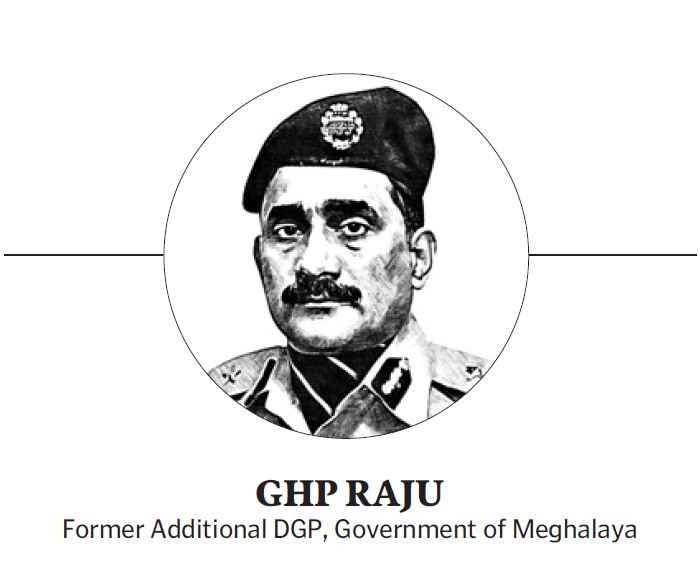
by GHP Raju
It is well known that topics such as morality, ethics, and integrity fall within the general scope of philosophy. Philosophy as a subject is the least favorite of any student during college and some aspiring candidates choose it as an elective subject in UPSC. The curriculum of our education system neither introduces ethics, integrity or competence as a common subject, nor encourages faculty or school staff to introduce these topics for debate, discussion and reflection.
The UPSC has made Ethics, Integrity and Competency a compulsory subject in the 250-mark civil service exam, despite being fully aware of the dismal situation in the current education system. What is the rationale behind this decision?
reason
From what I understand, the rationale may be that these subjects force candidates to learn the art of thinking through abstract subjects, and the topics covered on the exam have no “right or wrong” answers. For example, in the 2022 Power Exam, the questions:
“Wisdom lies in knowing what to consider and what to ignore. It is not uncommon in bureaucracies for cadres to look at the periphery and ignore core issues. Would you agree that such preoccupation by administrators leads to justice to the cause of effective service delivery and good governance Mocking?” Comment critically.
There are 10 points in this question, and you can write 150 words in about five minutes. In the absence of a right or wrong answer, the candidate should quickly organize his or her thoughts on the question and use basic ethical thinking tools to arrive at an accurate answer with compelling logic. Each candidate offered their explanation. This is where UPSC forces candidates to learn the “art of thinking” in any subject. Our educational system rarely encourages students to learn the art of thinking through a given topic based on empirical evidence, variables, interpretations of those variables, etc.
Science subjects such as mathematics, physics, and chemistry have straight-forward answers to questions that are right or wrong, right or wrong, because they involve objective universal variables, have the same meaning and value, and lead to the same conclusion in a given context. That’s why they are called rational agents, because they are based on logic and reason.
individualism
Morality, integrity, and competence are irrational topics because their inferences and conclusions are subjective variables derived from one’s own experience, belief system, etc. Because these involve subjective variables, inferences drawn or conclusions drawn are individualistic and cannot be universally valid.
That’s why no two answers to this question are the same. Only the UPSC model answers (if any) to the questions provided to the examiners will determine the marks awarded for each candidate’s answers. This will surely compel serious civil service aspirants to learn the “art of thinking” on various topics mentioned in the syllabus of ethics, integrity and competency exam papers.
In this paper, UPSC employs a two-pronged strategy to test the theoretical aspects and applied abilities of the candidates in a time-stressed environment. The theoretical aspects are like “tools for thinking” and their understanding is tested in Part A of the dissertation. Fifty-three percent of the marks are assigned to this section. Part B deals with hypothetical situations given as case studies to test the application of the “thinking tools” learned from Part A. Forty-seven percent of the mark is assigned to this section.
The Ethics Essay asks and forces aspirants to start “thinking” with tools such as integrity, public responsibility, honesty, empathy, attitude, optimism, values, morality, rationalism, emotional intelligence, moral dilemmas, prudence, honesty, fairness, prudence, Temperance, fortitude, justice, fairness, conflicts of interest, social justice, constitutional ethics, and competence.
Most of us probably know the common sense meaning of this term, I prefer to refer to it as a “thinking tool” for civil service exams. The common-sense meaning of these “tools of moral thinking” is not much help in understanding what each tool really means, or in applying them to case studies on exams.
No wonder, out of 250 marks for this paper, very few selected candidates scored more than 130 points. Most candidates end up scoring between 80 and 100 due to a lack of proper understanding of each “thinking tool” and how to use them to interpret the case study. The Ethics Essay really showcases the innate “thinking skills” of aspirants. UPSC has been successful in this aspect of this prestigious exam.
The Ethics paper, along with the Essay paper which also carries 250 points, is a good equalizer in the civil service exam. The huge leverage offsets the undue advantage of engineering graduates taking this exam and has an advantage over students with humanities backgrounds from rural areas. Through ethics and dissertation papers, UPSC has successfully created a level playing field for candidates with technical and/or humanities background.
clear concept
Preparing for ethics, integrity, and aptitude tests involves knowing “exactly what” each thinking tool is, and using those “thinking tools” to solve as many case studies as possible. UPSC does not expect academic knowledge and understanding of these “tools of thought” to be able to resolve case studies. Candidates expect conceptual clarity of all thinking tools. Since there is no standard right or wrong, right or wrong answer, for case studies, candidates must be guided by an expert who has conceptual clarity about the case studies, discusses various other ways of analyzing them, and revisits the case with greater conceptual clarity Research.
Preparing an ethics essay is a continuous process. Every news item in the news, Supreme Court case, and every major government policy decision will be treated as a case study to identify conflicting views (moral dilemmas) and gather as many relevant facts as possible news item and explain the situation by applying the “moral thinking tools” described above.
E.g. Moral Dilemmas in Same Sex Marriage (LGBTQIA: Lesbian, Gay, Bisexual, Transgender, Queer, Intersex and Asexual), Black Money and RBI, IAS and IPS Officials Controlling Monetary Power in Elections In order to please others political masters in order to obtain the so-called plum blossom stickers, CCTV systems in public places lead to privacy and security, freedom of speech and hate speech, environmental protection and economic development, secularism and religious freedom, judicial activism and judicial restraint, etc. Service aspirants should examine all of these news items and view them as case studies in applying theoretical “moral thinking tools” and writing answers from different perspectives.
By introducing the Ethics, Integrity and Competence paper, UPSC is helping aspiring civil servants develop the habit of using ‘moral tools’ to start ‘thinking’ about various morally dilemma situations and extend the same thinking skills to other subjects in the syllabus. In this exam, being a civil servant requires “thinking” because they are “problem solvers” in governance.
(Opinions are personal. ipsraju@gmail.com)
