

Posted: Post Date – 12:50 AM, Thursday – November 3rd

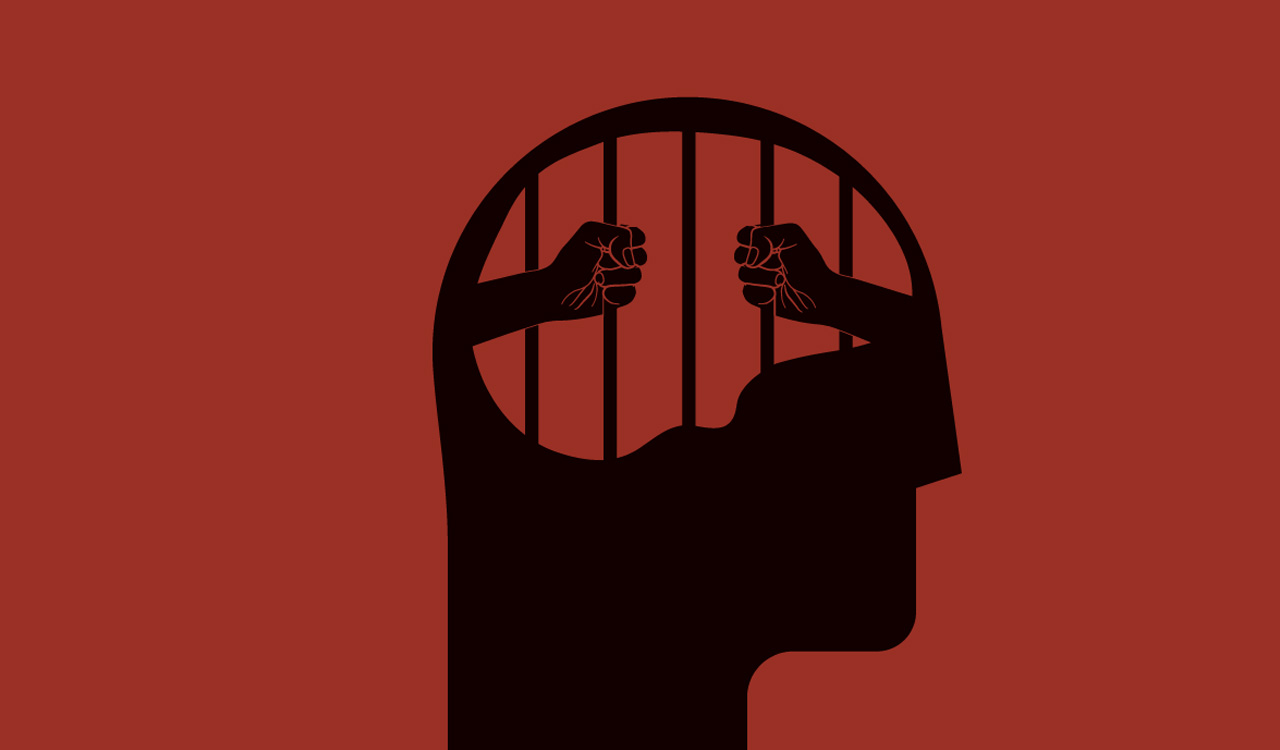
Specialised mental health services for prisoners will enable testing and rapid treatment.
Authors: Meghana Srivatsav, Forum Lalka, Moitrayee Das
October is over and people around the world are talking about mental health, and October 10th is being celebrated as World Mental Health Day. Professionals, celebrities and non-professionals alike are hyping the importance of mental health, personal struggles, seeking help, signs of mental health and more on social media. One thing is clear – mental health issues do not differentiate between people and their status. So why are we?
A group of people who are completely forgotten are in captivity. Behind the metal fence are the silent screams of silent terror that haunt the people who live within it.
lack of focus
Mental illness today is a global health challenge, and the alarming rate at which statistics are rising is an absolute nightmare. It reveals that more than 80% of the population does not receive mental health care for a number of reasons, including stigma, inaccurate information, lack of awareness and expensive services, to name a few. An important area of discussion that may not receive the attention it deserves is the mental health of prisons and prison inmates. Research reports that more than 10 million people are imprisoned worldwide. The prevalence of all diagnosed psychiatric disorders was higher among prisoners compared with the non-clinical population. Research has shown lower rates of recognition and treatment of psychiatric problems among prison inmates (Fazel et al., 2016).
While mental health in India is a whispered topic in itself, the problem of prisoners is hardly even acknowledged. Every year, thousands of prisoners in India commit suicide in prisons. They lack good food, doctors, social structures, a sense of purpose, and the drive to get better. Don’t they need the best psychological assessment and treatment to really heal them and make them better citizens and human beings? What do we need to move from a punitive prison system to a reform system? More suicides? Offense again? More false confessions? More social injustice? Seems like we’ve checked all these boxes.
Has not changed much
With the revision of the Mental Health Act 2017, India appears to be working hard to recognise the importance of access to mental health and professional training. However, not much has changed in terms of quality of care or professional training. Today, many universities offer forensic and rehabilitation psychology programs. But the skills these “trained” people acquire are limited to finding jobs in business, academia or the private sector. Forensic psychologists learn how to deal with deception detection machines and work as lab technicians.
However, there is no emphasis on training them to help prisoners reform. Instead, the focus is on finding ways and inventing unscientific machines to convict and punish their crimes. The quality of professionals and existing systems in the fields of forensic and investigative psychology is staggering, to say the least. The complex interplay between the structure of long-standing mental health problems, inmates who do not report problems, and the complete lack of care and treatment for reported or diagnosed problems creates a vicious cycle of deteriorating mental health in prisons.
Research has shown that offenders who do not receive due and adequate treatment for mental illness have significantly higher rates of recidivism (Bakker and Riley, 1996; Douglas and Webster, 1999). When cases of suicidal ideation are not reported and treated, it leads to significantly more prison suicides (Skogstad et al., 2006). Prison inmates with mental illness have a much higher risk of suicide, self-harm, violence and victimization. Minority groups, including women and older prisoners, may face different mental health challenges and their needs should be addressed accordingly (Fazel et al., 2016). A blanket approach to treating mental illness will not be effective in any case.
What can we do to address this overarching problem? Obviously, there is a lot that needs to be done and must be done. Some of them are:
● Update textbooks to incorporate the latest research in the field
● Train professionals using established and well-researched techniques that are scientifically and practically applicable to the real world
● Elimination of torture methods (physical and psychological) within the law enforcement system
● Authorize training in humanitarian investigation techniques for existing law enforcement officers
● Hire trained psychologists to work with inmates in every prison in the country
● Frequent visits by mental health professionals to prisons and operating mental health facilities
● The focus needs to be on rehabilitation, not punishment
● regular awareness campaigns highlighting the importance of the overall health of prisoners
● The judiciary and researchers must cooperate, as the joint action of the necessary officials will address serious problems in a holistic manner and lead to practical solutions
health prison
Now is the time for us to provide mental health services and functional facilities for the mental health of prison inmates so that problems can be detected and treated faster. Many studies have indeed highlighted in great detail the high incidence of mental disorders in prisoners and the urgent need for adequate mental health services there (Rabiya & Raghavan, 2018). Adequate training of prison staff is critical in this context. Understanding that the environment people live in has a huge impact on their cognitive, emotional and behavioral development.
A healthy prison environment is important for fostering healthy mental health in prisoners. Therefore, understanding the predisposing factors of multiple interactions that play a role in inmates’ mental health problems and better treatment becomes critical. A joint effort between mental health professionals and the judiciary is needed to provide timely and appropriate treatment to those in need at all times. There is a general micro-view of prisoners: “they are prisoners”. Their identity as individuals is woven into their offense and punishment. Seeing them in a macro perspective can help develop a better society. This includes providing good mental health and resources to find a different life path away from crime. We all have a responsibility to change our prejudices and prejudices so that we don’t get in the way of a fair process of treating people like people.

(Meghana Srivatsav is a criminal psychologist and founder of weareforseti.com. Forum Lalka is a practicing senior psychologist at Mindtemple, Mumbai. She is also a queer affirmation therapist and trained in QPR in suicide prevention (Moitrayee Das is Assistant Professor of Psychology at Flame University, Pune)
