





Canada Refuses to Bend – World Cup Star Denied Entry Before Toronto Match
The 2026 FIFA World Cup was promoted as a tournament of unity across Canada, the United States, and Mexico. But even before the opening stages of the competition settled into rhythm, one of the biggest questions surrounding the tournament had little to do with football itself.
Who gets to cross the border?
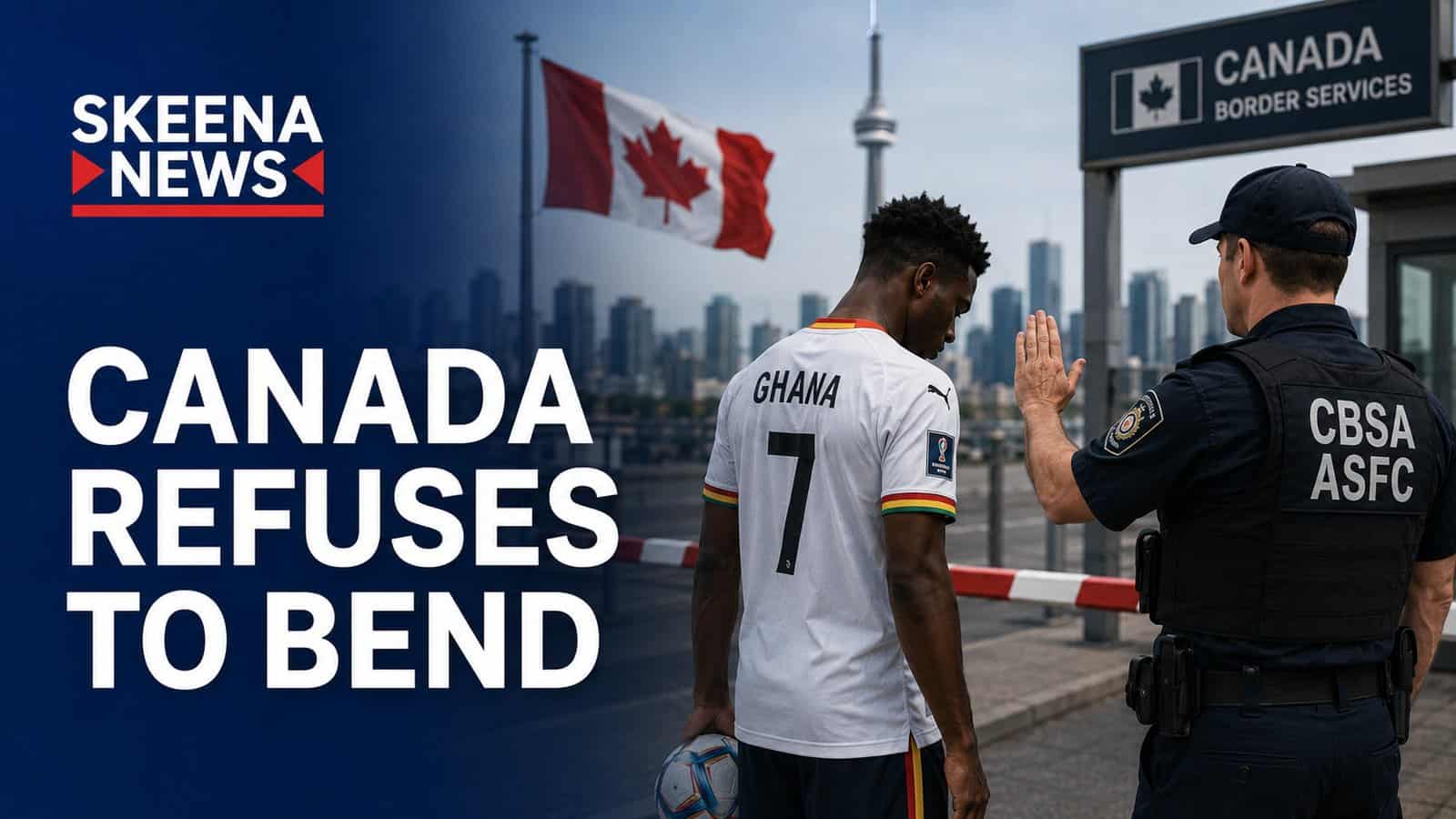
That question came into sharp focus after Ghana midfielder Thomas Partey was refused entry to Canada ahead of Ghana’s Group L match against Panama in Toronto. Partey, a senior member of Ghana’s national team, is facing multiple criminal charges in the United Kingdom, which he denies. He has not been convicted.
Canada’s decision, and the Federal Court’s refusal to grant emergency relief, has placed the issue of immigration law, criminal allegations, and international sport under a global spotlight.
Canada Says World Cup Status Does Not Override Immigration Law
Partey’s case became a major test of how far a host country is expected to go in allowing accredited athletes to enter for a global sporting event.
According to reporting on the court proceedings, Canadian immigration officials refused Partey’s temporary entry after reviewing his pending legal matters in the United Kingdom and issues connected to his visa application. His legal team argued that he should be allowed to enter Canada under strict supervision, participate in Ghana’s match, and leave the country according to the team’s schedule.
The court did not accept that argument.
The ruling made clear that participation in the FIFA World Cup does not create an automatic right of entry into Canada. For Canadian authorities, the question was not whether Partey was an important player, or whether Ghana’s team would be affected competitively. The question was whether Canada’s immigration laws had been properly applied.
That distinction matters.
In criminal law, a person is presumed innocent unless proven guilty. But immigration decisions operate under a different standard. A country may refuse entry to a foreign national if officials determine that legal or security concerns meet the threshold under domestic immigration law.
In simple terms, Canada did not need to decide whether Partey was guilty or innocent. It only had to decide whether there were enough grounds under Canadian law to deny him entry.
A Bigger Issue for Multi-Country Tournaments
The Partey case also exposes a larger problem for the 2026 World Cup: the tournament is being hosted by three countries with three separate immigration systems.
A player may be cleared to enter the United States but still face problems entering Canada. A staff member may be able to travel to Mexico but be delayed or refused at a U.S. airport. A referee or official approved by FIFA may still be stopped by border authorities.
That creates an uncomfortable reality for teams and tournament organizers. FIFA can accredit players, coaches, referees, and staff, but it cannot override the immigration laws of sovereign countries.
This is especially complicated in a tournament where teams may have matches in different countries within days. Border decisions can affect lineups, travel plans, preparation, and even competitive fairness.
Other Visa and Border Problems Have Already Raised Concerns
Partey’s case is not the only immigration controversy connected to the 2026 World Cup.
Reports have also highlighted visa and entry issues involving officials, staff, and supporters from other countries. Somali referee Omar Abdulkadir Artan was reportedly denied entry to the United States despite being selected for the tournament. Iran’s national team also faced reported delays and restrictions involving support staff and travel arrangements.
These incidents have raised questions about whether the co-hosted tournament has enough practical coordination between governments, football authorities, and national federations.
For fans, players, and officials, the slogan of a welcoming World Cup can quickly collide with the reality of border screening, diplomatic tension, and national security policy.
Ghana Frustrated, But Canada Holds the Legal Line
The Ghanaian side has understandably viewed the decision as a serious blow. Losing a senior midfielder before an opening World Cup match can affect team balance and morale. Ghanaian officials and supporters have argued that pending charges should not be treated as guilt.
That concern is not without emotional weight. Athletes, like anyone else, have legal rights. Allegations must be tested in court. Public judgment should not replace due process.
But Canada’s position reflects a different legal principle, entry into a country is not automatic for non-citizens.
A major sports tournament may create international expectations, but it does not erase national border authority.
That is the central tension in this case.
The presumption of innocence protects a person in criminal proceedings. It does not necessarily force another country to admit that person across its border while serious charges remain unresolved.
The Lesson for Federations and Players
For national football federations, the case carries a practical warning.
Visa applications for major tournaments can no longer be treated as routine paperwork. Every player, coach, official, and staff member may need careful legal review before travel documents are submitted. Mistakes, omissions, or incomplete answers can have serious consequences.
This is especially true when a player has pending legal matters in another country. Even if the player has not been convicted, immigration authorities may still examine the underlying allegations, court status, and application history.
For athletes, the message is also clear: sporting status does not place a person above border law.
Sport Is Global, But Borders Are Still National
The 2026 World Cup is meant to be a celebration of football across North America. But the tournament is also showing that global sport still depends on national permission.
FIFA can organize the competition. Teams can qualify. Players can be selected. Fans can buy tickets.
But at the border, the final decision still belongs to the host country.
That reality may become one of the defining off-field lessons of this World Cup. In an era of larger tournaments, multi-country hosting, and rising political tension, immigration systems are no longer a background issue. They can shape who plays, who officiates, who attends, and how fair the tournament feels.
For Canada, the Partey decision was about applying domestic law. For Ghana, it was a sporting and diplomatic setback. For FIFA, it is a reminder that the future of global tournaments may require stronger planning around visas, legal risk, and border coordination.
The game may be international.
The border is not.