




One Fibre Cut Disconnected Northwestern B.C. — and Exposed a Bigger Problem
Vandalism between Fraser Lake and Burns Lake disrupted internet, mobile, television and telephone services across a vast region, raising new questions about network redundancy and emergency preparedness
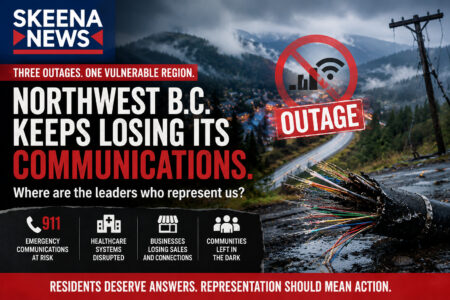
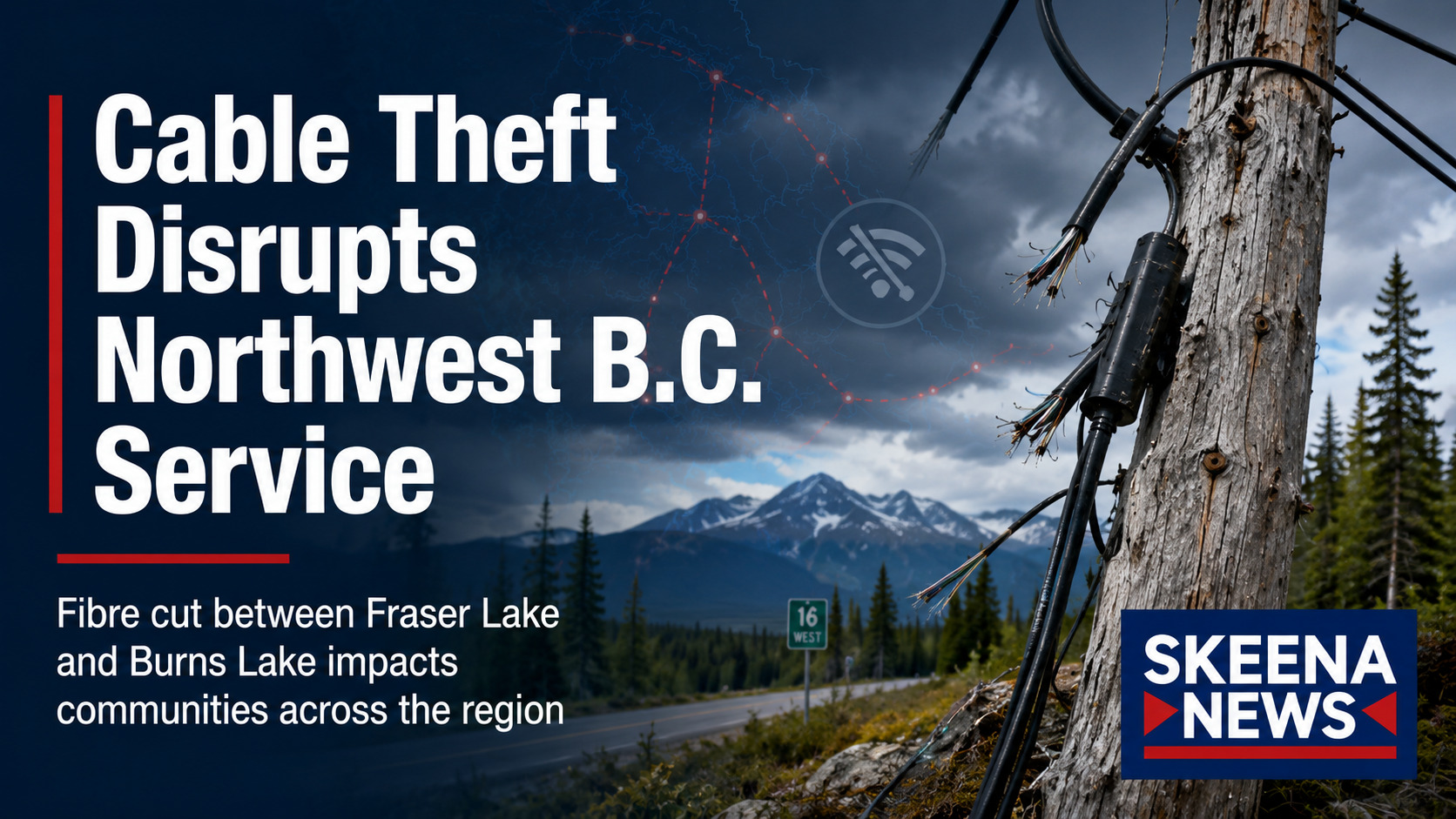
A major telecommunications outage on Sunday, August 2, left communities across Northwestern British Columbia without reliable internet, mobile service, television and telephone connections after infrastructure was damaged between Fraser Lake and Burns Lake.
CityWest identified the cause as vandalism connected to cable theft. The damaged line formed part of a major telecommunications route serving communities west of Fraser Lake, allowing one incident in the Central Interior to disrupt services hundreds of kilometres away.
The outage affected parts of the Bulkley Valley, the Hazeltons, Terrace, Kitimat, Prince Rupert, Haida Gwaii and several smaller rural, coastal and Indigenous communities.
For many residents, the disruption was more than an inconvenience. Businesses lost payment-processing systems, residents struggled to make calls, internet-based services stopped working and emergency agencies warned that access to mobile 911 could be affected.
Service began returning later Sunday evening, although restoration times differed by location and provider.
The outage has renewed concerns about the vulnerability of Northwestern B.C.’s telecommunications infrastructure and why one damaged cable can repeatedly disconnect such a large portion of the province.
What happened
The outage began shortly after midday on August 2.
CityWest’s outage information identified the problem as vandalism involving cable theft along the route between Fraser Lake and Burns Lake.
The available information indicates that people attempting to steal copper damaged fibre-optic infrastructure in the process.
Fibre itself carries data through thin strands of glass and has little scrap value. However, fibre lines can be installed near copper telephone cable, electrical equipment, grounding wire or steel-armoured infrastructure.
People targeting copper may cut into a cable without understanding what it contains, causing damage far beyond the value of anything they could steal.
Authorities have not publicly disclosed the exact location of the August 2 damage, whether copper was successfully removed or whether suspects have been identified.
The research gathered following the outage also found no confirmed public information about arrests or charges connected specifically to this incident.
Where services were affected
The disruption spread across a wide portion of Northwestern B.C.
Communities reported or believed to have experienced some level of service interruption included:
- Fraser Lake
- Burns Lake
- Houston
- Telkwa
- Smithers
- Witset
- New Hazelton
- Hazelton
- South Hazelton
- Terrace
- Thornhill
- Kitimat
- Prince Rupert
- Port Edward
- Haida Gwaii
- Several First Nations and remote coastal communities
The exact effect differed by provider and location.
Some customers lost all services, while others may have retained limited telephone, mobile or internet access through another provider, satellite service or private communications network.
TELUS and CityWest customers both experienced disruptions. Mascon and smaller providers relying on regional wholesale connections may also have been affected.
The underlying research dossier describes the outage as extending from the Nechako Valley through the Bulkley Valley, the Coast Mountains and North Coast to Haida Gwaii.
Why one cut caused such a large outage
The scale of the outage reflects the geography and design of Northwestern B.C.’s telecommunications network.
In large urban centres, fibre systems are commonly built as rings or interconnected networks. If one route fails, traffic can often be redirected through another physically separate route.
Northern and rural regions are more difficult and expensive to serve.
Long-distance fibre lines often follow highways, railway corridors and utility rights-of-way because building separate routes through mountains, forests and remote terrain can cost millions of dollars.
Highway 16 functions as one of the main east-west telecommunications corridors serving Northwestern B.C.
A simplified route runs from Central B.C. through Fraser Lake, Burns Lake, Houston, Smithers and the Hazeltons before reaching Terrace. From Terrace, connections branch toward Kitimat and Prince Rupert, with additional infrastructure serving coastal communities and Haida Gwaii.
When the fibre was damaged between Fraser Lake and Burns Lake, communities west of the cut lost their connection to the wider network.
Local cell towers may have remained powered, but towers still need a working backhaul connection to carry calls and data to the rest of the network.
That explains why a phone may still show signal bars while calls, texts and mobile data fail.
Emergency-service concerns
The outage raised serious concerns about access to emergency communications.
When a mobile network fails, a cellphone may attempt to connect to another carrier for a 911 call. However, that fallback only works if another functioning tower is available and if that tower has not lost its own backhaul connection.
In Northwestern B.C., different providers may still depend on the same or closely connected long-distance infrastructure.
That means multiple networks can fail during the same fibre cut.
Residents were advised to use a functioning landline where possible. In areas where neither mobile nor landline service worked, people may have needed to travel directly to a fire hall, police detachment, ambulance station or hospital.
The outage demonstrates that Northern communities need emergency communication systems that do not depend entirely on one terrestrial fibre route.
How Starlink helped
Starlink users were among those able to remain connected during the outage.
Unlike conventional internet, Starlink does not depend on the damaged Highway 16 fibre line to connect the customer to the internet.
A Starlink dish sends data to satellites in low Earth orbit. The traffic is then carried through Starlink’s satellite and ground-station network before reaching the broader internet.
Because the signal travels through space rather than through the damaged regional fibre route, Starlink connections could continue operating as long as customers had electricity and a clear view of the sky.
Residents and businesses with Starlink could continue to:
- Access outage information
- Communicate through email and messaging applications
- Use Wi-Fi calling where available
- Continue some online business operations
- Process payments in some cases
- Work remotely
- Share internet access with others
- Publish emergency and community updates
Starlink’s role during the outage shows the value of satellite connectivity as an independent backup system.
However, it is not a complete replacement for fibre.
Starlink requires electricity, can be affected by obstructions or severe weather and has less overall capacity than a major fibre-optic backbone.
During a power outage, Starlink will also stop working unless it is connected to a battery, generator or other backup-power source.
The best use of Starlink is as a secondary emergency connection at hospitals, fire halls, municipal offices, First Nations offices, police detachments and other essential facilities.
This has happened before
The August 2 outage was not the first major telecommunications disruption linked to cable theft in the Burns Lake area.
On May 4, another cable was damaged near the Sheraton rest area east of Burns Lake during an apparent copper-theft incident.
That outage affected communities including Burns Lake, Smithers, the Hazeltons, Terrace, Prince Rupert and Masset.
The similarity between the two incidents is concerning.
Two major disruptions within approximately three months suggest the region remains exposed to the same physical vulnerability.
Northwestern B.C. has also experienced other telecommunications failures caused by vandalism, damaged fibre, equipment problems and subsea-cable issues.
The causes may differ, but the result is often the same: communities lose communications because there are too few independent routes available.
Why redundancy matters
A backup fibre cable does not provide real protection if it is installed in the same trench, on the same poles or through the same roadside cabinet as the primary cable.
One cut, fire, landslide or vehicle collision can damage both connections.
True redundancy means building a physically separate route.
For Northwestern B.C., that could involve:
- A second terrestrial fibre route using another highway or utility corridor
- A Highway 37 connection into Terrace or the North Coast
- Greater use of coastal and subsea fibre
- Regional fibre rings
- Emergency microwave links
- Satellite backhaul for essential services
- Automatic traffic rerouting between providers
The Connected Coast project may eventually improve coastal network resilience, but governments and providers need to explain which communities are connected, whether the route is fully operational and whether it can carry regional traffic when the Highway 16 line fails.
What should be done
The region needs both immediate protection and long-term infrastructure investment.
In the short term, essential facilities should have:
- Starlink or another satellite internet system
- Backup generators or batteries
- Satellite telephones
- Radio communications
- Tested emergency procedures
- Public emergency Wi-Fi locations
High-risk telecommunications sites should also be protected with:
- Tamper-resistant cabinets
- Cameras
- Cut and vibration sensors
- Stronger conduit
- Buried fibre where practical
- Faster automatic alerts to police
British Columbia should also review scrap-metal regulations.
Possible changes include banning cash purchases of high-risk copper, requiring electronic payments, photographing sellers and materials, recording licence plates and reporting suspicious transactions in real time.
The financial benefit to thieves is often small, but the damage to communities can be enormous.
Questions still unanswered
TELUS, CityWest and governments should publicly explain:
- Why one cable cut affected such a large region
- Whether a functioning backup route existed
- Why traffic was not automatically rerouted
- What improvements were made after the May 4 outage
- Whether Connected Coast could have provided backup capacity
- How many customers and communities were affected
- Whether 911 service failed in any locations
- What protection will be added to the Fraser Lake–Burns Lake corridor
- When Northwestern B.C. will receive a physically separate second fibre route
Residents and businesses across the region increasingly depend on internet and telecommunications for daily life, healthcare, emergency services, banking and commerce.
When one act of vandalism can disconnect communities from Burns Lake to the North Coast and Haida Gwaii, the problem is no longer simply a damaged cable.
It is a regional infrastructure weakness that requires a regional solution.