





Northwest B.C. Faces a Housing Test as Resource Development Accelerates
PRINCE RUPERT, B.C. — Northwest B.C.’s housing shortage is becoming increasingly difficult to separate from the region’s economic ambitions, as major projects and expanding industries compete for workers in communities where finding a home can already be a challenge.
From Prince Rupert’s port and logistics sector to industrial development in Kitimat and growth around Terrace and Smithers, the Northwest is positioning itself for continued investment. But municipal housing assessments show that communities across the region will need thousands of additional homes over the coming years.
The challenge is no longer simply attracting investment.
It is whether the region can provide enough housing for the people who will be needed to support it.
Prince Rupert provides one of the clearest examples.
The city has identified substantial housing needs over the coming years, while its location, limited land base and construction costs present additional challenges for developers. The city’s housing strategy includes measures aimed at increasing supply, including making better use of city-owned land, reducing development barriers and encouraging new rental construction.
A recently completed project in the city is offering one possible approach.
A different way to build
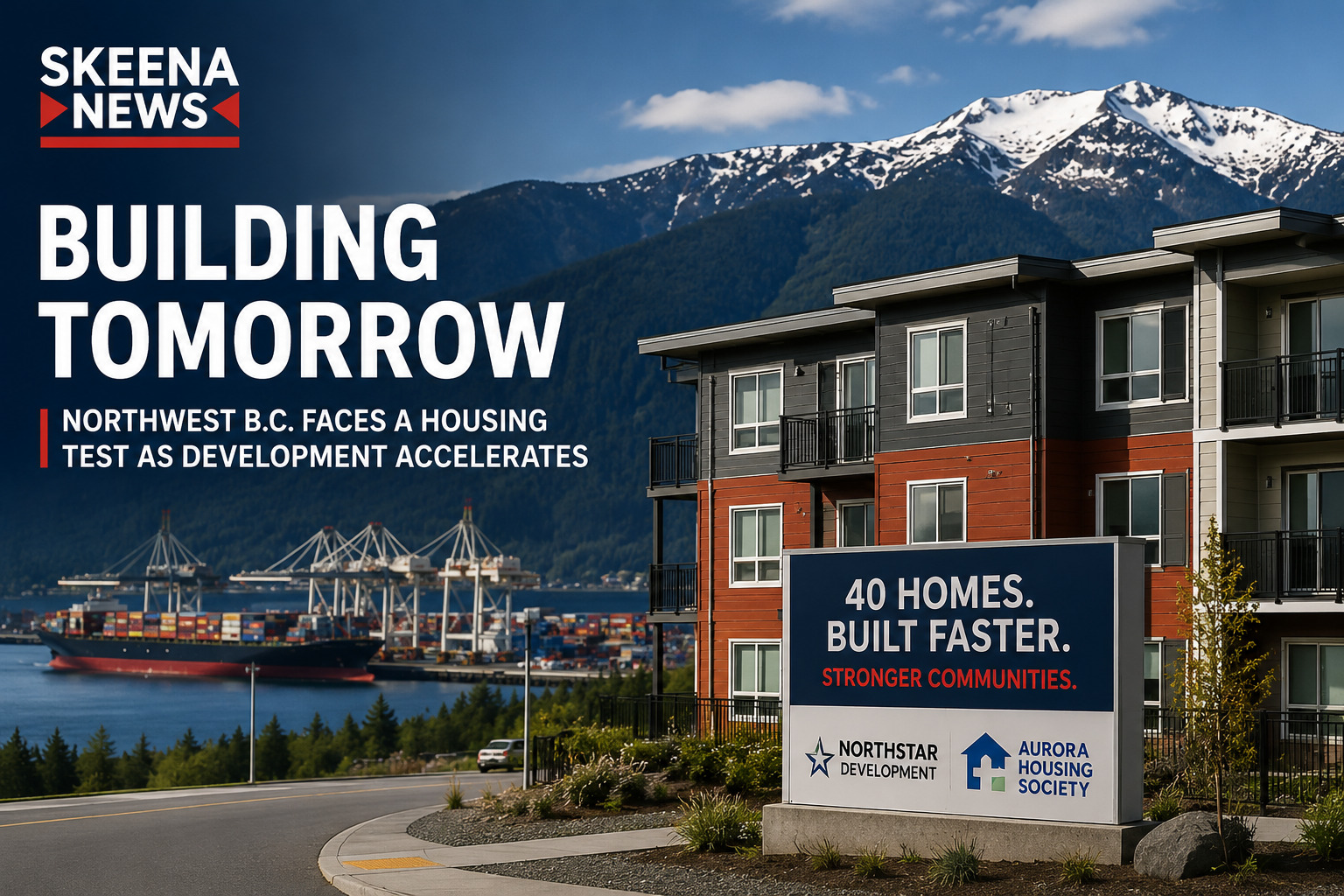
Estrella, a 40-unit purpose-built rental development on West 9th Avenue, was delivered through the provincial BC Builds program using modular construction.
The building was constructed using modules manufactured off-site while work was carried out simultaneously at the Prince Rupert site. The approach shortened the construction timeline and reduced some of the logistical challenges associated with conventional construction in a remote community.
The project is also specifically aimed at workers and families who are essential to the local economy.
Thirty per cent of the units are being rented at 20 per cent below market rates, while the development is intended to support workers in sectors including health care, education, port operations and logistics.
NorthStar Development, which developed Estrella with Aurora Housing Society and other partners, has described the project as an example of how modular construction can accelerate housing delivery in smaller and remote communities.
The company says the project was completed approximately six months faster than a comparable conventional build and saved more than $1.7 million.
For Prince Rupert, however, 40 homes represent only a fraction of the larger requirement.
The pressure extends beyond Prince Rupert
The housing challenge is regional.
Kitimat’s housing planning identifies a need for approximately 627 additional units over five years and 1,304 units over 20 years. The municipality has been updating its planning framework to accommodate additional housing forms and future demand.
Terrace is also undertaking planning work focused on housing, infrastructure and long-term community growth. The city published a new Housing Needs Report in 2024 and is currently updating its Official Community Plan.
The broader Terrace area is facing its own housing requirements. Regional housing planning for Electoral Areas C and E of the Regional District of Kitimat-Stikine identified hundreds of additional units needed over the next five and 20 years.
The issue is particularly significant for renters.
A City of Terrace social-needs assessment found that median rents had increased substantially over the previous decade and that renters were more likely than homeowners to be in core housing need.
Smithers has likewise been working on housing supply and affordability through municipal planning and incentive programs, including measures designed to encourage additional multi-family housing.
Growth is adding another layer
Housing pressure is occurring at a time when the Northwest is attracting major industrial and infrastructure investment.
Prince Rupert’s port and logistics industries require a workforce. Kitimat’s industrial base continues to generate employment. Mining projects are advancing elsewhere in the region, while Terrace remains an important service and transportation centre for Northwest B.C.
That creates a direct connection between housing and economic development.
Employers need workers. Workers need housing. And communities need the infrastructure and services required to support both.
The provincial government has explicitly linked the Estrella project to that issue, saying the development will help local employers attract and retain workers in sectors including health care, education, port operations and logistics.
Modular construction draws attention
The Estrella project is attracting attention beyond Prince Rupert because of the potential for modular construction to address some of the problems associated with building housing in northern and remote communities.
Instead of completing the majority of construction at the final site, modules can be manufactured in a controlled environment and transported to the community for assembly.
That can reduce the amount of time trades and equipment need to remain on site and can allow site preparation and building construction to happen simultaneously.
For northern communities where construction costs, weather, transportation and labour availability can all affect a project, those advantages can be significant.
But modular construction is not a substitute for a broader housing strategy.
Communities still need land, roads, water, sewer capacity, financing, planning approvals and long-term rental operators.
A regional challenge with different local solutions
There is no single housing market across Northwest B.C.
Prince Rupert has different pressures from Terrace. Kitimat’s housing needs are closely tied to its industrial economy, while Smithers faces its own combination of affordability, rental supply and regional-service pressures.
Indigenous communities and organizations are also playing an increasingly important role in developing housing across the region.
In Terrace, housing has been a central subject of regional discussions, including a Northwest Regional Housing Conference held in May that brought together municipal, Indigenous, housing and community representatives to discuss issues including seniors housing, Indigenous-led initiatives, affordable housing and regional development.
The range of approaches now being pursued — from municipal planning and zoning changes to modular construction, affordable rental projects and Indigenous-led housing — reflects the scale of the challenge.
The question facing the Northwest
The Northwest has spent years positioning itself for economic growth.
The next challenge may be making sure that growth can be accommodated by the communities where it is occurring.
A new 40-unit building in Prince Rupert demonstrates that housing can be delivered differently and, in some circumstances, faster.
But the broader numbers suggest that much more construction will be required.
As investment continues to flow into the region, the availability and affordability of housing could increasingly influence whether businesses can recruit workers, whether families can remain in the communities where they live and whether the Northwest can sustain the economic growth being planned for it.
For communities across the Skeena and Northwest, the housing question is becoming increasingly tied to a much larger one:
Can the region build the homes it needs before economic growth puts even greater pressure on an already limited housing supply?