





OTTAWA — The geopolitical complexity of the Skeena region’s energy corridor was pushed to the forefront of the national agenda today, January 28, 2026. During high-level “Team Canada” meetings in Ottawa, Prime Minister Mark Carney held a three-way tête-à-tête with B.C. Premier David Eby and Alberta Premier Danielle Smith to address an escalating crisis over energy sovereignty and market diversification.
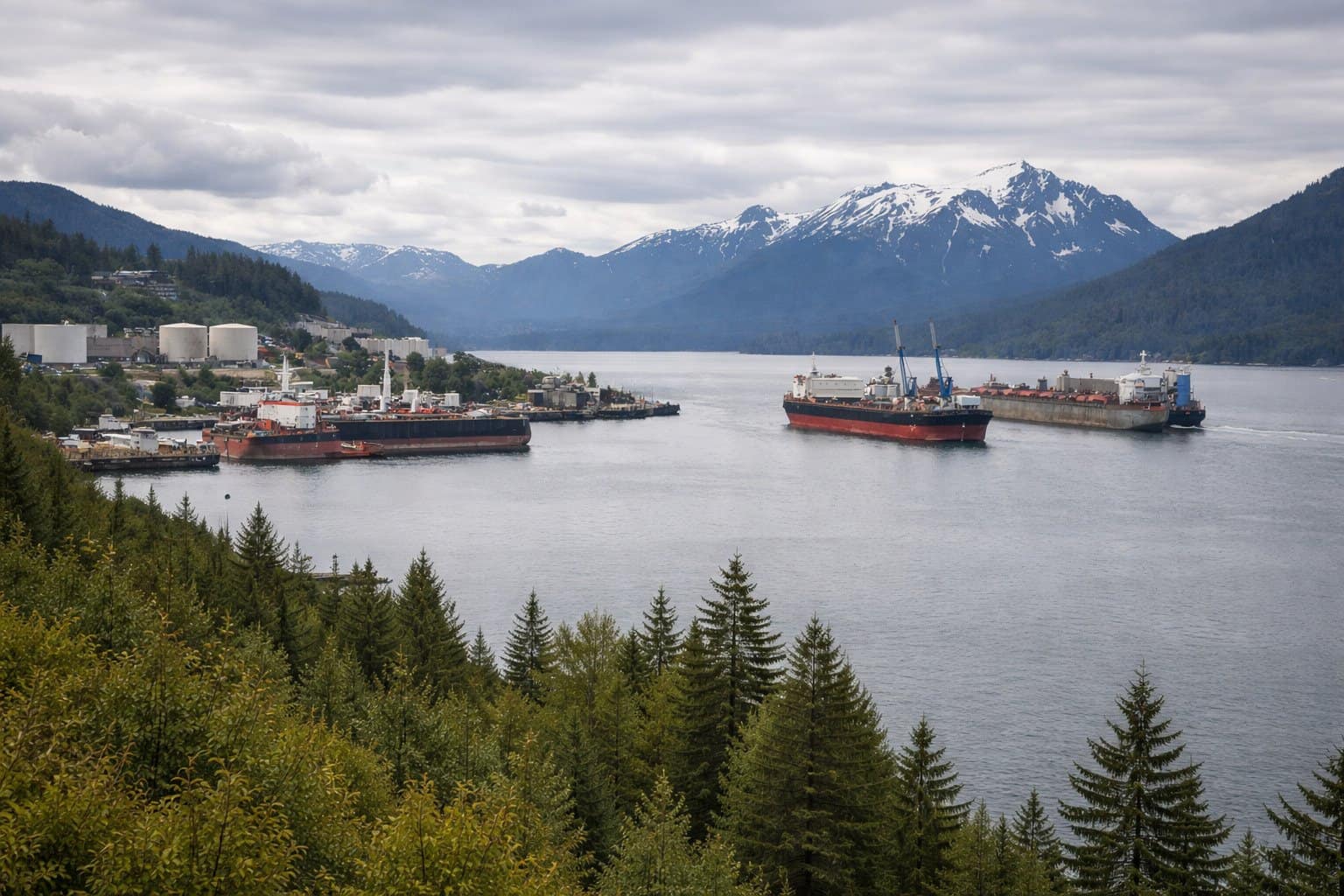
The meetings, held against the backdrop of rising trade tensions and the looming review of the Canada-United States-Mexico Agreement (CUSMA), have placed the Port of Prince Rupert at the heart of a “once-in-a-generation” struggle.
Alberta’s “Global Moral Imperative”
Premier Danielle Smith arrived in Ottawa advocating for a “West Coast oil pipeline do-over,” committing $14 million in provincial funds for early regulatory work on a new line to Prince Rupert. Smith argues that Prince Rupert is the “safest and most efficient” exit point for Alberta’s heavy crude, particularly as it lacks the tanker size constraints found in Vancouver.
Under a new Memorandum of Understanding (MOU) with the Carney government, Alberta is pushing for this project to be deemed of “national interest,” potentially bypassing traditional provincial hurdles.
Eby and the “Line in the Sand”
Conversely, Premier David Eby remains steadfast in his rejection of any proposal that would require overriding the federal Oil Tanker Moratorium Act (Bill C-48). Standing with Coastal First Nations leaders, Eby signed a joint declaration earlier this winter vowing to protect the North Coast from “catastrophic” crude oil spills.
Eby has dismissed Smith’s proposal as “wedge politics,” instead musing about building a domestic refinery or optimizing the existing Trans Mountain (TMX) system, which B.C. supports alongside the expansion of green energy and LNG projects like Ksi Lisims.
The “Venezuela Wrinkle” and U.S. Pressure
The deadlock is further complicated by a seismic shift in global oil flows. Following the recent capture of Nicolás Maduro, the United States is moving to exert significant control over Venezuelan heavy crude.
U.S. Treasury Secretary Scott Bessent has signaled that if Canada remains hesitant to build tidewater pipelines to Asia, the U.S. is prepared to absorb more Alberta oil—but on American terms. Analysts warn that if Venezuelan supply begins to replace Canadian heavy crude in U.S. Gulf Coast refineries, Canada could face a $13-billion economic hit unless it secures a direct route to the Pacific.
Strategic Energy Outlook: The Skeena Corridor (2026)
| Strategy | Primary Objective | Obstacle |
| Prince Rupert Crude Pipeline | Diversify to Asian markets | Federal Tanker Ban & B.C. Opposition |
| TMX Optimization | Maximize existing infrastructure | Nearing 100% capacity |
| Refinery Development | Domestic value-added processing | High capital cost & 10-year timeline |
| U.S. Market Deepening | Integrated continental security | Dependency on U.S. political whims |
The Carney government’s Major Projects Office is now tasked with finding a “grand bargain” that can satisfy Alberta’s need for market access while respecting B.C.’s environmental and Indigenous “no-go” zones.