





VICTORIA / TERRACE — British Columbia is grappling with a profound deterioration of its fiscal health as the Budget 2026 reveals a province deeply entrenched in structural deficits. Under Premier David Eby, B.C. has transitioned from a stable surplus to a string of record-breaking operating deficits, raising urgent questions about the long-term sustainability of regional capital projects.+1
The “Vertiginous” Upward Trajectory of Debt
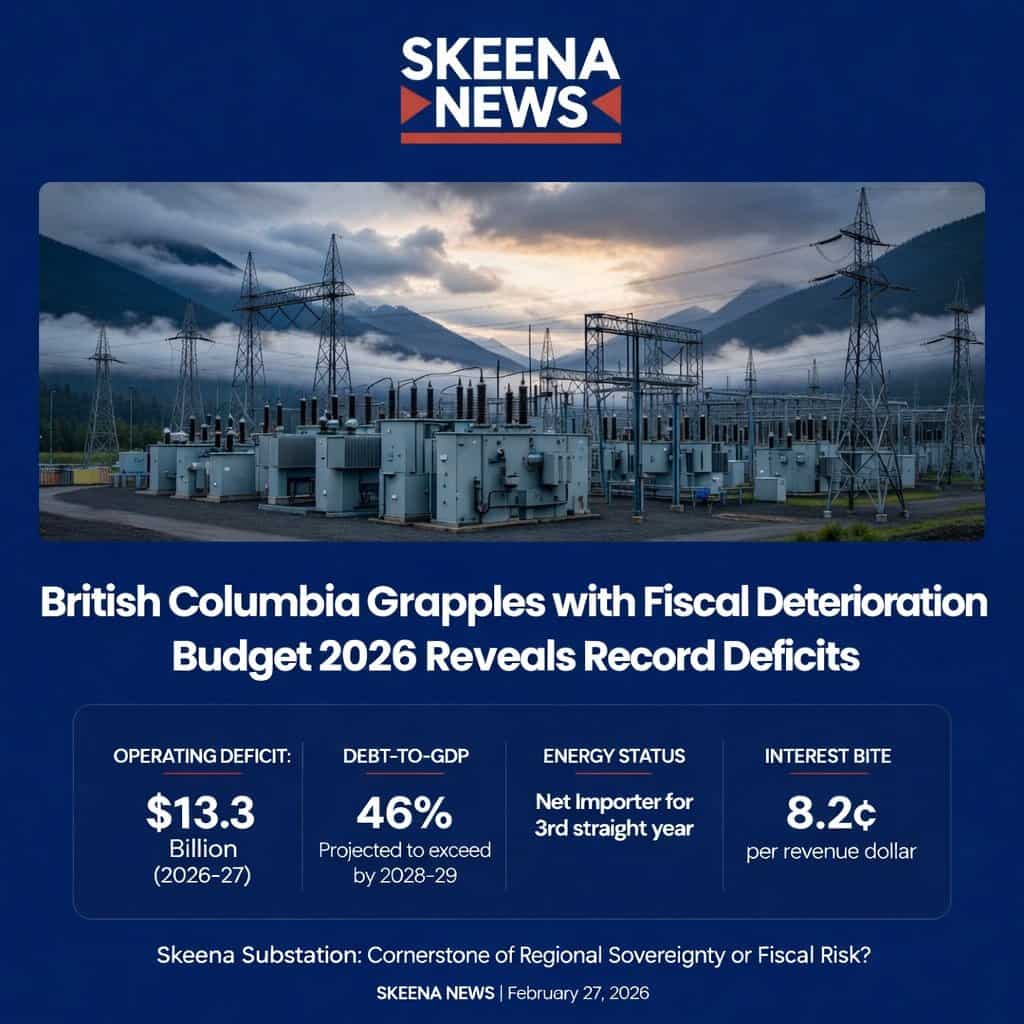
Operating deficits for the 2025-26 fiscal year are confirmed at $9.6 billion, with projections ballooning to between $12 billion and $13 billion annually over the next three years.
The most alarming metric for analysts is the taxpayer-supported debt-to-GDP ratio.
- 2022-23: 22.3%
- 2025-26: 26.1%
- 2028-29: Projected to exceed 46%
Independent economist Jock Finlayson argued on February 26 that the government has demonstrated “extraordinary fiscal recklessness,” doubling the total provincial debt—now fast approaching $155 billion—since 2018. Finlayson warns that the interest bite is rising from 4.9 cents to 8.2 cents for every dollar the province collects, siphoning away funds that could otherwise support essential services.+1
Skeena Substation: A Beacon of Regional Sovereignty?
For the Skeena region, this debt manifests locally in critical infrastructure like the BC Hydro Skeena Substation near Terrace. Construction updates on February 26 highlighted the substation as a cornerstone for the Northwest Transmission Line, which is expected to electrify over $22 billion in planned mining and industrial projects.
However, the “sovereignty” of this energy infrastructure is under fire. Critics from the Energy Futures Institute point out a glaring “policy dissonance”: while B.C. pushes for rapid electrification, it has simultaneously become a net energy importer for three consecutive years.
The Energy Sovereignty Gap
Despite B.C.’s vast hydroelectric potential, BC Hydro imported 5,591 gigawatt hours of electricity in 2025—more than the annual output of the $16-billion Site C dam.
- Cost of Failure: The price of imported electricity exceeded $2 billion over the last two fiscal years.
- Trade Risk: Analysts warn that relying on the United States for power is “extremely dangerous” under the second Trump Administration, which has hinted at potential limitations on energy exports during trade disputes.
Fiscal and Energy Snapshot: Feb 26, 2026
| Metric | Current/Projected Status |
| Total Provincial Debt | Fast approaching $155 Billion |
| Operating Deficit (2026-27) | $13.3 Billion |
| Interest Bite | 8.2¢ per revenue dollar |
| Energy Status | Net Importer for 3rd straight year |
| Skeena Infrastructure | Skeena Substation construction (Active) |
As B.C. faces credit rating downgrades and escalating borrowing costs, the Skeena region must weigh the benefits of immediate infrastructure spending against the long-term risk of a “fiscal abyss” that could threaten future economic resilience.