





TERRACE — British Columbia is betting on a massive injection of clean energy to revitalize the Skeena-Stikine corridor, utilizing new legislative powers to prioritize heavy industry over the emerging “digital gold rush.”
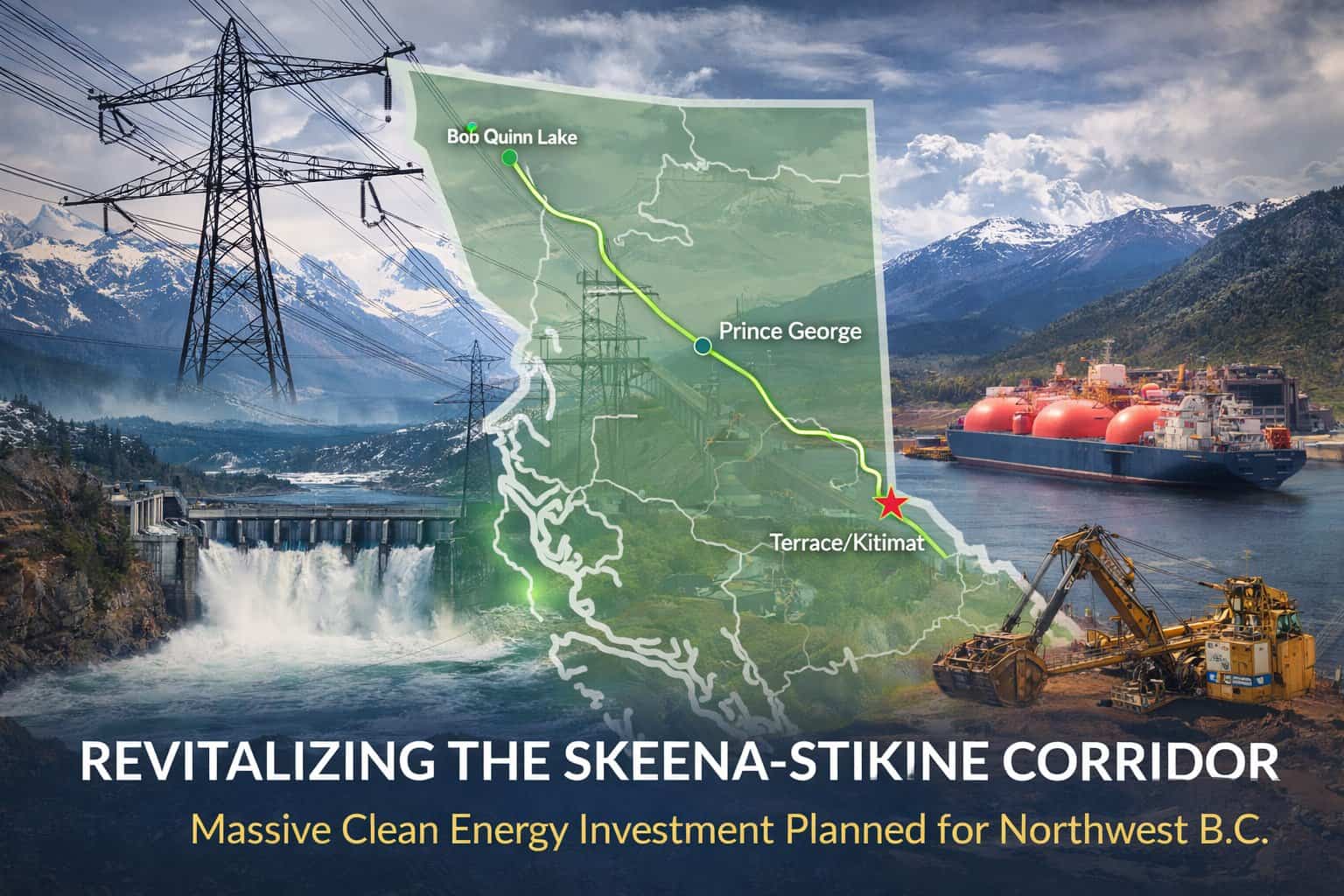
With the recent passage of Bill 31 (the Energy Statutes Amendment Act), the provincial government has cleared the path for the $6-billion North Coast Transmission Line (NCTL). The project, which is set to begin construction in Summer 2026, will deliver 2,200 megawatts of electricity—roughly double the current capacity—from Prince George to the Terrace-Kitimat region and as far north as Bob Quinn Lake.
By exempting the project from the standard B.C. Utilities Commission (BCUC) review process, the province has shaved an estimated 18 months off the timeline. Premier David Eby has defended the move as a “nation-building” necessity, projecting the line will add $9.8 billion to the provincial GDP annually and support nearly 10,000 direct jobs.
Prioritizing “Clean” Industry over AI and Crypto
Starting this month (January 2026), BC Hydro is officially moving away from its traditional “first-come, first-served” connection model. Under the new Industrial Allocation Framework, the province is playing favorites to meet its climate goals:
- The Winners: “Lowest-emission LNG” projects (such as the floating Ksi Lisims LNG near Gingolx) and critical mineral mines in the Golden Triangle. These sectors are seen as vital for both reconciliation and global decarbonization.
- The Losers: Emerging high-consumption sectors like AI and data centers are now capped and forced into a competitive bidding process.
- The Exit: The 2022 moratorium on cryptocurrency mining has been made permanent. Officials argue that while crypto uses massive amounts of power, it provides negligible local employment or tax revenue compared to a mine or a port.
Local Impacts: From Terrace to the Golden Triangle
The NCTL is designed in three phases, with Phase 2 terminating at the Skeena Substation in Terrace. This will be the “power hub” for:
- Port Expansion: Electrifying new berths at the Port of Prince Rupert.
- Mining: Powering massive proposed projects like the KSM (Seabridge Gold) and Galore Creek mines, which combined could require over 500 megawatts.
- Reconciliation: For the first time, Bill 31 allows First Nations to purchase an equity ownership stake in the transmission line itself, ensuring long-term revenue for local Indigenous communities.
The “Site C” Shadow
Despite the economic optimism, critics warn of “regulatory shortcuts.” By bypassing environmental assessments and BCUC oversight, some experts fear the NCTL could face the same geotechnical and cost-overrun issues that plagued the Site C dam. The project’s price tag has already doubled from an initial $3 billion in 2023 to $6 billion today.
For residents of the Skeena, however, the project represents the most significant infrastructure investment in a generation—one that promises to turn the Northwest into a global leader in low-carbon resource production.