





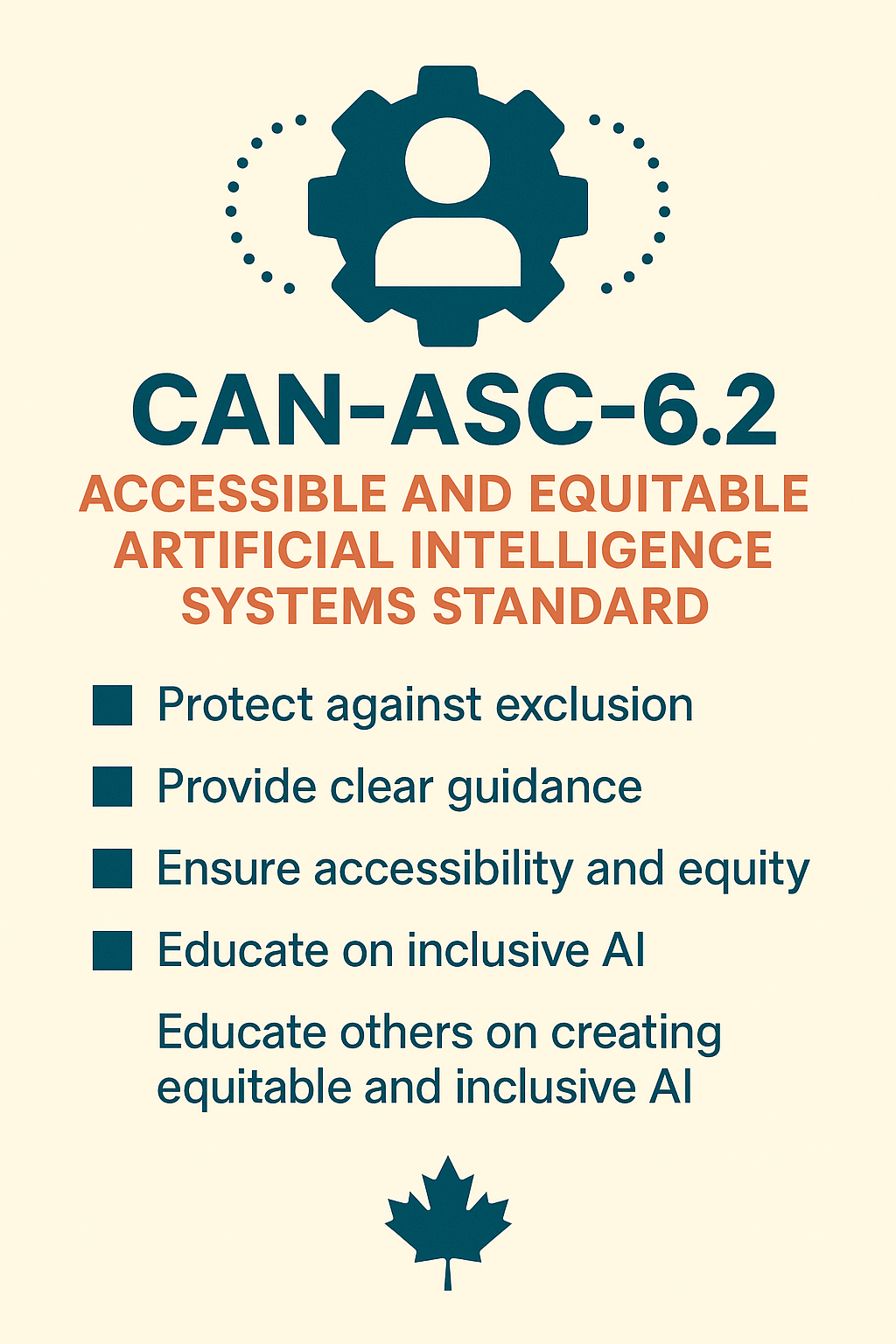
GATINEAU, QC – Canada has cemented its position as a global leader in accessible technology with the publication of the CAN-ASC-6.2 – Accessible and Equitable Artificial Intelligence Systems standard. Announced on December 3, 2025, by Accessibility Standards Canada, this equity-based document is the first National Standard of Canada focused specifically on accessible artificial intelligence (AI).
Its release coincides with the International Day of Persons with Disabilities (IDPD), underscoring Canada’s commitment to advancing inclusion as AI quickly becomes a key part of daily life, supporting everything from customer service tools to hiring systems and everyday apps.
Protecting Against Exclusion from the Start
The new standard aims to protect people from exclusion and ensure AI works for everyone. Clear accessibility guidelines are crucial to ensure that barriers in AI systems are recognized and addressed before they impact users.
The standard provides clear and practical guidance to help organizations and developers:
- Design AI systems that are accessible to people with disabilities.
- Ensure fairness and prevent exclusion.
- Establish processes so accessibility and equity remain central throughout the AI lifecycle.
- Educate others on creating equitable and inclusive AI.
“When technology is built to include people with disabilities, we strengthen our workforce, our communities, and our country,” said the Honourable Patty Hajdu, Minister of Jobs and Families.
Developed by People with Disabilities
The CAN-ASC-6.2 standard was developed through a rigorous process by an Accessibility Standards Canada technical committee. Significantly, this committee was made up primarily of people with disabilities and members of equity-deserving groups.
The standard was approved by the Standards Council of Canada as a National Standard of Canada, confirming that it meets national requirements and aligns with international best practices. While the standard is a voluntary instrument, it is a key component of the mandate to help create a barrier-free Canada by 2040.
Dino Zuppa, CEO of Accessibility Standards Canada, stated that the standard “fills a critical gap by providing clear and practical guidance to help organizations design AI systems that are accessible and equitable from the start”.
The standard is available for free, in both official languages, and in accessible formats, including a summary made available in plain language, American Sign Language, and Langue des signes québécoise.