




Canada Steps Deeper Into Ukraine War Supply Chain With New Defence Package
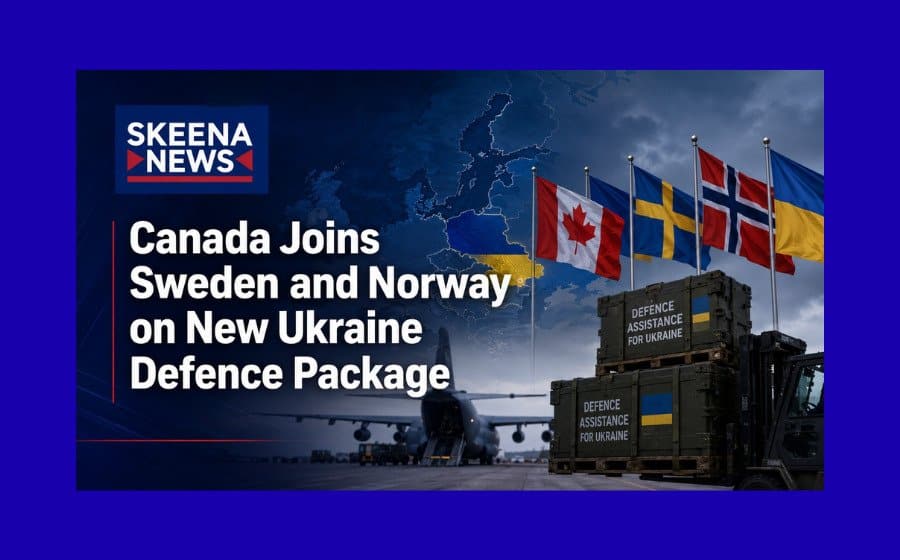
Canada is preparing to join Sweden and Norway in a new defence package for Ukraine, marking another step in Ottawa’s expanding role in the international supply chain moving U.S.-made weapons to the Ukrainian battlefield.
According to Reuters, Sweden’s Defence Minister Pål Jonson said in Brussels on Thursday that Sweden, Norway and Canada will announce a new package under the Prioritised Ukraine Requirements List, known as PURL. The NATO-backed system allows allied countries to fund military equipment sourced from the United States and send it to Ukraine.
Sweden’s defence ministry said Stockholm’s contribution to the package will be about US$108 million. The exact amounts from Canada and Norway were not immediately disclosed in the Reuters report.
The announcement is significant because it shows Canada continuing to align itself with a fast-moving NATO supply mechanism designed to get high-priority weapons and equipment to Ukraine more quickly than traditional procurement routes. Instead of every country sending only what it has in its own military inventory, PURL allows allies to finance U.S.-made systems that Ukraine urgently needs.
NATO describes PURL as a way to coordinate the purchase of critical defence equipment from the United States. Under the system, NATO’s military command identifies packages of equipment and munitions that Ukraine needs and that the U.S. can provide at scale. Allied countries then fund those packages, either individually or together, with NATO coordinating delivery.
For Canada, this is not the first move through PURL. Government of Canada records show Ottawa previously committed approximately CAD $680 million, equal to US$500 million, for a PURL package of U.S.-sourced military equipment aimed at strengthening Ukraine’s air defence and other urgent military needs. Canada also committed CAD $200 millionin December 2025 toward another PURL package of critical capabilities sourced from the United States in partnership with NATO allies.
That means this new joint package with Sweden and Norway would add to Canada’s existing role in financing weapons and equipment that move through a U.S.-NATO supply route rather than through purely Canadian stockpiles.
The timing also matters. Ukraine has continued to press allies for more air defence, long-range artillery ammunition, drones and other battlefield capabilities as Russia’s war continues. Norway’s government said in May that Ukraine had identified air defence equipment, drone procurement support and long-range artillery ammunition as key needs in 2026 under the PURL framework.
The new Canada-Sweden-Norway package also highlights the growing importance of Nordic defence coordination. Sweden and Norway have become major contributors to Ukraine’s military support, and Canada has increasingly worked with Nordic and NATO partners on Arctic security, European defence and Ukraine assistance.
For Canadians, the political question is becoming sharper: Canada is no longer only donating equipment or training Ukrainian forces. It is also helping finance an international weapons pipeline built around U.S. military inventory, NATO coordination and allied funding.
Supporters will argue this is exactly what Ukraine needs: fast access to advanced weapons at a scale Canada and European allies cannot produce alone. Critics may question the long-term cost, the reliance on American weapons stockpiles, and whether Parliament and Canadians are getting enough detail on each contribution.
What is clear is that Canada’s role in Ukraine’s defence is moving deeper into the machinery of NATO’s wartime supply system.
The latest package has not yet been fully detailed, and Canada’s exact contribution in this new Sweden-Norway-Canada announcement remains undisclosed as of the Reuters report. But the direction is clear: Canada is continuing to fund Ukraine’s defence not only through direct aid, but through coordinated NATO purchasing of U.S.-made weapons.
For a war now stretching across years, the supply chain itself has become part of the battlefield — and Canada is stepping further into it.